
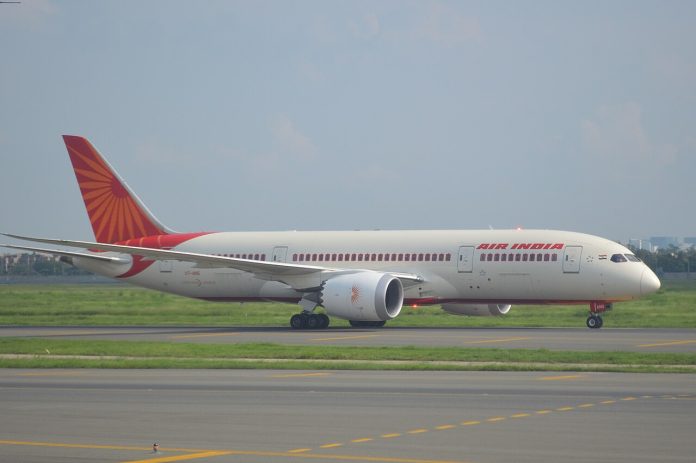
PUNE, India – The Air India 171 disaster has become one of India’s worst Aviation tragedies, and Air India’s first wide-body crash since the Kanishka bombing of Air India 182 back in June of 1985.
Time has stood still in those 40 years as the world has passed us by; the dreadful memories of that Boeing 747 strewn over the Atlantic Ocean off Ireland still jar the mind when this B-787 turned into a fireball at Ahmedabad and brought us crashing down to earth to reality.
That afternoon, I got a call from a friend in engineering and watched the forwarded video in horror; within minutes, TV channels were scrambling to verify the facts. It was Indian aviation’s worst nightmare, a wide-body aircraft tragedy that likely had killed all on board and, worse still, had plowed into a medical college on the ground, killing many more.
When all was done and dusted, 260 people had perished in that inferno: 241 passengers and crew, and 19 innocents on the ground. Miraculously, one person survived and was found talking on the phone as he walked away; a halo of invincibility surrounded him.
The scale of grief stunned the politicians and Indian public; it was India’s first live air tragedy that disgustingly got converted into a social media soap, where millions of us, vicariously viewed the drama daily, oblivious of the pain of the families they left behind.
So, what really happened to AI-171? Was it a technical glitch? Was it an engine failure? Or a FADEC failure? Was it sabotage, as some uselessly speculated? Was it pilot suicide as we are led to believe? Why was the world’s third largest aviation nation so clueless about how to go forth in this tragedy of epic proportions?
Why was the entire investigation shrouded in such secrecy that even high-level officials in the ministry and the airline were kept out of the proceedings? Was it being remote-controlled from the US headquarters of an aircraft company ?
As Air India grieved for its dead, the nation mourned with the families and cried with those we lost. For me, it was truly personal, as I knew Sumeet since a little after he joined IGRUA. I also knew the two senior cabin crew, Shraddha Dhavan and Aparna Mahadik, personally, having been with Air India for so long; everything that happens there automatically becomes personal.
The preliminary report released to the world appeared to be a real hatchet job, without even having proper subject matter experts. The report raised more questions than it answered, and Pilots and experts shook their heads in disbelief as it tried to give a clean chit to the Aircraft and engine makers rather than delve deeper into the reasons for the accident.
The cryptic one line in the report, which is neither a quote nor a complete narration, merely states, “In the cockpit voice recording, one of the pilots is heard asking the other why he cut off. The other pilot responded that he did not do so.”
It does not speak of details, but is deftly maneuvered to create a shroud of suspicion around at least one pilot and deflect attention from the most obvious question:: was this on the basis of some technical or systemic fault? If not, this raises the obvious and central question: if the CVR was retrieved and one sentence was paraphrased, then why was the entire transcript not released?
Was the truth so shocking that we, as Indians, would not be able to accept it? Or was it done to distract the world’s focus through outrage and anger?
In many ways, the scenes playing out were reminiscent of Lion Air 610, way back in October 2018, when it primarily blamed Captain Suneja’s pilot error. It was the crash of Ethiopian Airlines 302 a few months later that prompted the worldwide grounding of all 737 Max aircraft and a relook at the entire problem. The final report on Lion Air 610 listed 9 contributory factors, focusing on MCAS, AoA, and sensor and software issues, but moving away from pilot error.
We all wonder whether AI-171 bears a similar tale, or, as WSJ & other western media speculate, could it have been a case of a German Wings? Hold that thought -let me put the speculation to rest: “I knew Sumeet, and flew with him,” I also spoke to his batchmates and friends: “I don’t for a moment believe that he could ever do something like that; in fact, neither pilot would.” The truth has been kept wrapped up in strange machinations at the Government of India, the AAIB, and the regulator DGCA.
Let’s not forget that Boeing has not exactly covered itself in glory over the last decade with the various scandals that it has fallen into, from the 737- Max crashes and its subsequent grounding ; the regulatory and ethics issue with FAA ; the manufacturing quality issues with the 737 & 787; the door plug blowout issue (Alaska air) the culture crisis and whistleblower issues ; the Starliner spacecraft failures all of which highlighted the speed over safety issues and overconfidence in legacy reputation at the Airplane manufacturer.
Interestingly, in a recent TV interview, Romin Vohra, who lost three of his family members in the 171 tragedy, states that he entered the morgue, and in one section, he saw a pilot’s body, bent over in a seated position, holding a part of the yoke (central column). He also saw other bodies, as he tried to identify his niece and family. There has been no denial of this account by any authorities or the AAIB, nor any confirmation, leaving the matter even more mysterious. If Captain Sumeet Sabharwal fought and died trying to save the plane, why would he allegedly flip the switches in the first place? The post-mortem of Captain Sumeet is not publicly available to confirm these reports; hence, such speculation must remain inconclusive.
Rachel Chitra, an investigative journalist, has this month, in a special report, quoted an unnamed source from the AAIB, who allegedly stated that “The preliminary report was a negotiated deal between Air India, Tata, GE and Boeing—GE to a lesser extent,” which is close to what some of us said eleven months ago, when the preliminary report was released. We said that it seemed designed purely to allay the fears of US Big corporations and the 1,400-odd 787s flying in the skies. There was absolutely no reason for an accident investigation board in a sovereign democratic nation to give a clean chit to an aircraft maker and an engine manufacturer in another country, when it had not even bothered to release the transcript of the CVR, leave alone delve deeper into the systemic issues that had plagued the manufacturer or any other issues that many others have flagged.
One year on, many speculated, but I did not expect the AAIB to present a final report on AI-171. We are no closer to the truth today than we were on July 12 2025. India has embarrassed itself in the comity of global aviation with subterfuge, questionable practices, and a system beset by a regulator with questionable morals and an AAIB that doesn’t seem to function coherently. One hopes that the new Indian Director General of Civil Aviation will cleanse the Aegean stables of the inherited muck.
India has to repair its system, and it’s a job the Prime Minister will need to look into deeply: the world’s fastest-growing aviation system has people who are incompetent and others who are rotten to the core. There are a few good apples in this barrel, but overall, we are scraping the bottom, a framework in decay, without a functioning system. It’s time for the government to cleanse the regulator, bring in an independent CAA, allow our accident investigation board to operate independently, ensure transparent release of the findings of AI-171, and let’s all learn to move on with our lives.
Air India, for its part, has maintained a dignified silence and grieved alone for its crew, its passengers, and the setbacks it faced in its transformation journey, while slowly rebuilding customer confidence. In many ways, AI-171 could be the heartbreaking turning point for Air India, just as 26-11 was a tragic yet resilient testament to the courage of the brave men and women of the Taj. The Tatas have faced bigger challenges before, and Air Indians are a tough, resilient bunch who will bounce back stronger and higher. I know them well.
However, we owe it to the dead and their families, to our citizens, to give them the truth, in a transparent fashion, however bitter it might be; even if it turns out to be what we never wanted to accept or hear, we will have to do so; our nation’s credibility depends on it.

Sanjay Lazar
- Sanjay Lazar#molongui-disabled-link

- Sanjay Lazar#molongui-disabled-link

- Sanjay Lazar#molongui-disabled-link

- Sanjay Lazar#molongui-disabled-link