Data Dashboards and ‘Wetland Mitras’
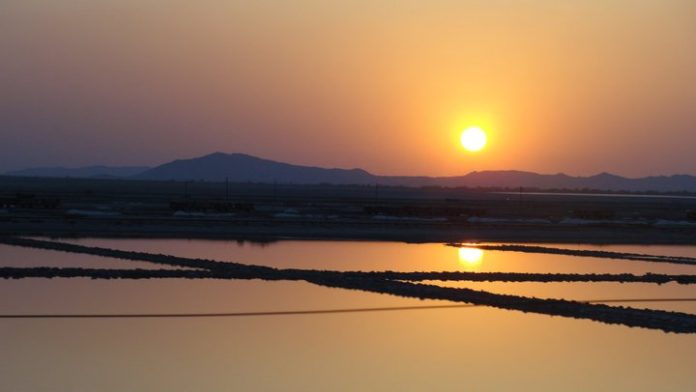
Innovation does not always have to originate solely from rural initiatives. A closer look at contemporary water movements reveals individuals from the tourism sector who are transforming wetlands into centers of curiosity and ecological attraction. Looking to revive a pandemic-hit travel industry by placing nature at its core, tourism innovators like Dilip Chauhan began viewing the Sambhar Salt Lake wetland as a massive opportunity for “salt tourism.”
Chauhan, who has previously built successful community-driven rural livelihood and education models alongside tourists from Europe, the West, Asia, and Latin America, is designing a specialized “wetland track.” This concept aims to blend an understanding of ancient, eternal history with the philosophy of global fraternity, offering travelers a sense of peace rooted in living cultural experiences rather than mere sightseeing.
In recent years, the launch of the ‘Sambhar Utsav’ has successfully drawn attention to this iconic lake, which supplies nearly 10% of India’s salt requirements as well as its migratory bird populations and the ancient Shakambhari Mata temple. However, the critical issue of its upkeep as a protected Ramsar site often gets lost in the festival’s clamor.
Conversely, a brilliant example of quiet community action can be found in Menar, a small village in the Udaipur district. Without a single rupee of government aid, the vigilant local community relied on sheer social resolve to transform their two major water bodies, Brahma and Dhand, into a secure bird sanctuary. By establishing its identity as a ‘Bird Village,’ the residents did not just revive a dying hydrological system; they built a fortress of water security. In such scenarios, the state’s role should ideally be to legitimize, support, and seamlessly link these grassroots achievements with broader environmental conservation programs.
According to the government’s official dashboard under MoEFCC’s ‘Mission Sahbhagita’, more than 7.6 lakh citizens have been formally designated as Wetland Mitras (Friends of Wetlands). Yet, despite these administrative and community strides, India’s delicate micro-hydrology continues to battle concrete encroachments and industrial waste. It brings a stinging realization that while we take pride in our 100 international Ramsar sites spread over 13 lakh hectares, these ecosystems survive primarily due to rural stewardship a stewardship that is increasingly fractured by urban consumerism.
The Colonial Remnants of the ‘Wasteland’ Label
The roots of this crisis trace directly back to our colonial past and a lingering administrative mentality born out of servitude. A major legal and social hurdle for Indian water bodies is the persistent, archaic tag of the “wasteland.” Inherited from British revenue models, the colonial state classified any land that failed to yield direct agricultural taxes or timber revenue as absolute waste.
It is a dangerous misnomer. According to the official Wastelands Atlas of India, published by the Ministry of Rural Development and ISRO, an astonishing 16.96% of the country’s total land area, roughly 5.57 crore hectares, is still classified as wasteland. Because this designation routinely lumps together seasonal waterlogged zones, marshes, and saline flats, these natural water bodies are rendered legally defenseless. This makes it incredibly easy for administrative systems to convert them into garbage dumping zones or industrial estates.
In nature, no land is “waste.” These marshy terrains provide ecosystem services worth crores of rupees for free, buffering the monsoon’s volatile shifts and serving as primary zones for groundwater recharge.
On paper and in bureaucratic jargon, the “wasteland” label persists across various departments. Frequently logged in records as Gair Mumkin (unusable/uncultivatable) land, local Panchayats, municipalities, forest departments, and public works wings have historically traded or allocated these plots at throwaway prices. Leaving these lands unmonitored serves no one’s interest. There is immense potential to manage them sustainably for the mutual benefit of the community and ecology. While we actively discuss shaping indigenous Indian standards, we simultaneously validate and reinforce these colonial remnants. To break this conflict, state involvement must shift decisively from bureaucratic interference to genuine administrative support.
The Legal Paradox: Utility vs. Origin
This contradiction between revenue paperwork and ecological reality has escalated to the apex court. In May 2026, the Supreme Court of India, in the case of Ravindra Sinha v. Union of India, issued a formal notice to the Central Government to review the constitutional validity of the Wetlands (Conservation and Management) Rules, 2017.
The core legal challenge argues that the 2017 framework explicitly excludes historic, community-constructed structures like rural ponds, stepwells (baoris), and man-made reservoirs from stringent legal protection. Legal experts view this exclusion as a direct violation of the environmental Principle of Non-Regression (which dictates that environmental protection standards cannot slide backward).
This builds upon the Court’s earlier October 2025 ruling in the Futala Lake case, where it invoked the Public Trust Doctrine to decree that irrespective of a water body’s artificial or natural origin, if it serves a vital environmental utility, the state cannot permit its concretization.
Furthermore, the judiciary has taken a very strict stance against the systemic exploitation of the “wasteland” and Gair Mumkin revenue tags. In the landmark Jagpal Singh v. State of Punjab case, the Supreme Court held that merely recording a piece of land as “waste” or “unusable” in revenue registers does not strip it of its community character, and ordered such lands to be restored to local Gram Sabhas.
More recently, in cases emerging from Rajasthan’s arid zones, such as M.K. Ranjitsinh v. Union of India, the Court shattered the administrative myth that grasslands and pastures are ecologically vacant spaces simply because they remain classified as “wastelands” under archaic 1980s guidelines.
The ground reality remains absolute: nature does not read revenue records. A small village pond or a seasonal pasture recharges groundwater and regulates micro-climates just as effectively as a massive natural lake. By stripping these structures of legal armor through arbitrary definitions, we clear a path for urban real estate and industrial planners to treat them as mere vacant plots. The resulting damage is not merely a dip in numbers on a government dashboard; it is the permanent erasure of our microclimatic resilience.
‘Amrit Dharohar’ and Interpreters of Nature
While we wait for historical administrative errors to be corrected, national policies are shifting to restore ecological dignity to our water bodies. India is actively exploring a socioeconomic model that links local livelihoods to water systems without damaging the underlying ecosystem. Guided by this vision, the MoEFCC and the Ministry of Tourism have jointly implemented the Amrit Dharohar Capacity Building Scheme, launched in 2023, to protect these vital sites.
This scheme intentionally champions high-value, low-impact “nature tourism” over destructive mass tourism. The goal is to deepen consumer engagement and education rather than maximize a raw headcount. Across selected pilot sites such as Odisha’s iconic Chilika Lake, the mangrove ecosystems of Bhitarkanika, Sultanpur in Haryana, and Sirpur in Madhya Pradesh, local communities are directly integrated into conservation through income-generating activities like specialized bird photography, silent kayaking, and guided stargazing.
Under the Amrit Dharohar model, travelers explore traditional conservation histories alongside local guides. In villages like Menar, which resonates with the calls of over 150 bird species, visitors are served traditional meals featuring indigenous millets (Shri Anna) grown using the wetland’s high water table. They return home with a deep appreciation for local folklore, history, and community resilience.
To formalize this, the government introduced structured training courses like the Alternative Livelihood Program and the Paryatan Navik (Tourism Boatman) Certificate. In the brackish waters of Chilika and the delicate ecosystems of Bhitarkanika, where boatmen previously drove their motorized vessels dangerously close to wildlife and endangered Irrawaddy dolphins to please tourists, the training has transformed behavior. Certified boatmen now shut off their motors within a strict 200-meter buffer zone, switching to silent manual paddles or electric motors. This training elevates a boatman from a simple ferryman to a certified nature interpreter, allowing them to command premium, standardized guiding fees while minimizing ecological distress.
Following extensive studies of international models, including the deep-underground Salt Mine Museum in Poland, tourism innovator Dilip Chauhan is connecting global travelers to local community initiatives in Sambhar, such as the vibrant 7-day Nandkeshwar Utsav celebrated during Holi. While he holds a comprehensive blueprint for year-round sustainable tourism, such high-potential regions cannot be placed on the global map through isolated individual efforts. A continuous loop of dialogue must connect governments, ecological experts, and local communities.
Echoing this, Khemraj Sharma, a retired Forest Department official trained at the prestigious Forest Training Institute in Dehradun, strongly advocates for mobilizing local financial institutions to fund and scale these grassroots wetland conservation innovations.
However, eco-tourism carries the inherent seed of its own destruction. If a pristine natural site faces human footprints beyond its carrying capacity, the entire ecosystem collapses. It is critical to enforce seasonal limits on visitor numbers using digital ticketing, while ensuring that a major share of tourism revenue is retained directly by local community trusts and conservation specialists. Until water security is embraced as a living component of our livelihood, traditional heritage, and cultural pride, we cannot fulfill our collective responsibility to preserve our wetlands. It is time to fully liberate the nation from the colonial stigma of the “wasteland.”
Indian Philosophy in Eliot’s ‘The Waste Land’

Dr. Shipra Mathur
Dr. Mathur is a veteran journalist based in Jaipur, India. The views expressed here are solely those of the author.
- Dr. Shipra Mathur#molongui-disabled-link

- Dr. Shipra Mathur#molongui-disabled-link

- Dr. Shipra Mathur#molongui-disabled-link

- Dr. Shipra Mathur#molongui-disabled-link