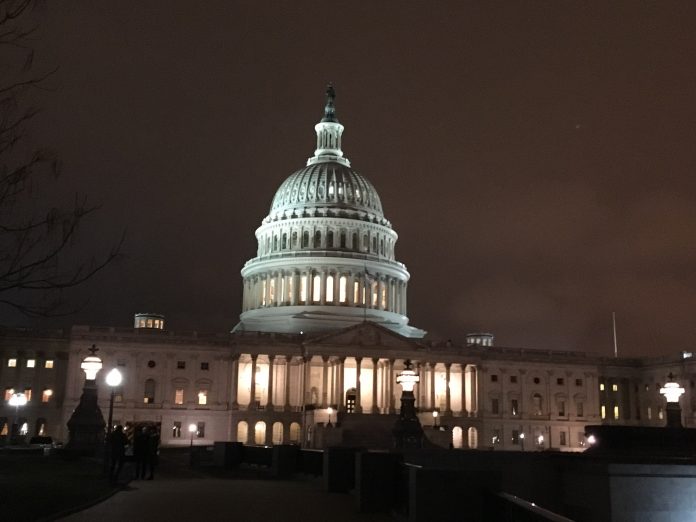
WASHINGTON – The Tom Lantos Human Rights Commission (TLHRC) recently convened a virtual congressional staff briefing entitled “The Enduring Human Rights and Humanitarian Crises in Ethiopia.” The timely hearing brought together Members of Congress, congressional staff, foreign policy specialists, humanitarian organizations, and human rights advocates to examine Ethiopia’s worsening humanitarian emergency and to discuss the role the United States can play in promoting peace, accountability, democracy, and human rights.
The bipartisan briefing was hosted by Congressman James P. McGovern, Co-Chair of the Tom Lantos Human Rights Commission, and Congressman Christopher H. Smith, Co-Chair of the Commission, both of whom have long demonstrated their commitment to defending human rights around the world.
The distinguished panel featured Magnus Taylor of the International Crisis Group, Abdullahi Hallakhe of Refugees International, Mahlet Gebremedhin of Omna Tigray, and Dr. Yirga Gelaw Woldeyes of Curtin University in Australia. The discussion was moderated by Lauren Ploch Blanchard, Specialist in African Affairs with the Congressional Research Service.
Ethiopia’s Crisis Continues
Although the Pretoria Cessation of Hostilities Agreement signed in November 2022 formally ended the devastating war in Tigray, peace has not returned to Ethiopia. Armed conflict, political instability, and widespread humanitarian suffering continue across several regions, including Amhara and Oromia, while tensions remain in Tigray.
The panelists described a country still experiencing widespread insecurity, large-scale displacement, destruction of civilian infrastructure, restrictions on humanitarian assistance, and allegations of serious violations of international human rights and humanitarian law.
Reports from international human rights organizations continue to document allegations of extrajudicial killings, arbitrary arrests, conflict-related sexual violence, attacks against civilians, ethnic-based violence, and the use of drone strikes in populated areas. Millions of Ethiopians remain displaced from their homes, while many communities continue to face hunger, severe malnutrition, inadequate medical care, and limited access to humanitarian assistance.
The speakers emphasized that lasting peace cannot be achieved without accountability, protection of civilians, an independent judiciary, respect for fundamental freedoms, and an inclusive national political dialogue.
Written Testimony Submitted
I was honored to submit written testimony to the Commission entitled “The Enduring Human Rights and Humanitarian Crises in Ethiopia.”
In my testimony, I thanked Chairman James McGovern, Chairman Christopher Smith, and the distinguished Members of Congress for continuing to focus attention on Ethiopia during one of the most difficult periods in its modern history.
I explained that, for more than two decades, I have worked with Members of Congress, the United States Senate, the U.S. Department of State, and numerous international human rights organizations to promote democracy, religious freedom, and respect for human rights in Ethiopia.
I reminded the Commission that Ethiopia and the United States have maintained a strong friendship for more than a century. The United States has consistently provided generous humanitarian assistance that has saved millions of Ethiopian lives during periods of drought, famine, conflict, and economic hardship.
At the same time, I expressed deep concern that Ethiopia continues to move further away from democratic governance while widespread violence, political repression, and humanitarian suffering continue in many parts of the country.
My testimony emphasized that international attention must not be limited to any single conflict or region. Every Ethiopian civilian deserves equal protection regardless of ethnicity, religion, political affiliation, or geographic location.
I urged Members of Congress to recognize the suffering of civilians throughout Ethiopia, including those affected in Tigray, Amhara, Oromia, Benishangul-Gumuz, Afar, and other regions where innocent people continue to bear the terrible human cost of armed conflict.
I also raised concerns regarding continued reports of violence affecting the Ethiopian Orthodox Tewahedo Church, attacks on places of worship, restrictions on religious freedom, and the suffering experienced by members of the Amhara community. Every allegation of abuse deserves an independent and impartial investigation, and every victim deserves justice.
The Need for a New U.S. Strategy
The hearing underscored the importance of continued congressional engagement with Ethiopia.
The United States has long been one of Ethiopia’s closest partners. That partnership should continue—but it should also be guided by America’s longstanding commitment to democracy, accountability, religious freedom, and universal human rights.
Congress should continue exercising strong oversight of U.S. policy toward Ethiopia and encourage efforts that promote an immediate cessation of violence, unrestricted humanitarian access, the protection of civilians, accountability for serious human rights violations, and an inclusive political dialogue that reflects the aspirations of all Ethiopians.
The United States should also support independent investigations into credible allegations of atrocities and encourage reforms that strengthen democratic institutions, judicial independence, freedom of the press, and the rule of law.
A Call to Action
Ethiopia stands at a critical crossroads. The choices made today by Ethiopian leaders—and by the international community—will shape the country’s future for generations.
The international community cannot afford to look away while millions of innocent civilians continue to suffer. Humanitarian assistance alone is not enough. Sustainable peace requires justice, accountability, reconciliation, democratic governance, and respect for the dignity and equal rights of every Ethiopian citizen.
Congress has demonstrated bipartisan leadership by continuing to examine Ethiopia’s deteriorating human rights situation. That leadership must continue.
The Ethiopian-American community remains committed to working constructively with Congress, the Administration, international organizations, religious leaders, and civil society to help advance a peaceful, democratic, and united Ethiopia where all citizens can live in freedom, security, and dignity under the rule of law.
The people of Ethiopia have endured decades of conflict, political instability, and immense suffering. They deserve a future defined not by war and repression, but by peace, justice, reconciliation, and democratic opportunity.
The time for sustained international engagement is now.

Mesfin Mekonen
Mesfin Mekonen is the author of Washington Update, a bulletin about Ethiopia’s struggle for freedom and prosperity, and founder of MM Management.
- Mesfin Mekonen#molongui-disabled-link

- Mesfin Mekonen#molongui-disabled-link

- Mesfin Mekonen#molongui-disabled-link
- Mesfin Mekonen#molongui-disabled-link