When President Trump, on the first day of his second term, closed the U.S. Agency for International Development and began dismantling the Voice of America, he also severely curtailed what had been America’s soft power dominance in the world.
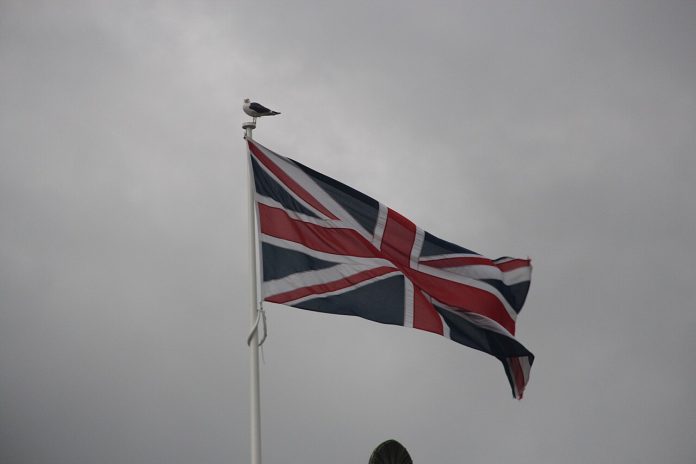
With those actions, we abandoned something of inestimable value: the ability to project Americanism, our ideals. Trump retired an entire diplomatic system that had served the United States well since we more or less inherited it from the British.
Soft power was codified as a concept by the late Harvard professor Joseph S. Nye, Jr. in four books published between 1990 and 2023.
While Nye made soft power his own — he coined the term in 1990 — and wrote, lectured and testified before Congress about it, he never totally convinced conservatives what a valuable weapon it was in the national armory.
The proof of that is in the current administration’s indifference to diplomatic and social muscle, and its lack of a mechanism to talk to the Iranian people in Farsi, their language.
Nye believed an important part of soft power was our educational system, and U.S.-educated foreign students going home and spreading the good news about America.
I believe, although it was never thought of that way, that soft power was one of the things that kept the British Empire together. I saw it in action in Africa as colonial rule waned.
James R. Schlesinger, who served as chairman of the Atomic Energy Commission, director of the CIA, secretary of defense, and secretary of energy, was a friend of mine throughout his public career and afterward. The one question he asked me constantly was how the British Empire was able to hold together with so few troops spread across so much of the world.
Schlesinger, a former history professor, wondered how those lessons might be applied to America in the late 20th century.
I told him that it was a combination of the hard power of the Royal Navy and British Army but also, importantly, of the then-unnamed soft power.
Take the massacre in Amritsar, in the northwestern Indian state of Punjab. This occurred on April 13, 1919, when a local British commander in the Punjab feared a meeting in a garden might turn violent and opened fire without warning on thousands of unarmed civilians. Official figures reported 379 dead and 1,200 injured; Indian estimates exceed 1,000 deaths.
This massacre hardened Mahatma Gandhi’s attitude to British rule over the subcontinent. His initial reaction, on hearing of the slaughter, was disbelief that the British would do such a thing. He had bought the soft-power assertion of British values, of decency.
Winston Churchill, then serving as the minister of war, told Parliament early the next year that the shooting was “unalterably monstrous.”
I tried to explain to Schlesinger over many evenings, over many years, what I had seen growing up in British Africa as the essence of British soft power.
To me, it boiled down to a kind of moral posture, a determination to project British justice as inviolate, British exceptionalism as a moral force, and a general admirable state of decency. The term soft power hadn’t yet been created, but it was the essential ingredient in British colonial administration.
When American commanders sought the “hearts and minds” of the Vietnamese, they might well have said they were seeking to establish “soft power.” But it was too late.
The concept of soft power and how it blossomed for America has wilted under the Trump administration. The posture now is that economic and military power are how we project influence and authority.
Ironically, while I think Nye did something of great value in identifying and promoting the concept of soft power, he and I didn’t enjoy a warm relationship. He had been President Jimmy Carter’s point man for nuclear disarmament and had favored an end to nuclear reprocessing as well as other aspects of the U.S. nuclear ecosystem.
In 1977, we debated in London, and the argument got so intense that we spilled into the street, shouting at each other.
This article first appeared in White House Chronicle.

Llewellyn King
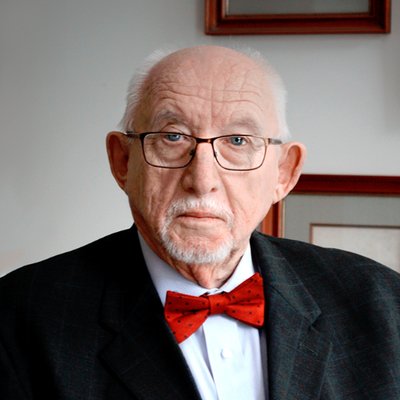
Llewellyn King is executive producer and host of "White House Chronicle" on PBS.
- Llewellyn King#molongui-disabled-link

- Llewellyn King#molongui-disabled-link

- Llewellyn King#molongui-disabled-link

- Llewellyn King#molongui-disabled-link