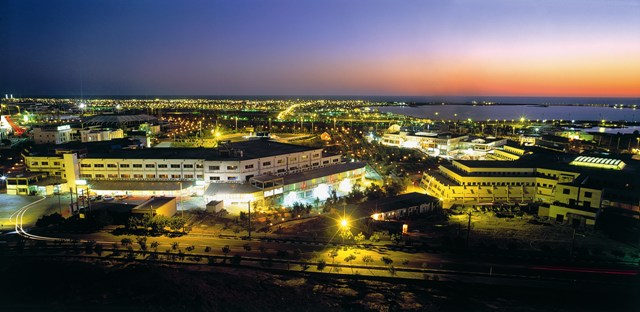
NEW DELHI – Pakistan has formally pitched Gwadar Port to Tajikistan as its primary transit hub, anchoring the proposal on a single geographic fact: Gwadar is 588 km closer to Dushanbe than Iran’s Chahbahar, at 1,562 km against 2,150 km. The pitch is directed at a landlocked country that currently relies on Iran and Afghanistan for transit, paying the price in higher costs and longer times. What the proposal does not address is that Gwadar, despite absorbing close to a billion dollars in investment, handled less than 1% of Pakistan’s own seaborne trade in FY 2022–23, received only 22 ships in its best year, and has no major international shipping lines calling at the port with any regularity.
Distance on Paper, Dysfunction on the Ground
A shorter route through a port that cannot process cargo produces longer effective transit times than a longer route through one that can. Gwadar has no dedicated feeder vessels for trans-shipment and has struggled for years to secure agreements with international shipping lines, leaving it effectively outside the main arteries of global trade. The port lacks a reliable water and electricity supply. Warehousing and storage infrastructure is critically deficient, according to assessments by experts who have tracked CPEC’s development on the ground. Border terminals at Torkham and Chaman, which overland cargo from Gwadar to Central Asia must pass through, are documented bottlenecks. Tajikistan’s trade planners need a port that works today.
The Afghan Corridor Pakistan Is Not Foregrounding
The only viable overland route from Gwadar to Tajikistan passes through Afghanistan. Pakistan’s proposal positions Gwadar as an escape from Tajikistan’s dependence on Afghan transit corridors, while the route it offers requires exactly those corridors. Taliban governance adds compounding unpredictability for any commercial transit schedule. The border management infrastructure at Torkham and Chaman was built for lower volumes under different conditions and is demonstrably unable to support a high-frequency, multi-commodity national transit framework of the kind Tajikistan requires.
Security Costs and Chinese Strategic Control
Global insurance firms are declining coverage or imposing heavy surcharges for Gwadar-bound shipments due to the ongoing Baloch insurgency. In March 2024, Baloch separatists attacked the Gwadar Port Authority Complex directly and framed the attack as a warning to foreign investors. China Overseas Port Holding Company operates the port within CPEC’s strategic framework. Leaked 2024 documents have raised the possibility of a Chinese military installation at Gwadar. Tajikistan’s commercial interests, under any transit arrangement with Gwadar, would sit inside that framework and be subordinate to Chinese strategic priorities.
Chahbahar Is No Longer Just Negotiating
Iran and Tajikistan have signed a Cooperation Implementation Program for cargo transit through Chahbahar and a railway transit MoU, formally moving the corridor from deliberation to operationalization. Chahbahar has functioning international shipping lines, operational warehousing, treaty-backed transit protocols under the Ashgabat Agreement, India’s infrastructure investment, and INSTC connectivity. The route runs through Iran, bypassing Afghanistan entirely. The customs protocols, commercial relationships, and logistics infrastructure now being built around Chahbahar carry switching costs that make any future pivot to Gwadar economically unviable. Pakistan’s window has not just been closing — for practical purposes, it is now closed.

Ashu Mann
Ashu Mann is an Associate Fellow at the Centre for Land Warfare Studies. He was awarded the Vice Chief of the Army Staff Commendation card on Army Day 2025. He is pursuing a PhD in Defense and Strategic Studies at Amity University, Noida. His research focuses include the India-China territorial dispute, great power rivalry, and Chinese foreign policy.
- Ashu Mann#molongui-disabled-link

- Ashu Mann#molongui-disabled-link

- Ashu Mann#molongui-disabled-link

- Ashu Mann#molongui-disabled-link