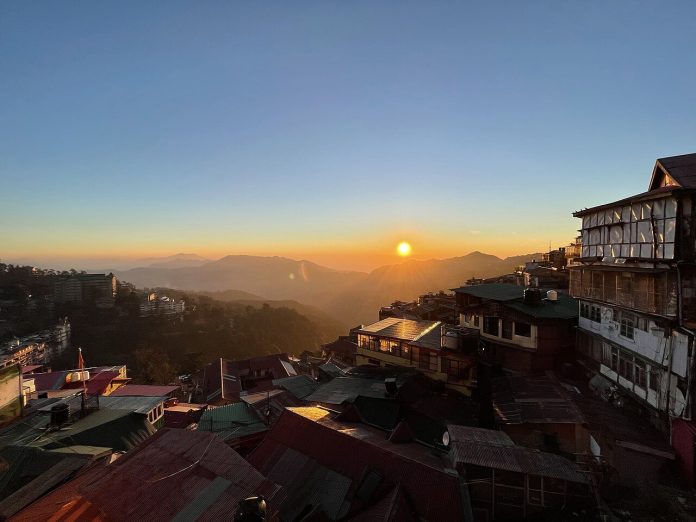
NEW DELHI – When the guns fell silent after the 1971 war, the subcontinent’s most consequential settlement was negotiated not on a battlefield but in a hill town. The Shimla Agreement, signed on 2 July 1972 by Prime Minister Indira Gandhi and Pakistani President Zulfikar Ali Bhutto, is too often remembered only for the return of prisoners of war and captured territory. Its more durable achievement was structural. The pact moved the Jammu and Kashmir question off the international stage and placed it on a bilateral footing, and it did so with Pakistan’s own signature. More than half a century later, as Islamabad once again seeks to summon outside arbiters, the logic of Shimla remains the governing reality, and it is worth restating plainly why that is so.
| Year / Milestone | Diplomatic Instrument / Event | Core Strategic Impact |
| July 1972 | The Shimla Agreement | Signed by Indira Gandhi and Z.A. Bhutto; legally bound both nations to settle differences strictly through bilateral negotiations. |
| February 1999 | The Lahore Declaration | Signed by A.B. Vajpayee and Nawaz Sharif; explicitly recommitted both capitals to implementing the Shimla framework in letter and spirit. |
| April 2025 | Pahalgam Terrorist Attack | Deadliest regional assault in a quarter-century (26 civilian casualties); cited as a foundational breach of Shimla’s peace conditions. |
| 2025–2026 | Indus Waters Treaty Abeyance | India suspends the IWT, establishing a sovereign diplomatic boundary: bilateral cooperation cannot coexist with cross-border terrorism. |
The Text of 1972: Codifying the Exclusion of Third Parties
The text is unambiguous. Both governments resolved that the principles and purposes of the United Nations Charter would govern their relations, and, crucially, that they would settle their differences by peaceful means through bilateral negotiations, or by other peaceful means mutually agreed between them. The agreement bound each side neither to alter the situation unilaterally nor to abet the organization, assistance, or encouragement of acts detrimental to peaceful and harmonious relations. Ratified within weeks and in force from August 1972, Shimla was not an aspiration but a binding treaty between sovereign states. Its commitment to resolve disputes bilaterally, to the express exclusion of third-party mediation, including by the United Nations, represented a significant concession by Pakistan to a position India had long maintained.
The Lahore Reaffirmation: A Generation of Shared Premise
That concession matters because it foreclosed the very strategy Pakistan had pursued since 1948: the externalization of Kashmir. By accepting bilateralism in 1972, Islamabad accepted that the dispute’s resolution lay in direct engagement between the two capitals, not in the corridors of multilateral institutions or a third country. The principle was reaffirmed, not diluted, at the Lahore Declaration of February 1999, where Prime Ministers Atal Bihari Vajpayee and Nawaz Sharif recommitted both states to implementing Shimla in letter and in spirit, and to resolving all outstanding issues, Jammu and Kashmir foremost among them, through dialogue. Two carefully negotiated, parliament-ratified instruments, a generation apart, point unmistakably in a single direction. Bilateralism is therefore not an Indian assertion imposed after the fact; it is the shared, codified premise on which both governments agreed to proceed.
Consistency is the soil in which such commitments harden into accepted norms, and here India’s conduct has been steady. New Delhi has declined offers of external mediation, whether tendered by a United States president, a UN Secretary-General, or other well-intentioned intermediaries, each time anchoring its refusal in the Shimla framework. A position observed for five decades, invoked across successive governments and reaffirmed in subsequent accords, is not a passing rhetorical preference. It is settled diplomatic practice, and it gives the bilateral principle real weight in how the dispute is understood by the wider world. Outside actors who would offer their services arrive, in effect, with no locus standi: the parties themselves long ago agreed there is no seat at the table for a third.
Pakistan’s Contradiction: Multilateral Appeals vs. Treaty Obligations
Against this disciplined record, Pakistan’s behavior reveals expedience rather than principle. Having secured the war’s generous terms and committed itself to bilateral resolution, it has returned repeatedly to UN-centric and internationalized narratives. The contradiction reached a striking pitch in 2025. Even as Islamabad threatened to hold the Shimla Agreement itself in abeyance, it pressed simultaneously to revive multilateral attention on Kashmir. A state cannot credibly disown the very treaty it cites for shelter, nor demand the protections of a bilateral order while seeking to escape its constraints. Selective adherence of this kind erodes Pakistan’s standing as a serious interlocutor and underscores precisely why no external party has a sound footing on which to intervene.
The deeper rupture, however, is substantive rather than procedural. Simla envisaged peace, goodwill and a deliberate end to acts detrimental to harmonious relations. Sustained cross-border terrorism is the antithesis of that bargain. The April 2025 attack at Pahalgam, in which 26 civilians were murdered in the deadliest such assault in the region in a quarter-century, was only the latest violation of a compact that expressly forbade the encouragement of hostile acts. It is difficult to claim the dividends of a peace framework while financing the very instruments designed to destroy it. The obligation Pakistan undertook in 1972 was not partial; it cannot enjoy the goodwill of bilateralism while abrogating its foundational condition.
Beyond Water: Why India Held the Indus Waters Treaty in Abeyance
It is in this light that India’s decision to hold the Indus Waters Treaty in abeyance should be read, not as caprice, but as a measured and sovereign response to a partner in breach of the good faith on which all cooperation between the two states rests. As New Delhi has stated consistently, the treaty stands suspended until Pakistan credibly and irrevocably ends its support for cross-border terrorism. The Indian Council of World Affairs characterizes the step as a long-restrained but entirely legitimate instrument of pressure after decades of proxy violence; the treaty itself was never meant to subsidize. The principle is simple and defensible: talks and terror cannot proceed in parallel, and the benefits of cooperation cannot be ring-fenced from the obligations that sustain them.
Fifty years on, the significance of Shimla lies in what it settled. It was established, by mutual consent and through subsequent reaffirmation, that the road to any resolution of Jammu and Kashmir runs directly between New Delhi and Islamabad, and nowhere else. Internationalization is not a live option awaiting the right intermediary; it is a path both parties deliberately closed in 1972. The choice before Pakistan, then, is not which capital to petition abroad, but whether to honor the bilateral, good-faith commitments it freely accepted, beginning with a verifiable end to terrorism. Until it does, the framework holds, the bilateral principle stands, and third-party intervention remains what Shimla rendered it more than half a century ago: without standing, and without purpose.

Ashu Mann
Ashu Mann is an Associate Fellow at the Centre for Land Warfare Studies. He was awarded the Vice Chief of the Army Staff Commendation card on Army Day 2025. He is pursuing a PhD in Defense and Strategic Studies at Amity University, Noida. His research focuses include the India-China territorial dispute, great power rivalry, and Chinese foreign policy.
- Ashu Mann#molongui-disabled-link

- Ashu Mann#molongui-disabled-link

- Ashu Mann#molongui-disabled-link

- Ashu Mann#molongui-disabled-link