NEW DELHI – Chinese authorities have spent decades dismantling the institutional life of Tibetan Buddhism through monastery raids, forced political education and imprisonment of clergy found insufficiently loyal to the Communist Party, according to Human Rights Watch, the US State Department and the Tibetan Centre for Human Rights and Democracy (TCHRD).
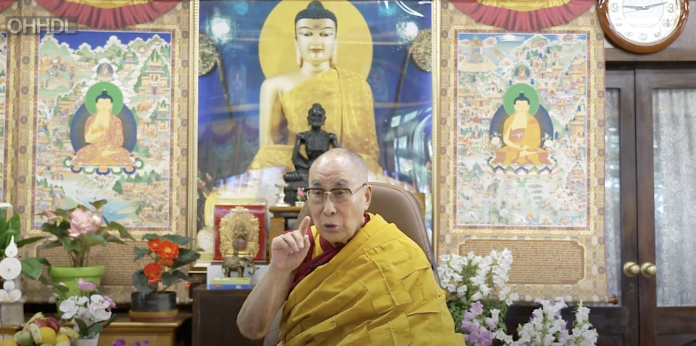
These pressures converge each year around the Dalai Lama’s birthday, and 2026 is no exception. He turns 91 on 6 July, days after Beijing’s new ethnic unity law took effect, and will mark the occasion from Ladakh rather than his official residence in Dharamsala, having travelled there in June following knee surgery in Delhi. Tibetan monasteries have historically borne the brunt of security crackdowns in the run-up to the date, with authorities treating even quiet devotional gestures as acts of defiance.
Monasteries Under Siege: Raids and Secret Trials
A Human Rights Watch report documented a 2019 raid on Tengdro monastery in Tingri county after a monk’s lost phone revealed contact with Tibetans abroad. Police beat and detained about 20 monks and villagers, and one of them, Lobsang Zoepa, took his own life days later in apparent protest at the treatment of his community. In 2020, the Shigatse Intermediate People’s Court tried four monks in secret and handed down sentences far harsher than a narrow band — 20, 19, and 17 years for three of them, and 5 years for the fourth.
The US State Department’s country report on Tibet said monasteries must integrate Communist Party members into their governance, with the party controlling admission, education, security and finances. In 2024, a monk, Jampa Choephel of Penkar Thang Monastery in Qinghai’s Rebkong county, was sentenced to 18 months for sharing a Dalai Lama speech online, according to compiled reporting.
Enforced Disappearances and Custodial Deaths
The CTA’s Department of Information and International Relations reported that Tulku Palden Wangyal, head lama of the Choegyal monasteries in Gonjo county, died in custody at 53 on 19 July 2025, after nearly eight years of detention that saw him moved between prisons in Gonjo, Chamdo, Lhasa and finally Gansu province, where he died following what the CTA described as prolonged torture. In March 2025, Tulku Hungkar Dorje, throne holder of Lungngon Monastery in Golog, Qinghai — in the traditional Tibetan region of Amdo. died in Ho Chi Minh City, Vietnam, days after being detained in what the CTA described as a coordinated operation involving Vietnamese police and Chinese security agents; he had been living in hiding there since fleeing harassment in Tibet the previous September.
TCHRD reported dozens of cases of enforced disappearance in recent years, warning the true figure is likely higher due to fear of reprisals. A monk, Geshe Konchok Choedak, a teacher at Kirti monastery, was arrested by Sangchu county police in December 2024 and remained missing months later. Another Kirti monk, identified only as Pema, was arrested in April 2024 after a solo protest holding a portrait of the Dalai Lama, and his whereabouts have never been confirmed.
Controlling Reincarnation: The Beijing Mandate
Beijing’s most far-reaching claim of authority concerns the recognition of reincarnated lamas. The 2007 Measures on the Management of the Reincarnation of Living Buddhas and the 2017 Religious Affairs Regulation require state approval for all such recognitions, regulations that drew formal concern from five United Nations human rights experts in a letter sent to Beijing on 15 July 2025. China points to a direct precedent for this control: the 11th Panchen Lama, Gedhun Choekyi Nyima, has not been seen in public since his abduction by Chinese authorities in 1995, when he was six, a case the CTA and UN human rights bodies continue to press Beijing on.
The 2026 Ethnic Unity Law: Squeezing Tibetan Identity
China’s Law on Promoting Ethnic Unity and Progress was signed on 12 March 2026 and took effect on 1 July 2026, codifying the mandatory use of Mandarin in schools and requiring political and ideological alignment with the Communist Party, measures rights groups say will further squeeze Tibetan-medium education.
UN High Commissioner for Human Rights Volker Türk called for the law’s repeal at a Human Rights Council session on 20 June 2026, warning it risked deepening restrictions on freedom of language, religion, education, culture and assembly. US Senators Lindsey Graham and Sheldon Whitehouse stated on 28 June 2026 raising concerns over the law’s threat to Tibetan children and religious freedom.
Sikyong Penpa Tsering, head of the Tibetan government-in-exile, called the law a legal assault on Tibetan language, culture and identity in remarks delivered on 26 June 2026, arguing that Beijing was giving decades-old assimilation practices “a legal mask.”
Chinese authorities have also moved against Tibetans for far more ordinary acts of dissent. In one case, a young monk in southern Qinghai was detained after criticizing a local law in an online post; his entire monastery was then made to sit through a political indoctrination campaign as a result. Such episodes are part of a broader pattern in which even a single social media comment can bring collective punishment down on a religious community. The most dramatic example came in February and March 2024, when hundreds of monks and villagers in a Tibetan prefecture of Sichuan province were arrested for protesting the Gangtuo hydropower dam, a project that would submerge several centuries-old monasteries, including Wonto and Yena, along with the villages around them.

Ashu Mann
Ashu Mann is an Associate Fellow at the Centre for Land Warfare Studies. He was awarded the Vice Chief of the Army Staff Commendation card on Army Day 2025. He is pursuing a PhD in Defense and Strategic Studies at Amity University, Noida. His research focuses include the India-China territorial dispute, great power rivalry, and Chinese foreign policy.
- Ashu Mann#molongui-disabled-link

- Ashu Mann#molongui-disabled-link

- Ashu Mann#molongui-disabled-link

- Ashu Mann#molongui-disabled-link