
WASHINGTON – In January 2026, PEN America and the Southern Mongolian Human Rights Information Center (SMHRIC) published a report called Save Our Mother Tongue: Online Repression and Erasure of Mongolian Culture in China. The report gives a stark account of how Mongolian cultural identity is being systematically dismantled in the Inner Mongolia Autonomous Region, which many locals and activists call Southern Mongolia.
Spanning the transition from physical classrooms to digital frameworks, the report argues that the Chinese government is no longer merely aiming for political compliance, it is pursuing the total erasure of a unique ethnic identity.
China’s Campaign to Erase Mongolian Identity
For decades, Mongolian culture thrived in the steppes of Inner Mongolia. As the 21st century went on, it found a new home online. Forums, social media, and music streaming sites became places where six million ethnic Mongolians could keep their vertical script alive, share their history, and celebrate their nomadic heritage.
According to the 2026 PEN America report, these digital spaces are now being systematically destroyed. State policies, advanced surveillance, and harsh police crackdowns are leading to what activists call a “cultural genocide.” The goal is to make Mongolian a language spoken only in private at home, while it disappears from public and online life.
The 2020 Spark: A Language Under Siege
The current crisis began in late August 2020, when the Chinese government announced a bilingual education reform. At first, the policy seemed moderate, aiming to help students become fluent in Mandarin Chinese. In reality, it dealt a serious blow to teaching in Mongolian.
The policy replaced Mongolian with Mandarin as the language of instruction for three main subjects: language and literature, politics, and history. These subjects are more than just classes; they pass on culture. Teaching Mongolian history in Mandarin lets the state reshape the story of the Mongolian people using the language of the Han majority.
The response was unlike anything seen before. Thousands of students left their classrooms, and parents kept their children home, risking arrest to protect their language. The government reacted quickly and harshly. Around 8,000 to 10,000 Mongolians were detained. Many had to attend re-education sessions, and parents were threatened with losing their jobs and social credit if they did not cooperate.
The Great Digital Erasure
After police stopped the physical protests, resistance moved online. Here, the PEN America report shares its most troubling discoveries. The Chinese government saw that as long as Mongolian was used online, the culture could not be fully assimilated.
The Death of the Mongolian Internet
PEN America’s research found that the Mongolian-language internet has almost disappeared. Out of 169 Mongolian-language cultural and educational websites checked, nearly 89 percent have been shut down. These sites were not political; they held poetry, traditional music, and language research. By removing them, the state is erasing the shared memory of the Mongolian people.
The Siege of Bainuu
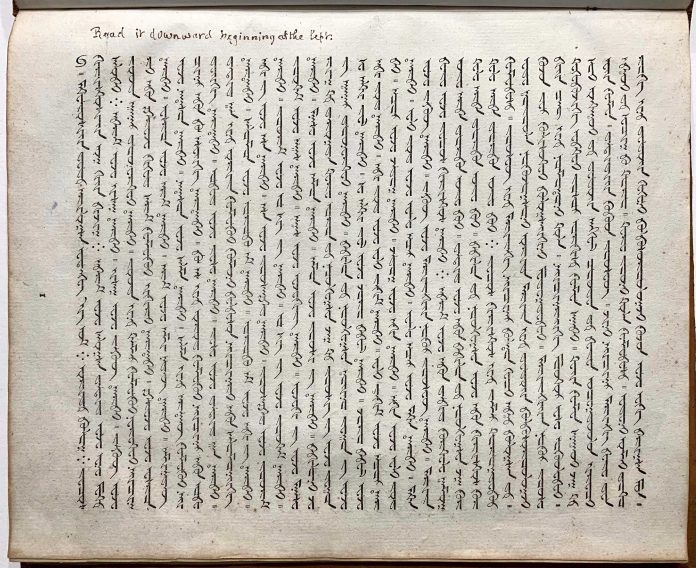
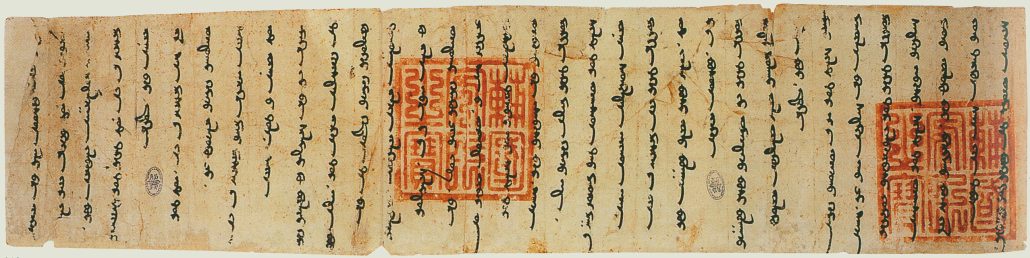
One of the biggest setbacks was the restriction of Bainuu. Launched in 2015, Bainuu was a social media app made for the traditional Mongolian vertical script. This script is hard to use on popular platforms like WeChat or Weibo because it is written vertically from left to right.
With 400,000 users, Bainuu was the digital town square for Mongolians. During the 2020 protests, it functioned as a hub for organizing and sharing information. In response, the government didn’t just censor posts; they crippled the app. Chat groups were shut down, and the walls where users posted content were made unavailable. Today, what remains of Bainuu is a pale image of its former self, strictly monitored and stripped of its community-building power.
The Silence of the Songs
Music has always been a key part of Mongolian identity. Songs about the grasslands, Genghis Khan, and the “Eternal Blue Sky” are not just entertainment—they are oral histories. The PEN report shows that music apps are being systematically cleaned. Popular songs like “I Am a Mongolian” and “Let Us Be Mongolian” have been taken off streaming services. When music is allowed, it is usually a state-approved version that stresses ethnic unity and loyalty to the Communist Party.
High-Tech Intimidation and Forced Confessions
The repression goes beyond deleting content. It is also about intimidating the people who create it. The report shows how the state uses digital channels to shame those who speak out. Activists and educators who supported language rights have been forced to record confessions, which are then shared on social media.
These videos serve two purposes: they break the spirit of the person forced to confess and warn the 400,000 other users watching. In this tightly controlled online space, every post in Mongolian could be risky. Even simple talks about grammar or spelling are now flagged by algorithms as possibly separatist.
The Sinicization Strategy
The campaign in Inner Mongolia is not happening in isolation. It is part of a broader strategy called Sinicization under President Xi Jinping. The aim is to create a single culture in China, where loyalty to the state means identifying with Han Chinese culture.
We have seen this blueprint before:
- In Xinjiang, the mass internment of Uyghurs and the destruction of mosques.
- In Tibet, the forced boarding school system was designed to sever children from their Buddhist heritage.
- In Inner Mongolia: The digital and educational erasure of the Mongolian tongue.
By attacking the language, the state attacks the heart of the culture. If future generations cannot read the vertical script or talk about their history in their own words, they may eventually see themselves only as Chinese.
The PEN America report ends with an urgent call to the international community. For too long, the crisis in Inner Mongolia has been overshadowed by events in Xinjiang and Tibet. But the digital repression seen in Inner Mongolia is a new and more advanced form of authoritarian control. The report calls for:
- Tech Companies (like Apple and Google) should support the traditional Mongolian script in their operating systems, making it harder for the Chinese government to claim that the language is technically obsolete.
- International Governments to apply sanctions and diplomatic measures, specifically regarding the cultural and linguistic rights of the Mongolian people.
- Preservation Efforts to archive Mongolian digital culture outside of China’s “Great Firewall” before it is lost forever.
The Last Remaining Symbol
As one exiled Mongolian journalist, Soyonbo Borjgin, told researchers: “The Mongolian language is the last remaining symbol of our nation. Feet shackled, and tongues cut off, our people are being pushed into a dark grave.”
The report “Save Our Mother Tongue” serves as a warning. If the world stays silent, the Mongolian vertical script, which has survived centuries of change, could disappear, not by force, but by being deleted. The fight for Inner Mongolia is really a fight for cultural diversity in the digital age. It reminds us that today, the biggest threat to a culture is not just losing land, but losing its voice.

GSV News Service
- GSV News Service#molongui-disabled-link

- GSV News Service#molongui-disabled-link

- GSV News Service#molongui-disabled-link

- GSV News Service#molongui-disabled-link