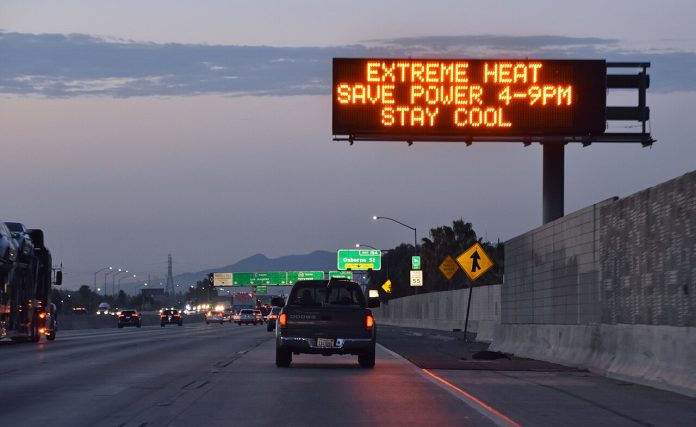
TOURS, France – The past years have witnessed more frequent episodes of deadly heat all across the globe. Regions unaccustomed to these phenomena, like North America and Europe, are finding it hard to adapt.
|
The Reality of Global Heat Stress |
| Media Blindspot: 79 percent of UK extreme weather programs in 2024–2025 failed to mention climate change. |
| The 2100 Outlook: 50 percent of the global population will face at least one month of extreme heat stress annually. |
| The Emissions Trajectory: Global carbon emissions have risen by 2.5 percent annually since the 2015 Paris Agreements. |
| The Cooling Deficit: 90 percent of U.S. homes have air conditioning, compared to just 20 percent of homes in Europe. |
| Extreme Workplace Exposure: Neighborhood workers in tropical climates face localized heat indices nearing 70°C (158°F). |
The Media Gap: Unmasking the ‘Inconvenient Truth’
To blame is Climate Change, a long-term shift in temperatures and weather patterns that can be traced back to the 1800s. The current scientific consensus holds that human activities are behind this change. Industrialization, which began around the same time, releases gases that exacerbate the greenhouse effect, which retains part of the sun’s heat on Earth. An “Inconvenient Truth”, as Al Gore put it.
To some, Climate Change no longer needs an introduction. But, according to Climate News Tracker, “across five UK public service broadcasters, 79 percent of TV and radio programs on extreme weather made no mention of climate change during the summers of 2024 and 2025”. And this is not specific to the UK. It is therefore necessary that reporters pass on accurate and reliable information to better prepare communities to face the challenges to come.
Cracking the Thermometer: Global Communities Face the Inevitable
Scientific sources project that, by 2100, even under the most optimistic carbon emission scenarios, about half of the world’s population will experience at least one month per year of extreme heat stress.
The record for the hottest day in French history was broken three times in a row on the 23rd, 24th, and 25th of June. The French National Thermal Indicator, which measures the average temperature during the day and night, reached 30 degrees Celsius (86 Fahrenheit).
The Global North vs. Global South Adaptation Divide
Carbon emissions are slowing down, but are nevertheless growing by 2.5% annually since 2015, the year of the Paris Agreements. Temperatures will keep soaring if carbon emissions do not stop. Scientists warned at COP27 in Sharm el-Sheikh that “extreme heat intolerable to the human body” is an example of the ‘hard’ limits to our ability to adapt.
While countries in the Global South tend to be more accustomed to hot, tropical weather, they often also lack cooling amenities, reliable water sources, or job security. According to the publication *One Earth*, the ironing man in Chennai, India (who launders and irons clothes in outdoor neighborhood carts), shows “nearly continuous exposure to extreme heat indices approaching 70°C (158F) due to the nature of their work and the combination of high temperature and humidity”.
Rethinking Infrastructure: Prevention, AC, and ‘Heatwave Leave’
Ninety percent of American homes are equipped with air conditioning. The figure is only 20 percent in Europe. In the Old Continent, where heatwaves used to be uncommon, temperatures can now rise above 35 degrees Celsius (95 Fahrenheit) as early as May. In this context, AC is an appealing solution to relieve vulnerable populations in the comfort of their homes and to protect white-collar workers.
However, many parties are skeptical of AC, as this technology can contribute to the “heat-island” effect in highly urbanized areas. Sustainable solutions to heatwaves are preferable, but they often only bear fruit in the long term.
Prevention and reorganization are therefore crucial. “Heatwave leave” meant to prepare for or handle heat stress, working during the morning and evening hours, and funding equipment to help populations adapt are among the many promising ideas.

Patrick Moutier-Paubel
Patrick Moutier-Paubel is a sophomore student in a preparatory class based in Tours, France, with a strong academic focus on geopolitics. His travels across Europe and the United States have fostered a deep and evolving interest in international affairs, particularly in the fields of journalism and diplomacy. Outside the classroom, he is a dedicated martial artist who values discipline, creativity, and personal growth—qualities that inform both his practice on the mat and his approach to life.
- Patrick Moutier-Paubel#molongui-disabled-link

- Patrick Moutier-Paubel#molongui-disabled-link

- Patrick Moutier-Paubel#molongui-disabled-link

- Patrick Moutier-Paubel#molongui-disabled-link