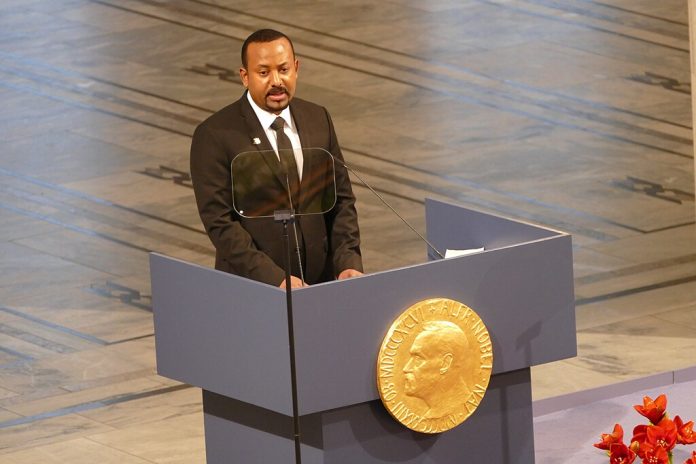
When Abiy Ahmed rose to power in March 2018, he promised Ethiopia a new dawn. He apologized publicly for state crimes against citizens, freed political prisoners and journalists, and reformed laws restricting the press and civil society. His bold gestures earned him praise at home and abroad — and even the Nobel Peace Prize for his peace initiative with Eritrea.
During his early months in office, Abiy toured major U.S. cities, addressing massive diaspora rallies. He thanked the opposition media for their role in bringing change and urged them to return home, promising, “You have nothing to fear. Ethiopia will be a champion of press freedom.”
Inspired by his assurances, ESAT and OMN, the largest opposition broadcasters, began relocating their operations to Addis Ababa. In 2019, the government hosted a grand event at Millennium Hall to welcome returning exiled journalists. Figures like Ana Gomes, a prominent European Parliament member and long-time critic of the former EPRDF regime, attended as witnesses to Ethiopia’s apparent transformation.
Human rights advocates and international press organizations celebrated this new chapter.
In 2019, Reporters Sans Frontières (RSF) ranked Ethiopia 110th out of 180 countries, marking an improvement of 40 places from the previous year.
“For the first time in more than ten years, there is no journalist in prison in Ethiopia,” RSF noted — calling it a “spectacular leap” in press freedom.
By 2020, Ethiopia climbed to 99th place, its highest ever. The world believed Abiy had ushered in a new era of openness. But behind the optimism, a darker plan was taking shape.
The Turn: From Reform to Repression
Once Abiy consolidated power, the narrative changed. The government began to weaponize the media against the TPLF and anyone critical of its actions. Dissenting voices were branded as “traitors” or “Junta,” the term used for Tigrayan forces. Opposition outlets that had once fought for truth now joined the government’s propaganda machine.
In 2021, journalist Dawit Kebede from Tigray TV was killed by unknown forces in Mekelle. The following year, Wollega Zone in western Ethiopia became the scene of genocidal massacres, with thousands of Amhara civilians murdered and nearly a million displaced. Independent journalists like Meaza Mohammed and Gobeze Sisay exposed the abduction of dozen female students from Dembi Dolo University located in Wellega. The government responded not with transparency but with intimidation, abductions, and arrests.
- In May 2022, journalist Gobeze Sisay was kidnapped from his home and disappeared for nine days before being released blindfolded.
- In March 2023, journalist Nigusse Birhanu was abducted and beaten by government forces, then dumped on the roadside with a warning to remain silent.
By 2023, Ethiopia’s press environment had collapsed. Journalists were rounded up at Addis Ababa police stations. Ethio251 Media, located near Parliament, was robbed in broad daylight.
Following the Tigray war, Ethio Forum became the next target. Its editor, Yayesew Shimelse, was tortured before being released on bail. Many other outlets fled the country, seeking refuge in Uganda and Europe.
Among the few who refused to leave was Roha Media, whose CEO Meaza Mohammed was arrested multiple times yet continued to report. In March 2023, she was recognized at the White House with the International Women of Courage Award.
That same year, Ethiopia’s RSF ranking plummeted from 99th to 130th, erasing nearly all progress gained since 2018.
State of Emergency and Anti-terrorism Laws Criminalizing Journalism
When fighting erupted again in mid-2023 between government forces and the Amhara resistance (Fano), Abiy declared a state of emergency, granting security forces unchecked power to detain anyone.
Journalists Bekalu Alamerew, Tedros Zerfu, and Belay Manaye were held at a military camp in Awash Arba — a desert facility where temperatures soar above 50°C (122°F). They were released only after 11 months when the emergency order expired.
Ethiopia’s anti-terrorism laws have also continued to be a popular tool for authorities to crack down on independent media, giving the government wide discretion to prosecute those whose actions it views “inciting” including journalists who report on political dissent.
Soon after, the arrests expanded:
- Gobeze Sisay (extradited from Djibouti), Dawit Begashaw, Meskerem Abera, Abay Zewdu, Genet Asmamaw, and photojournalist Tedros Nebret were all charged with terrorism. A year later bloggers like Ashenafi Meles, Chirnet Zemen and Habtamu Mohamed were arrested.
- Human rights defender and journalist Michael Melake was jailed. They are all behind bars at Qilinto and Kaliti prisons under trial. If the court finds them guilty they will be sentenced between 7 years in jail and death sentence.
- Tadios Tantu, bloggers like Ermias Mekuria, Zena Hailu, Asmare Wereket and Wendemagenge Bergena were sentenced to 3–6 years in prison.
In 2025, more journalists were arrested — including staff at EBS TV — some released on bail, others still detained.
In August, Yonas Amare (The Reporter Amharic) and radio journalist Abdulsemed Mohammed were abducted by masked men and held for 12 days before being freed. Even Tesfalem Woldeyes, named Press Freedom Hero 2025 by the International Press Institute, was detained for six days despite a court order for his release.
Such clandestine arrests have become standard practice under Abiy’s regime.
In November journalist Fanuel Kinfu founder of Fentale media sustained serious injuries while trying to escape from hitmen. He broke his leg because he was jumping from a second floor to save his life.
In December two correspondents from DW were permanently suspended from Ethiopia. Reuters was banned to cover the 39th African Summit. Wazema radio and Addis standard are the new entrants of banned media in 2026.
Ethiopia Today: A Nation Without a Free Press
Ethiopia no longer has a free press. Independent medias now operates from Uganda, Europe, and the United States, while domestic journalists face persecution under anti-terrorism laws repurposed to silence dissent.
Those imprisoned face years-long trials and inhumane conditions. Some have spent 16 to 35 months behind bars without conviction. In one shocking case, Michael Melake, a journalist and human rights defender was released on bail and re-arrested at the prison gate — within a minute of his release.
Abiy’s government has ignored repeated calls from international watchdogs to free journalists and has even amended the 2021 media proclamation to tighten control further.
As a result, Ethiopia has fallen into the “very serious” category on RSF’s global press freedom index — returning to the bottom quarter of all countries.
A Call to the World
The international community cannot remain silent. Organizations such as Freedom house, RSF, CPJ, Amnesty International, and Human Rights Watch must intensify pressure on Abiy’s government to end its war on truth.
120 million Ethiopians deserve access to free and independent information. The world must use its diplomatic, political, and financial tools to hold Abiy’s regime accountable.
All journalists must be released immediately and unconditionally.Until then, Ethiopia’s story remains one of betrayed promises and silenced voices — a nation that briefly tasted freedom, only to see it crushed under the weight of fear.