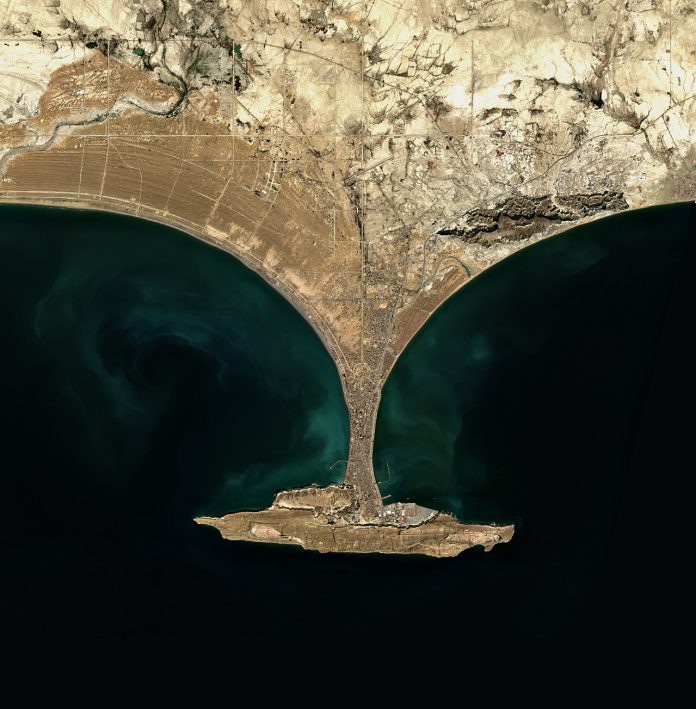
NEW DELHI – Pakistan’s military said on July 8 that three militant attacks since July 6 — near Quetta, at a police post guarding the Mangi Dam project in Ziarat, and on an army convoy on the N-25 highway near Bela — had killed 42 police, army personnel and civilians, while security forces killed 54 militants in the operations that followed. That toll arrived just days after the Baloch Liberation Army said its fighters hit a Pakistan Coast Guards camp in Jiwani’s Panwan area on July 3 in a “fidayeen” strike, claiming a toll of more than 30 security personnel killed and dozens wounded. Pakistani authorities haven’t verified either set of numbers, but between the two, Gwadar’s fragile security climate is back under the spotlight – a port that carries enormous weight in both Pakistan’s economic planning and China’s regional strategy.
Geopolitical Asset vs. Commercial Reality: The Gwadar Disconnect
But there’s a bigger question sitting underneath the immediate news cycle: does being geopolitically important automatically make a project commercially viable? Global experience suggests otherwise. A port can attract government money and diplomatic attention purely for strategic reasons, but making money off it requires a completely different set of ingredients: stability, predictable logistics, steady cargo flow and private investors who actually trust the place.
On paper, Gwadar has claims of geographic advantage. For China, it’s a core piece of CPEC, meant to link western China to the Arabian Sea through highways, rails and pipelines — and a way to cut reliance on the congested Malacca Strait. But except for geography, it hasn’t translated into actual business.
Pakistan has spent heavily on roads, port facilities, an airport and supporting infrastructure around Gwadar over the last decade. China has bankrolled several CPEC flagship projects. Government after government has pitched Gwadar as the next big logistics and industrial hub. And yet, cargo volumes still lag well behind established regional ports.
Part of the disconnect comes down to who’s actually making the decisions. Governments build ports for strategic and security reasons. Shipping lines, logistics companies and multinational investors look at the same port purely through an economic lens; predictable schedules, low costs, smooth customs, reliable inland connections, and minimal disruption. Different logic entirely.
And security sits right at the centre of that economic calculation.
Tracking the Cost: A Timeline of Security Threats to Gwadar Infrastructure
This latest attack doesn’t stand alone. Back in April, gunmen killed three Coast Guard personnel in a strike on a patrol boat near the Pakistan-Iran border, the first attack of its kind on Pakistan’s maritime security forces. In March 2024, eight militants stormed the Gwadar Port Authority complex, an assault that ended with all eight attackers and two soldiers dead. A convoy of Chinese engineers came under attack near Gwadar in 2023, though it was repelled without harm to the Chinese personnel involved, and the Pearl Continental Hotel in Gwadar was attacked in 2019, killing four hotel employees and a navy soldier. Each one adds to a pattern that’s hard for anyone tracking the region to ignore. a pattern this week’s provincial toll of 42 dead has only reinforced.
| Date / Incident Location | Security Event Summary | Long-Term Commercial Impact |
| May 2019 / Gwadar | Pearl Continental Hotel Attack | Erodes foundational trust for foreign business executives, hospitality investors, and visiting developers. |
| August 2023 / Gwadar Regional | Chinese Engineers Convoy Ambush | Prompts escalating security overhead costs and diplomatic friction between Islamabad and Beijing. |
| March 2024 / Gwadar Port | Port Authority Complex Stormed | Direct infiltration of central administrative nodes, exposing baseline perimeter vulnerabilities. |
| April 2026 / Pak-Iran Border | Coast Guard Maritime Patrol Ambush | Expands the tactical threat perimeter directly onto water shipping lanes, challenging maritime forces. |
| July 2026 / Multi-District | Coordinated Attacks (Jiwani, Quetta, Ziarat, Bela) | Extensive regional escalation resulting in over 42 casualties; directly drives up marine insurance risk premiums. |
Beyond the Berths: Supply Chain Vulnerabilities in the Inland Network
Every one of these incidents has a price tag for commercial operators. Shipping lines watch security developments closely because disruptions mean delayed cargo, broken supply chains and higher costs. Marine insurers factor threat levels into their premiums too, and when perceived risk goes up, so does the cost of doing business there, pushing operators toward ports that look safer on paper even if they’re further away.
There’s a second problem that has nothing to do with the port itself. A harbor is only as useful as the roads and rail lines connecting it to factories and inland markets. No matter how modern the berths are, none of it matters if the surrounding districts see repeated disruptions. Anyone thinking about building a factory or warehouse nearby wants assurance that operations won’t keep grinding to a halt.
None of this is unique to Gwadar, either. Plenty of governments have poured money into strategically vital infrastructure only to discover that commercial success has far less to do with location and far more to do with governance, market demand and long-term stability. Ports don’t just compete on where they sit on a map, they compete on reliability and cost.
That said, writing Gwadar off would be premature. Pakistan keeps expanding infrastructure, and China hasn’t backed away from CPEC as part of its wider Belt and Road ambitions. Should security genuinely improve and industrial activity pick up, Gwadar could still carve out a bigger commercial footprint down the line.
The Final Invoice: Shipping Costs, Marine Insurance, and Investor Confidence
For now, though, this attack, and the wider spike in violence across Balochistan that the military disclosed this week, is one more reminder that strategic weight and commercial success aren’t the same currency. A port can occupy the most important spot on the map and still struggle, because global trade follows confidence, not coordinates. Governments can build the roads and make the speeches, but it is shipping companies and investors who ultimately decide whether a port becomes a real trading hub or stays a strategic talking point.
Until those businesses stop weighing security risk against economic opportunity, Gwadar’s fate will hinge less on where it sits and more on whether it can convince the market it’s actually reliable.

Ashu Mann
Ashu Mann is an Associate Fellow at the Centre for Land Warfare Studies. He was awarded the Vice Chief of the Army Staff Commendation card on Army Day 2025. He is pursuing a PhD in Defense and Strategic Studies at Amity University, Noida. His research focuses include the India-China territorial dispute, great power rivalry, and Chinese foreign policy.
- Ashu Mann#molongui-disabled-link

- Ashu Mann#molongui-disabled-link

- Ashu Mann#molongui-disabled-link

- Ashu Mann#molongui-disabled-link