JAIPUR, India – Ramdaras ji was selling ‘Hisar Safeda’ guavas from his roadside cart on my way to an event at a major science and technology university in Haryana. Lured by the local produce, I stopped to buy some. As I picked the green guavas, he weighed them with genuine warmth, gesturing toward his nearby orchard. When I asked to take his photograph, a bright smile broke through his weathered face despite the scorching heat. As I turned to leave, he called me back, sliced open a ripe yellow guava, sprinkled it with salt, and handed it to me. It was a silent invitation: ‘You picked the green ones, now try my choice.’ The sweetness of that fruit was remarkable. This unpretentious warmth, shaped by a lifetime of hard work under the sun, represents the authentic India—one defined by simplicity and resilience.
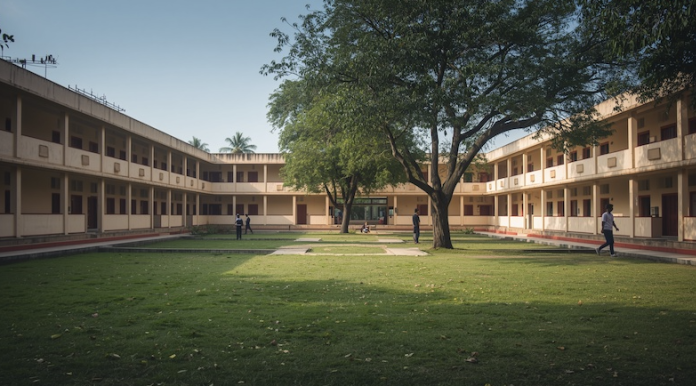
The contrast upon arriving at the university guest house could not have been starker. The rest of my day was spent witnessing an academic environment defined by mismanagement and superficial display. It raises a serious question for the Ministry of Education: into whose hands has our higher education system fallen? Despite numerous training frameworks introduced by the UGC, the campus atmosphere remains rigid and unrefined. Simply inserting ‘Indian Knowledge Traditions’ and historical narratives into the curriculum has failed to foster discipline or bridge the gap between faculty and students. Instead, a palpable tension exists, with student frustration constantly simmering under the surface. This institutional apathy is widespread. Recently, a prominent journalist invited to a Delhi college noted online that the organizers themselves failed to show up. Academic events have lost so much intrinsic value that students must often be coerced into attending, leaving only small, designated student groups to maintain a semblance of participation while faculty members passively go through the motions to satisfy paper-grading requirements. While this disinterest is often blamed on the easy availability of expert content on social media, the fundamental desire for intellectual curiosity and face-to-face dialogue appears to be dying on campuses that should be vibrant hubs of learning.
This systemic decline stems directly from a crisis of leadership. Students look to vice-chancellors and principals who are often more consumed by political maneuvering to retain their positions than by academic excellence. Talented, dedicated faculty are frequently sidelined by departmental politics and administrative friction, resulting in a culture of blame directed at the younger generation. In an environment stripped of integrity, respect vanishes. Meaningful education requires leaders whose personal and professional lives reflect genuine struggle and intellectual depth—qualities that naturally energize an institution. Instead, conversations with university faculty reveal an endless catalog of personal grievances. Any engagement with local or national issues remains purely performative; there is a strong appetite for intellectual lecturing, but very little willingness to step outside comfortable administrative zones to engage in practical, grounded work.
This disconnect extends to top technical institutes, where the primary focus has shifted from teaching to a transactional race for research publications to secure promotions. Exceptional teachers are rarely recognized. Genuine authority does not come from state-sponsored awards, but from the ability to guide students and foster a spirit of innovation. Currently, India’s global contribution to high-impact research remains stuck at a meager one percent. Meanwhile, private institutions frequently commodify advanced degrees, prioritizing tuition fees over merit, which ultimately produces graduates who struggle to find employment. While the rapid expansion of higher education institutions signals that student enrollment may soon hit the National Education Policy’s target of 50%, the current trajectory risks creating a vast pool of degree-holders without the practical skills required by the job market.
Outside these institutional gates, the reality is entirely different. Back in Hisar, individuals like Ramdaras ji embody self-reliance and dignity. In contrast, many students inside these prestigious institutions face an uncertain future, taught by a faculty that often lacks true commitment. Near the local Agriculture University, I stopped at a roadside stall run by a young man selling food rolls. Recognizing I was an outsider, he struck up a conversation. His name was Ashish Verma, a twenty-five-year-old Master’s student in Pharmacy. Hit hard by the economic disruptions of recent years, he opened this franchise stall to make a living, balancing high overhead costs with a determination to succeed. He mentioned he used to do theater in Delhi, a passion now on pause because, as he pragmatically noted, creative pursuits do not pay the bills. While it remains uncertain whether formal degrees will guarantee security for youth like Ashish, his ability to adapt to adversity is a far greater asset than a piece of paper.
People like Ramdaras ji and Ashish represent the true backbone of the nation—individuals navigating harsh realities with quiet dignity. Yet, within the artificial boundaries of the academic bureaucracy, individuals with little practical skill or societal utility continue to secure substantial rewards without accountability. The Ministry of Education must look beyond paperwork to make initiatives like the ‘Professor-of-Practice’ concept genuinely functional. While modern institutions may not fully replicate the ancient Gurukul system, higher education must recapture its core values: a dedicated teacher-student bond, intellectual integrity, and a sense of national purpose.
With rising challenges ranging from youth unemployment to broader global instabilities, a nation’s internal strength depends heavily on the morale and readiness of its citizens. As National Security Advisor Ajit Doval has observed, national resilience is not the responsibility of the military and police alone, but also of ordinary citizens. Educational institutions must rise above commercial interests to prepare a generation capable of standing independently, contributing to their families, and supporting society. Political leadership must prioritize systemic accountability to ensure that individuals of genuine merit are given real responsibilities. Bridging the gap between the academic world and the reality of India’s margins is no longer just an ideal; it is an urgent necessity.

Dr. Shipra Mathur
Dr. Mathur is a veteran journalist based in Jaipur, India. The views expressed here are solely those of the author.
- Dr. Shipra Mathur#molongui-disabled-link

- Dr. Shipra Mathur#molongui-disabled-link

- Dr. Shipra Mathur#molongui-disabled-link

- Dr. Shipra Mathur#molongui-disabled-link