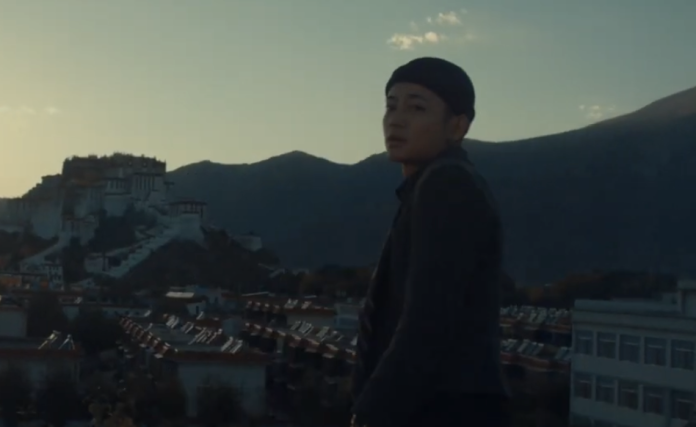
NEW DELHI – Tsewang Norbu was 25 years old when he set himself on fire near the Potala Palace in Lhasa on February 25, 2022. He was also the 158th person to carry out a self-immolation protest in Tibet since 2009. The pattern that produced that number did not begin with him and has not ended with him.
Norbu died from his injuries approximately one week after the protest. Witnesses reported that before losing consciousness, he called out for Tibetan independence, the return of the Dalai Lama, and freedom. Chinese authorities have not acknowledged his death publicly and issued no statement.
The wave of self-immolations that began in 2009 followed a specific set of events. That year, Tibetans across the plateau staged large-scale protests ahead of the 50th anniversary of the 1959 Tibetan uprising, during which the Dalai Lama fled into exile. Chinese security forces responded with mass arrests, monastery lockdowns, and intensified political surveillance. The protests were suppressed. The policy conditions that produced them were not addressed.
Human rights organizations and Tibet advocacy groups have documented what they describe as a sustained campaign targeting the two pillars of Tibetan cultural life: religion and language. The Dalai Lama, who has lived in exile in Dharamsala, India, since 1959, remains banned as a religious figure inside the Tibet Autonomous Region. Images of him are prohibited in public spaces and monasteries. Monks and nuns are required to attend political education sessions in which they are expected to denounce him and affirm loyalty to the Chinese state.
Tibetan-medium education has been progressively reduced across the region. Schools that once taught children to read, write, and learn in Tibetan have been brought under a curriculum that prioritizes Mandarin instruction. For communities where language, literature, oral history, and religious text are inseparable, the loss of language instruction represents not just an educational policy but the systematic removal of the tools through which a culture reproduces itself.
Norbu’s protest on February 25 did not arrive at a random moment. China’s National People’s Congress, the legislative session known as the Two Sessions, was underway in Beijing, a period during which the government is at its most sensitive to any signal of disorder or dissent. Losar, the Tibetan New Year, fell on March 4 that year. The anniversary of March 10, 1959, the date the Dalai Lama departed Tibet and the most emotionally significant date in the Tibetan political calendar, was two weeks away. Norbu did not choose February 25 by accident.
His family background placed him at the intersection of the system and its opposition. His parents were both employed by official state cultural institutions: his father as a composer with a state performance arts troupe, and his mother as a performer with a PLA-affiliated song and dance unit. His uncle, Lodoe Gyatso, had already served more than 21 years in prison for political activities connected to Tibetan independence. In 2018, Lodoe Gyatso staged a protest at the Potala Palace and was sentenced to an additional 18 years. His wife received a two-year sentence for filming it.
Norbu grew up knowing what the stakes of resistance looked like inside his own family. He chose resistance anyway.
The 158 self-immolations recorded in Tibet between 2009 and 2022 involved people from diverse backgrounds. Monks, nuns, farmers, students, and now a nationally recognized pop singer who had performed on China’s most-watched holiday television broadcast. The breadth of that range undermines any attempt to characterize the pattern as the behavior of a fringe group or a specific class of people. It spans generations, occupations, and regions.
Beijing’s official position is that Tibet is stable, prosperous, and developing, that Tibetan culture is protected, and its people are benefiting from integration into the Chinese economy. That position does not account for why, across more than a decade, 158 people have chosen the act of self-immolation as their only available form of political expression.
Chinese authorities have not addressed that number publicly. They have not addressed Tsewang Norbu’s death. They have not addressed the conditions that produced either.

Ashu Mann
Ashu Mann is an Associate Fellow at the Centre for Land Warfare Studies. He was awarded the Vice Chief of the Army Staff Commendation card on Army Day 2025. He is pursuing a PhD in Defense and Strategic Studies at Amity University, Noida. His research focuses include the India-China territorial dispute, great power rivalry, and Chinese foreign policy.
- Ashu Mann#molongui-disabled-link

- Ashu Mann#molongui-disabled-link

- Ashu Mann#molongui-disabled-link

- Ashu Mann#molongui-disabled-link