WASHINGTON – For decades, Pakistan’s legal and moral frameworks have struggled to reconcile tradition, religion, and the rights of the child. This tension has once again come into sharp focus in the latest judicial interpretations concerning underage marriage, raising difficult but necessary questions about the coherence of our legal system.
In 2025, Islamabad took a major legislative step by reforming the Child Marriage Restraint Act, setting 18 as the minimum legal age of marriage for both boys and girls. This reform aligned, in principle, with Pakistan’s obligations under the Convention on the Rights of the Child and marked progress toward the safeguarding of minors.
Yet, a critical inconsistency remains. While child marriage is criminalized, it is not uniformly treated as void. This distinction is not merely technical—it bears profound legal and human consequences. A marriage that remains legally valid, even after being declared unlawful, continues to bind the minor, effectively undermining the protective intent of the law.
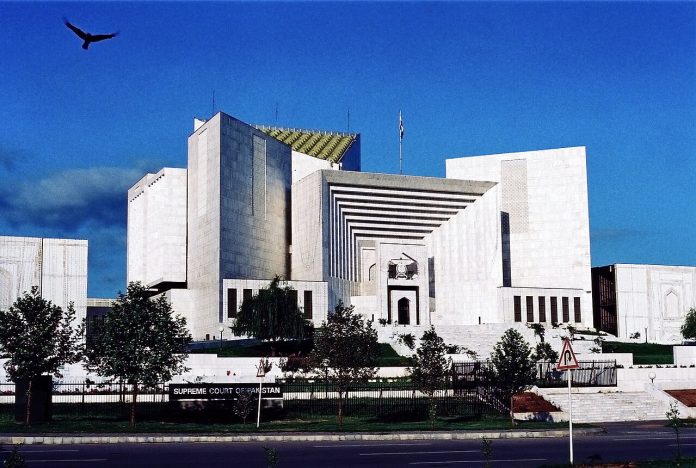
This contradiction has been brought into sharper focus by a recent March 2026 ruling of Pakistan’s Federal Constitutional Court in the case of Maria Shahbaz, a minor Christian girl. The court validated her marriage to a Muslim man, citing Islamic jurisprudential principles that permit marriage between a Muslim man and a woman from the “People of the Book.”
While the judgment acknowledged that penalties under child marriage laws may apply, it did not declare the marriage itself void.
The consequences of this interpretation are deeply concerning. It creates a duality within the law—where an act may be punishable, yet its result remains legally sustained. Such reasoning risks weakening statutory protections, particularly in cases involving age, consent, coercion, and vulnerability.
This ruling has triggered strong reactions across civil society. Human rights defenders, political activists, and minority representatives have expressed outrage, stressing that such decisions exacerbate fear and insecurity among religious minority communities, who already face disproportionate risks of forced conversions and underage marriages.
The inconsistency becomes even more evident when compared to cases such as the Dua Zehra case, where judicial intervention led to the annulment of a marriage involving a minor and her return to familial custody. Such divergent outcomes emphasize the absence of uniform legal standards in adjudicating cases involving children.
Reports by the Human Rights Commission of Pakistan and observations by the United Nations Office of the High Commissioner for Human Rights have consistently pointed to patterns of underage marriage, abduction, and forced conversion—especially affecting girls from minority communities. These are not isolated incidents but indicators of systemic legal and social gaps.
At its core, this issue is not one of religion versus law. Rather, it is about consistency, clarity, and the integrity of the legal system. If child marriage is recognized as a criminal offense, then its legal consequences must reflect that classification. Allowing such marriages to remain valid undermines both the deterrent effect of the law and the tenet of equal protection.
Pakistan’s constitutional commitments and international obligations are clear: the best interests of the child must remain supreme. This principle calls for not only legislative intent but also consistent judicial interpretation. Any ambiguity weakens both legal protection and societal trust.
A society is ultimately judged by how it protects its most vulnerable. Guaranteeing that no child is bound by a contract they cannot fully comprehend or meaningfully consent to is not simply a legal necessity—it is a moral imperative.

Seemab Asif
Seemab Asif is a multi-award-winning educator, human rights advocate, Peace Ambassador, and Executive Board Member of AMMWEC. She currently serves with Spring Education Group in the United States, where she is committed to advancing inclusive education and empowering women and underserved communities. Through education, advocacy, and public engagement, she champions dignity, equality, and equitable opportunities for marginalized populations, working to foster lasting social change and cross-cultural understanding.
- Seemab Asif#molongui-disabled-link

- Seemab Asif#molongui-disabled-link

- Seemab Asif#molongui-disabled-link

- Seemab Asif#molongui-disabled-link