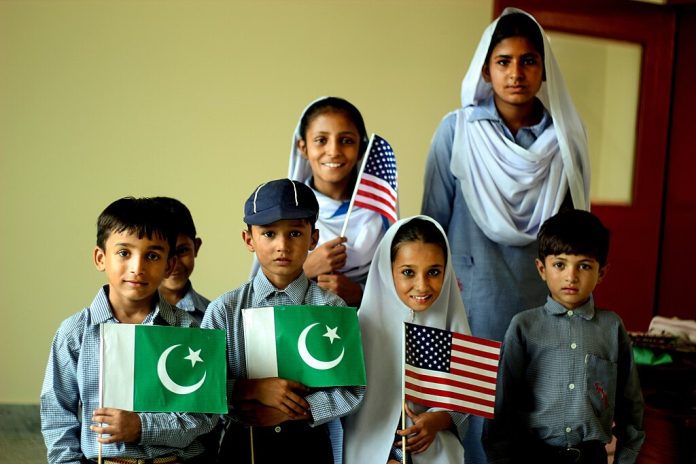
WASHINGTON, DC – Educational equity is no longer defined simply by access to classrooms—it is increasingly shaped by how deeply a system understands its learners. My professional journey across Pakistan and the United States has shown me that the accurate measure of an inclusive education system lies in the cultural sensitivity, family engagement, and individualized support offered to every child. Unfortunately, these essential pillars remain missing for many religious minority students in Pakistan.
When I moved to the United States, my transition into the education sector began with a series of mandatory professional trainings—rigorous, research-based modules on ADA (Americans with Disabilities Act) compliance, cultural competency, implicit bias, family engagement practices, trauma-informed teaching, and child-centered pedagogy. These trainings were not procedural formalities; they were skill-building experiences designed to prepare teachers to understand a child’s world before attempting to shape it.
One of the striking lessons I learned during these trainings was the importance of understanding cultural interpretations of behavior. Something as simple as eye contact, which in Western pedagogy signifies confidence, honesty, and respectful communication, has a very different meaning in many Eastern and South Asian contexts. A child avoiding eye contact may not be disengaged or disrespectful—they may be expressing humility. Similarly, responses such as saying “yes” or “no” directly, sitting posture, voice tone, physical distance, or even a child’s reluctance to volunteer can all carry distinct cultural nuances.
In the U.S., understanding these cultural dynamics is not optional—it is embedded in the teaching profession. A teacher is expected to learn about the child’s background, family system, language, beliefs, and even migration or trauma history. This context serves as the foundation for educators’ design of instruction, communication strategies, and behavior management plans. The underlying principle is simple: when you understand a child’s culture, you illuminate their learning pathway.
Invisible Curriculum in Pakistan
In contrast, religious minority students in Pakistan remain underserved because these foundational principles have never been embedded into the educational system. Despite decades of discussions around inclusion, minorities in Pakistan continue to operate at the margins—physically present in classrooms, yet emotionally disconnected from the environment meant to nurture them.
One of the most critical gaps is the absence of meaningful family-school relationships. Families from minority backgrounds are rarely engaged as stakeholders. Their cultural identities, fears, experiences of discrimination, and aspirations for their children are seldom part of the conversation. For many, the schooling experience becomes transactional—drop your child off, pick them up, ensure they graduate, and hope the system doesn’t harm them along the way. This disconnect creates subtle emotional and social barriers for children.
Family Engagement: The U.S. Model
The contrast with U.S. practice is stark. Teachers there are trained to build bridges with families long before learning challenges emerge. Regular family meetings, student cultural profiles, developmental reports, and personalized learning conferences are standard expectations. A parent’s voice is not symbolic; it is operationally significant. Their insights shape the support a child receives in school.
This level of intentional inclusion is almost unheard of in Pakistan for minority communities. Without structured teacher training, policy mandates for cultural responsiveness, psychological safety frameworks, or a relational approach to education, the system remains unable to fully understand the lived realities of its most vulnerable students.
The Way Forward
Pakistan must begin investing in nationwide teacher training programs that mirror global standards, including:
- Cultural competency and diversity awareness
- Anti-bias and anti-discrimination practices
- Trauma-informed and healing-centered pedagogy
- Family partnership development techniques
- ADA-inspired frameworks for accessibility and emotional safety
- Culturally sensitive communication models
- School climate training that supports belonging
Such frameworks would not only uplift minority students but also strengthen the nation’s educational landscape as a whole.
Our children—of every faith, community, and background—deserve more than academic content. They deserve to be understood. They deserve educators who recognize their journeys. And they deserve a system that views their families as partners, not outsiders.
As Pakistan moves toward global engagement and educational modernization, this is the moment to begin rewriting the narrative for religious minority students. Inclusion cannot flourish in silence; it grows when systems are willing to learn, evolve, and truly see every child.

Seemab Asif
Seemab Asif is a multi-award-winning educator, human rights advocate, Peace Ambassador, and Executive Board Member of AMMWEC. She currently serves with Spring Education Group in the United States, where she is committed to advancing inclusive education and empowering women and underserved communities. Through education, advocacy, and public engagement, she champions dignity, equality, and equitable opportunities for marginalized populations, working to foster lasting social change and cross-cultural understanding.
- Seemab Asif#molongui-disabled-link

- Seemab Asif#molongui-disabled-link

- Seemab Asif#molongui-disabled-link

- Seemab Asif#molongui-disabled-link