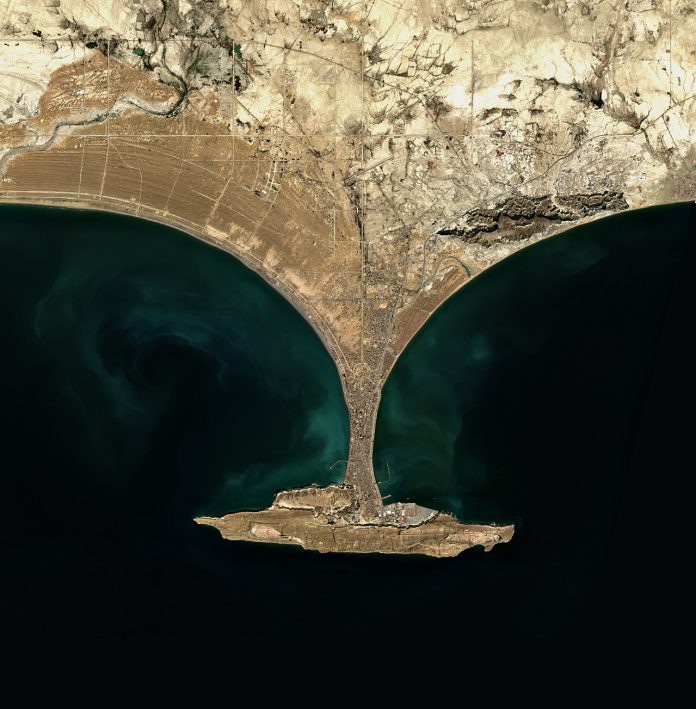
NEW DELHI – It is rare for a port to dominate security briefings more than trade reports. For Gwadar, this has been the norm for years. The gap between its strategic billing and its commercial reality has been a consistent feature of Pakistani and Chinese policy discussions. Security incidents, Chinese investor nervousness, and Baloch community opposition have kept the port from fulfilling the role envisioned for it.
April 2026 made a bad situation measurably worse. From April 1 to April 7, China hosted trilateral talks between Pakistan and Afghanistan in Urumqi. The talks concluded without a ceasefire or any verifiable commitments on TTP. On April 12, three Pakistan Coast Guard personnel were killed when BLA fighters attacked their patrol boat near Jiwani — the first confirmed militant strike on a maritime security vessel in the region.
The Urumqi talks were China’s attempt to prevent a bilateral crisis from becoming a regional catastrophe. The crisis had its immediate origins in late February, when Pakistan launched Operation Ghazab lil-Haq — a large-scale air and ground campaign against Taliban military infrastructure across multiple Afghan provinces, including Kabul, Kandahar, Paktia, and Nangarhar — after accusing the Afghan Taliban of unprovoked cross-border firing. The Taliban condemned the strikes and launched retaliatory drone and artillery attacks into Pakistani territory.
Pakistan-Afghanistan relations entered a deep freeze. China has interests that require both countries to cooperate, or at least refrain from active hostility. CPEC’s land-based corridors need stable transit through Pakistan. The longer vision, in which those corridors eventually extend through Afghanistan to Central Asia, needs Kabul’s participation. Beijing brought both sides to Xinjiang and pressed for an agreement. What it could not do was rewrite the interests that divide them.
Pakistan’s position on TTP has been stated and restated: verifiable action, not verbal assurances. The Taliban’s position on sovereignty has been equally consistent: no external oversight, no formal acknowledgment that TTP operates from Afghan territory. The talks reflected this impasse precisely. Both sides agreed to refrain from further escalation and to “explore a comprehensive solution.” Neither agreed to the specific actions the other requires.
China announced continued facilitation and called the process “substantive.” The delegations went home.
The maritime attack is categorically different from anything the BLA has done before, and that distinction matters beyond the immediate tragedy. The group simultaneously announced the formation of a dedicated naval wing — the Hammal Maritime Defense Force — signaling that this was not an opportunistic strike but the opening of a deliberate new operational theatre. For twenty years, Pakistan’s security response to the Baloch insurgency has been calibrated to a land-based threat: infrastructure protection, convoy security, urban counterterrorism. Earlier this year, the BLA added a drone unit, demonstrating the capacity to operate from the air.
The April 12 attack extends that reach to the sea. These are not isolated tactical experiments — they represent a systematic expansion of operational domains, each requiring a distinct Pakistani response.
For Gwadar specifically, the exposure is direct. Port operations involve vessels, breakwaters, offshore facilities, and shipping lanes. A group willing and able to attack a Coast Guard patrol boat and organized enough to announce a permanent maritime wing can threaten all of these.
Shipping insurance is a reliable indicator of how the maritime industry perceives risk in a region. Premiums rise when risk rises. Routes are reconsidered when premiums rise significantly. Ports that become expensive to reach — in direct costs or risk-adjusted terms — lose traffic to alternatives. Gwadar’s commercial performance has disappointed against projections for years. The port’s defenders argue that development takes time, that infrastructure projects of this scale require patience, and that traffic volumes will grow as connectivity expands.
These arguments are not wrong in principle. They are harder to make convincingly when the maritime approaches to the port have been demonstrated to be insecure, and when the group responsible has just formalized its naval capability.
Beijing has options: increased security assistance, continued diplomatic pressure on both Islamabad and Kabul, and adjustments to investment timelines.

Ashu Mann
Ashu Mann is an Associate Fellow at the Centre for Land Warfare Studies. He was awarded the Vice Chief of the Army Staff Commendation card on Army Day 2025. He is pursuing a PhD in Defense and Strategic Studies at Amity University, Noida. His research focuses include the India-China territorial dispute, great power rivalry, and Chinese foreign policy.
- Ashu Mann#molongui-disabled-link

- Ashu Mann#molongui-disabled-link

- Ashu Mann#molongui-disabled-link

- Ashu Mann#molongui-disabled-link