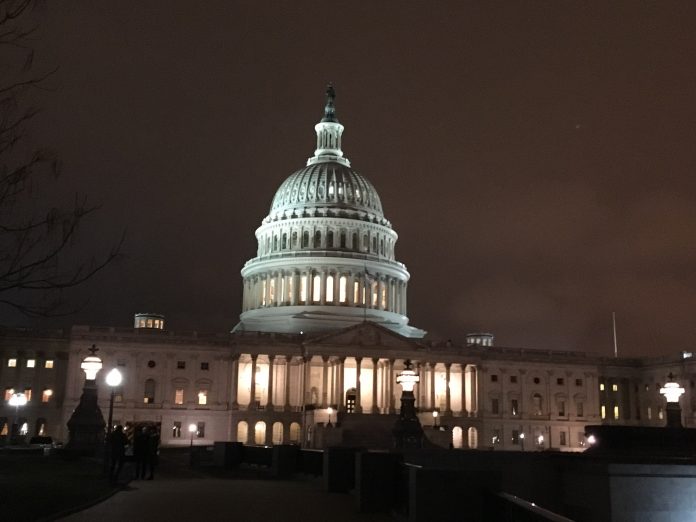
Extensive Media Coverage of the Capitol Hill Conference
Our recent Capitol Hill conference received extensive media attention, underscoring the urgency and global relevance of the crisis in Ethiopia. Coverage included multiple interviews and a featured article titled “Ethiopia: The Land of the Bible,” in which I was interviewed. The event was covered by iHeartRadio, national television outlets, and National Security Hours, which aired both in the United States and internationally. We also received overwhelmingly positive feedback from Ethiopians and friends of Ethiopia around the world.
Appreciation to Senator Chris Van Hollen
I would like to begin by expressing my sincere gratitude to Senator Chris Van Hollen for arranging this important congressional briefing and for their continued interest in Ethiopia. We deeply appreciate Senator Van Hollen’s longstanding advocacy for human rights, both in the United States and globally.
Reporting on the Human Rights Crisis
During the meeting, I reported on the deteriorating human rights situation in Ethiopia and formally requested a congressional hearing on the ongoing crisis.
Overall, the meeting was highly productive. We provided detailed updates on the current political situation in Ethiopia and discussed critical structural issues, including the country’s Constitution—on which we are actively working—and the existing federal system. We emphasized that these structural problems are among the root causes of the conflicts that continue to tear the country apart.
Proposed Solutions and Policy Recommendations
We presented draft resolutions outlining concrete solutions to Ethiopia’s most pressing challenges, with the goal of restoring peace, stability, and prosperity to the second-largest country in Africa.
Specifically, we recommended that the United States pursue a three-part strategy:
- Cessation of hostilities
- Targeted sanctions against perpetrators of human rights abuses
- Inclusive constitutional reform
For the record, we also cited findings from the state-appointed human rights commission, which has documented repeated outbreaks of violence, including drone strikes and house-to-house raids by government forces in areas outside the capital, particularly in the Amhara region.
Mobilizing Action: A 50-State Strategy
As part of a nationwide 50-State Strategy, we are mobilizing Ethiopian Americans and friends of Ethiopia across the country. Each state will organize coordinated efforts to contact U.S. Senators and Members of Congress to raise awareness and demand meaningful action from the U.S. government.
What You Can Do
Organize Locally
Form or join a state-level advocacy group to coordinate outreach to elected officials.
Contact Your Senators and Representatives
Call, write, and request meetings with your Members of Congress.
- Explain the worsening human rights situation in Ethiopia
- Emphasize atrocities committed against Amhara civilians
- Highlight the Ethiopian government’s suppression of democracy, unlawful killings, and mass imprisonment
Meeting Objectives with Senator Chris Van Hollen
The meeting focused on the critical role of the United States in supporting peace, democracy, and constitutional reform in Ethiopia. Our objectives included promoting a three-pronged strategy:
- Cessation of hostilities
- Targeted sanctions on perpetrators of human rights abuses
- Support for inclusive constitutional reform
A Call to the International Community
We call on the international community to:
- Launch independent investigations into atrocities
- Hold perpetrators accountable for crimes against humanity
- Take urgent and concrete steps to prevent further violence and protect civilians
The world must not look away. The people of Amhara—and all Ethiopians—deserve to live in peace, dignity, and freedom.
What Must Be Done Now
The United States and the international community must act decisively:
- Fully restore humanitarian aid to prevent mass starvation, with strong safeguards to ensure aid reaches civilians
- Impose targeted sanctions on Ethiopian officials responsible for war crimes and ethnic cleansing
We also discussed the Global Magnitsky Human Rights Accountability Act, introduced in 2015 by Senator Ben Cardin and Representative Chris Smith and enacted in 2016. This law empowers the U.S. government to sanction individuals worldwide responsible for gross human rights violations and significant corruption. It remains a vital tool for accountability in Ethiopia.
Ethnic Federalism: A Root Cause of Ethiopia’s Crisis
Ethiopia’s ongoing crisis is deeply rooted in its constitution, which is built on a divisive system of ethnic federalism. The ethnic conflicts now threatening to unravel the nation are a direct consequence of the 1994 Constitution, imposed by the EPRDF under then-Prime Minister Meles Zenawi.
This constitution dismantled Ethiopia’s long-standing national unity and reorganized the country into ethnically defined regional states. However, ethnic groups in Ethiopia are not confined to clearly defined homelands; they are dispersed across the country, leaving minorities in every so-called ethnic state.
Rather than fostering coexistence, the system institutionalized ethnic identity as the basis of politics, fueling competition for power and resources and escalating violence. Lasting peace and stability require Ethiopia to move beyond this divisive ideology. A national effort to revise the constitution is imperative. Left unchanged, the current system will continue to drive Ethiopia toward fragmentation and destruction.
Political Prisoners and the Path to Peace
We called for the immediate release of all political prisoners and Journalists including:
- Christian Tadele, former Member of Parliament
- Tadios Tantu, author
- Dr. Wondwosen Assefa, human rights activist
- Meskerem Abera, author and educator
- And many othersList of Journalists and Bloggers Currently Imprisoned
1. Gobeze Sisay
2. Dawit Begashaw
3. Meskerem Abera
4. Abay Zewdu
5. Michael Melake (+ Human Right Defender)
6. Genet Asmamaw
7. Tedros Nibret
8. Habtamu Mohamed
9. Cherinet Zemen
10. Ashenafi Meles
11. Asmare Wereket
12. Wendemagenge Berga
13. Ermias Mekuria
14. Zena Hailu
We also urged an immediate end to violence and a genuine cessation of hostilities. Only through these steps can Ethiopia move toward peace, democracy, and justice.
Constitutional Conference and Religious Persecution
We informed Senator Van Hollen about the Constitutional Conference held last December at the Rayburn House Office Building. This gathering is part of an ongoing series of conferences dedicated to finalizing a draft Ethiopian Constitution.
A central topic of discussion is the growing persecution of Ethiopian Orthodox Christians and the repeated attacks on the Ethiopian Orthodox Tewahedo Church.
Ethiopia stands at a crossroads. Now is the time to come together, find common ground, and work toward unity—for the Amhara people and for all communities seeking peace and inclusion.
Congressional Action: House Resolution 937
Senator Van Hollen was also briefed on an important resolution introduced in the U.S. House of Representatives by Congressman Buddy Carter (R-Georgia) and Congressman Joe Wilson (R-South Carolina):
House Resolution 937, which condemns the Government of Ethiopia for actions that threaten regional stability, violate fundamental human rights, and undermine U.S. strategic interests in the Horn of Africa.
The resolution cites credible reports of war crimes, crimes against humanity, and genocide, and highlights that the violence has targeted the Ethiopian Orthodox Church and other religious institutions.

Mesfin Mekonen
Mesfin Mekonen is the author of Washington Update, a bulletin about Ethiopia’s struggle for freedom and prosperity, and founder of MM Management.
- Mesfin Mekonen#molongui-disabled-link

- Mesfin Mekonen#molongui-disabled-link
- Mesfin Mekonen#molongui-disabled-link

- Mesfin Mekonen#molongui-disabled-link