NEW DELHI – Pakistan’s EO-3 episode is not a case of sloppy messaging. It is a case of a state prioritizing optics over authenticity at the exact moment when authenticity matters most — and getting caught doing it in public, on its own platforms, by anyone with enough patience to check a timestamp.
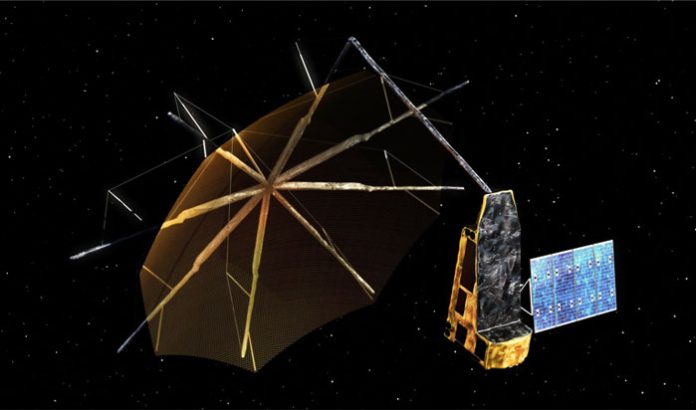
On 25 April 2026, Pakistan’s Foreign Office announced the launch of EO-3, the third satellite in SUPARCO’s electro-optical constellation, from China’s Taiyuan Satellite Launch Center.
The official statement declared that the integrated system would improve “data continuity, imaging reliability, and analytical precision,” and described the satellite as carrying advanced experimental payloads, including a Multi-Geometry Imaging Module, an advanced energy storage system, and an onboard AI-powered data-processing unit for real-time analysis and intelligent decision support.
President Asif Ali Zardari called it a “historic milestone” and described it as a “clear manifestation of Pakistan’s self-reliance, scientific expertise and growing capability in space technology.”
The prime minister, the deputy prime minister, the interior minister, and ISPR all issued statements in the same register. Every lever of official communication was pulled.
That is a high bar to set. The problem is what followed.
A remote-sensing satellite communicates capability through verifiable output: timestamped imagery, mission data, documented provenance — products that can be independently examined and confirmed. Instead, within days of the launch, a photograph began circulating across Pakistani social media, presented as EO-3’s first high-resolution image, a dramatic aerial view of Karachi Port, the newest satellite’s inaugural act of observation.
Analysts checking SUPARCO’s own website found the same image had been uploaded months earlier in 2025. The satellite had been in orbit for days; the photograph had been publicly available for months. It could not have been EO-3’s first capture. The supposed inaugural output of a system whose official launch statement promised precision and reliability failed the most elementary open-source verification in hours.
That is not a minor embarrassment. In the current information environment, every image carries a forensic burden the moment it is circulated. Metadata exists. Upload timestamps exist. Reverse image searches take seconds.
When a state — or accounts amplifying a state narrative — claims novelty and circulates recycled material in its place, it does not merely spread a falsehood. It demonstrates an institutional indifference to verification at precisely the point where disciplined, verifiable proof should matter most. The message is not just wrong; it is self-undermining, advertising the same failure of rigor that the official launch language was designed to conceal.
This is why EO-3 should be read as a doctrinal failure, not an isolated communications blunder. The pattern is consistent and recognizable: Pakistan elevates symbolic milestones into strategic proof points, then allows the proof to be assembled from whatever is immediately available rather than whatever is actually accurate.
The launch becomes the achievement. The image becomes decoration. And when the decoration is recycled, the whole structure of credibility collapses under its own weight. A system that depends on inflated symbolism is not projecting strength. It reveals the distance between what it can claim and what it can demonstrate.
The geopolitical cost of that distance is real. Pakistan’s EO-3 messaging was designed to signal technological maturity, operational independence, and scientific credibility to multiple audiences simultaneously: domestic voters, regional rivals, and the international community that adjudicates claims of “self-reliance” from a country that still relies entirely on Chinese rockets launched from Chinese soil to put its satellites in orbit.
The self-reliance framing is itself contested — SUPARCO designed the satellites, but the launch infrastructure, the launch services contract, and the launch site are all Chinese. That tension was already present before the image controversy. The recycled photograph made it impossible to ignore.
In the India-Pakistan context, where strategic signaling is closely watched and credibility gaps are quickly exploited, Pakistan managed something difficult: it turned a genuine achievement into a self-inflicted wound. EO-3 is a real satellite in orbit, with genuine capability, and two predecessors have already delivered data.
That is worth something. The recycled Karachi Port photograph ensured that something was processed through a filter of institutional distrust that Pakistan constructed entirely on its own. India does not need to make the argument. The timestamp makes it.
EO-3 matters less as a space story than as an information-warfare story. It shows a state trying to weaponize optics before it has secured operational authenticity — and discovering that in an era of OSINT, the gap between the two closes faster than any messaging operation can run.
Strategic communication is not judged by volume, by the number of ministers who issue congratulatory statements, or by the patriotic hashtags that accompany a launch announcement. It is judged by whether what is claimed can be verified. Pakistan’s problem is not that it announced a satellite launch. The problem is that it treated the announcement as sufficient, then allowed a recycled image to carry the burden of proof.
In strategic affairs, credibility spent on optics is very difficult to recover. Each episode of this kind — the recycled satellite photograph, the Battlefield 3 footage passed off as an airstrike, the cloud shadow presented as bomb damage — compounds the skepticism that greets the next claim, including legitimate ones.
Pakistan’s space program has made real progress. But the Karachi Port image has ensured that the program’s actual advances now arrive pre-discounted, examined for manipulation before they are examined for achievement. That is the cost of prioritizing image over intelligence — and Pakistan is paying it in installments.

Ashu Mann
Ashu Mann is an Associate Fellow at the Centre for Land Warfare Studies. He was awarded the Vice Chief of the Army Staff Commendation card on Army Day 2025. He is pursuing a PhD in Defense and Strategic Studies at Amity University, Noida. His research focuses include the India-China territorial dispute, great power rivalry, and Chinese foreign policy.
- Ashu Mann#molongui-disabled-link

- Ashu Mann#molongui-disabled-link

- Ashu Mann#molongui-disabled-link

- Ashu Mann#molongui-disabled-link