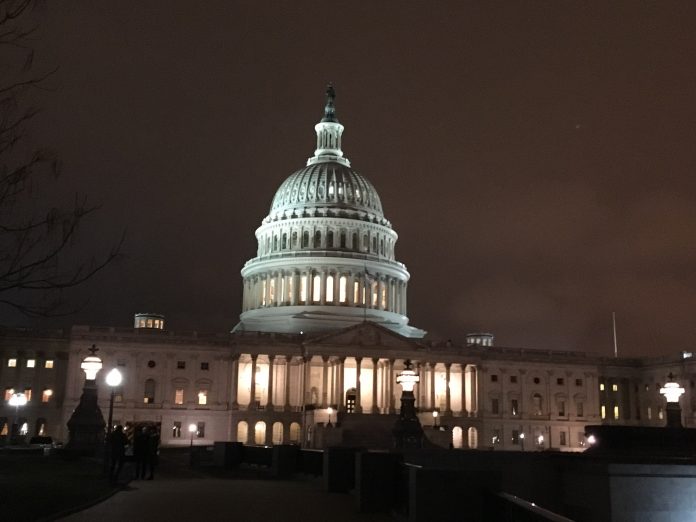
Mesfin Mekonen would like to thank all the speakers who participated in this historic conference and who submitted their summarized remarks.
Before presenting their remarks, I would like to remind Ethiopian Americans of the importance of the 50-state strategy.
Ethiopia: Washington Update – 50-State Strategy
Letter to Senators and Members of Congress
Dear Ethiopians and Friends of Ethiopia,
Below is a sample letter you can send to your Senators and Representatives as part of the 50-State Strategy. The time to act is now—if not now, when?
To find and contact your state’s elected officials, visit Congress.gov .
Please take a moment to send this letter on behalf of the voiceless Ethiopians suffering back home. Your action matters.
With gratitude,
Mesfin Mekonen
Sample Letter
Subject: Urgent Appeal to Prevent Civil War and Protect Human Rights in Ethiopia
Dear Senator / Representative,
I am writing as an Ethiopian American deeply concerned about the escalating violence and humanitarian crisis in Ethiopia. I respectfully urge you to take immediate action to help prevent further bloodshed and to promote peace, justice, and stability in the region.
I want to express my sincere appreciation for your leadership and commitment to justice and human rights. Your advocacy offers hope to millions of Ethiopians who long for peace and democracy.
I urge you to:to support the recent Resolution introduced by Congressman Carter (R-Ga) and Congressman Wilson (R-SC)
An important resolution has been introduced in the U.S. House of Representatives: “Condemning the Government of Ethiopia for actions that threaten regional stability, violate fundamental human rights, and undermine the strategic interests of the United States in the Horn of Africa.”
House Resolution 937, available at https://www.congress.gov/
- Condemn the atrocities committed by the Ethiopian government and armed groups;
- Call for an immediate end to drone strikes and military actions targeting civilians;
- Invoke the Global Magnitsky Human Rights Accountability Act to sanction those responsible for human rights violations; and
- Support a negotiated political settlement and an inclusive, democratic constitution.
The continued silence of the international community only emboldens perpetrators of violence and deepens the suffering of innocent civilians—especially among the Amhara people and Orthodox Christian communities, who are facing targeted persecution.
Your leadership at this critical moment can help bring accountability and hope to a nation in crisis.
Thank you for your attention and for standing up for justice and human rights.
Sincerely,
[Your Name]
[Your Address]
[City, State, ZIP]
SYNOPSIS: Presentation by Dr. Derrin Ray Smith
Former USG official and diplomat
[Note: Dr. Smith appeared as a private citizen and his presentation does not representany USG agency, department, bureau, or office, and his comments do not represent any official USG policy or guidance. Dr. Smith’s commentary solely represents his personal opinions as a scholar and any errors or omissions are his responsibility alone. End Note.]
Intro to Ethiopia Context: Dr. Smith Addressed AU Peace & Security Council Plenary Session on MANPADS surface-to-air missile threat from loose Libyan stockpiles. After the collapse of the Libyan regime, it was estimated that some 22,000 surface-to-air missiles, especially MANPADS, had been in the military stockpile and it was assessed that some could have fallen out of government control. These dangerous missiles, which can destroy a civilian aircraft, military jet, helicopter, or even be used to strike ground-to-ground can destroy target 6km away; plus, MANPADS can fit in the trunk of a car; a perfect weapon for terrorist organizations or transnational criminal organizations. Dr. Smith’s assignment at that time was to lead the U.S. government interagency overseas outreach missions to help mitigate the potential threat across the Sahel, Sub-Saharan Africa, Northern Africa, the Middle East, and Eastern Europe. (Relevant videos available at https://www.youtube.com/watch?
As well meaning as international charities are, in taking up collections of everything from clothing to household goods, sending volumes of shipping containers into developing countries, this form of “aid” has a similar effect on local economies. How does a local firm producing quality African cloths, or a designer creating fashions and clothing, or a household goods manufacturer, compete with essentially zero-cost competing merchandise in the local markets?
By encouraging “Trade versus Aid” whenever possible, local businesses and economies can grow, and thrive, with international investors being ever more ready to help fund and monetize profits in small and medium enterprises. Small to medium enterprises (SMEs) are the key to middle class wealth generation that can help Ethiopia to more quickly become a Middle Income Country (MIC) in the near future. This economic and commercial infrastructure is also valuable in further unifying Ethiopia as a nation, reduce internal strife, while helping increase cross border trade which can mitigate conflicts, contributing to improving regional peace and security.
In Sum: The Ethiopian Diaspora are key to the success of constitutional reform in Ethiopia. The resources to create the appropriate unifying, “equal rights for all” framework, with expert input and broad diplomatic engagement, exist here in the D.C. backyard. The benefits of this reform can have a domino effect on prosperity and peace in Ethiopia, as well as regional peace and security across the Horn of Africa. The significance, the importance, of this undertaking cannot be ignored, as Ethiopia and the African Union entities in Addis Ababa continue to help realize the new century of an emergent, successful, African continent. Blessings to all working to achieve these noble endeavors
Ato Mekonnen Doyamo remarks
I’m Mekonnen Doyamo.
I want to express my deepest gratitude to all Americans who have dedicated
themselves to preserving Ethiopia’s sovereignty. I also extend my heartfelt
thanks to all Ethiopians who have tirelessly advocated for the people, even
when our voices went unheard for 37 years.
Today, we are here to discuss the unresolved constitutional crisis in Ethiopia,
which has persisted for 37 years. This crisis began in 1991, when the
American government, under the Ronald Reagan administration, made three
significant mistakes.
Mistake # 1: The US Government backed up three anti-Ethiopian organizations
in synergy without checking their background.
Mistake # 2: The US government helped with billions of dollars to these
criminal organizations to sustain in power, betraying the Ethiopian people
without helping to preserve their legitimate Constitution of 1987.
Mistake # 3: The US government refuses to listen to the Ethiopian people who
have been crying in front of the State Department month after month, year
after year, for 37 years.
Subsequently:
These anti-Ethiopian criminal organizations gained control of Ethiopia and
effectively became its de facto government. Ultimately, this government failed
under Meles Zenawi, who is Ethiopia’s number one enemy. These terrorist
groups established unlawful member states and their territories and drafted a
fraudulent pseudo-constitution that promotes language-based ethnic
federalism for nine illegal member states, excluding Ethiopia itself. This
situation parallels that of Yugoslavia, particularly regarding the self-
determination clause in Article 47, Section 2.
1) Revoked: the Ethiopian sovereign Constitution of 1987.
2) Revoked the Ethiopian people’s ownership of the Constitution.
3) Revoked the Ethiopian people’s sovereignty.
4) Revoked the state of Ethiopia’s sovereignty.
5) Revoked: Ethiopia’s sovereign territorial Integrity, including ports.
6) Revoked: the sovereign and historic Ethiopian flag for a thousand years.
Replaced with:3
1) Replaced by nine illegal countries in the Current 1995 forged
constitution of EFDR by force that does not recognize Ethiopia as a
sovereign state and its people in Article 47/2.
2) Replaced by illegal nine countries, Nations, and nationalities
(Preamble) by force.
3) Gave sovereignty to 9 illegal countries or nations (Article 8) by force.
4) Replaced by illegal nine-member states or countries removing the
Mother State of Ethiopia (Article 47) by force.
5) Replaced by nine illegal countries or nations’ flag (“the hope of Nations”)
(Article 3) by force.
6) Designed nine illegal countries to develop their own languages to
disintegrate the Amharic national linguistic unity by force.
The Current Ethiopian fraudulent pseudo-constitution:
The current Ethiopian Constitution is a hidden and deceptive document,
crafted by a coalition of three terrorist groups aiming to dismantle Ethiopia’s
status as a sovereign member state of the UN and AU.
The current Ethiopian fraudulent pseudo-constitution has two deep-cover
phases:4
1) 2) Secession preparation plan: Done by Mels Zenawi. a) Created divided
societies in Ethiopia; designed a curriculum to develop their own
languages for each of the nine illegal member states.
Secession Exit Plan (hidden timing bomb): Abiy Ahmed has been
doing this since 2018.
A) Dissolved 4 FDRE into one PP party.
B) Made a PP party majority in the House of Federation to interpret the
fraudulent pseudo-constitution of 1995 to use Article 62 for
secession approval vote.
C) Abiy Ahmed invoked Article 93, sub-section 4/C, triggering the last
timing bomb explosion related to the secession of member states
under Article 47/2, according to the Ethiopian federation established
in 1995, which is based on what many perceive as a fraudulent
constitution of Ethiopia.
Our new Ethiopian Constitution draft is on hand:
1) Restore Ethiopia’s sovereign Constitution.
2) 3) 4) 5) 6) Restore the sovereign state of Ethiopia.
Restore 14 historic provinces, including Addis Ababa province.
Restore Ethiopia’s territorial Integrity, including Ports, the Red Sea, the
Red Sea Islands, and our Red Sea sovereign air boundary.
Restore the Ethio-American Red Sea partnership that our forefathers
established.
Restore Amharic for our national linguistic unity.5
Dear Americans,
We Ethiopians have paid a heavy price for America as a true alliance. A
monument in South Korea stands as a testament to the valiant efforts of
Ethiopians who fought alongside American forces. Many Ethiopians lost their
lives for the sake of America, and we would do so again. General Kebede
Gebre, who successfully commanded 35,000 troops in the Congo alongside
American forces from 1960 to 1964, was an Ethiopian. Ethiopians
successfully fought back in Somalia against an organization that killed an
American and dragged his body on the ground.
America, yesterday it was us, but today, it is your moral responsibility to save
us. Today, Ethiopians are dying every day due to genocide, drone
bombardments targeting civilians by Abiy Ahmed, massacres, war, crimes
against humanity, abductions, mass displacement, hunger, and disease—all
taking place under the tyrannical rule of Abiy Ahmed, which disregards the
legitimate Ethiopian Constitution.
We urgently request the United States’ immediate assistance in conducting a
national referendum in Ethiopia to vote on a new constitution. This initiative
aims to resolve conflicts similar to those addressed in Ghana in 1992 and in
Kenya, where the 2010 national referendum on a new constitution effectively
addressed ethnic and societal divisions.6
Today, Ethiopia has become a divided society. There is no other means or path
for political negotiation to resolve Ethiopia’s conflict except through a national
referendum for a new constitution.
Thank you for your attention.
Mekonnen Doyamo: BA, MS, and is currently the Chairperson of the Ethiopian Survival and Salvation Association
Wzro Tsigereda Mulugeta, Global Amhara remarks
Ethiopia is at a critical crossroads. A brutal, ethnically targeted war is being waged by the federal government against civilians in the Amhara region. The ongoing atrocities including massacres, drone attacks, and the mass imprisonment of civilians have created one of the most severe humanitarian and political crises in modern Ethiopian history. These crimes are not isolated events but part of a systematic campaign to repress dissent, crush opposition, and destroy Ethiopia’s social fabric through violence and terror. If unchecked, this crisis will lead to the total collapse of Ethiopia and a dangerous destabilization of the Horn of Africa. We are urgently calling on the United States and the international community to act now to stop the war, support a democratic transition, and prevent further bloodshed
We are calling for an urgent call for peace and accountability in Ethiopia, emphasizing the immediate cessation of hostilities and the withdrawal of the Ethiopian army from the Amhara region. We demand the unconditional release of political prisoners, unrestricted humanitarian aid access, and the invocation of U.S. sanctions on officials responsible for war crimes. We urge international organizations to investigate attacks on civilians and call for equitable reconstruction efforts across all affected regions, highlighting the significant economic costs of the ongoing conflict.
Ethiopia needs a new beginning. The only path forward is an inclusive, transparent, and accountable national dialogue. Fano’s mass based and legitimate armed struggle is equipped with a political program based on Democracy, the Rule of law, personal liberty, freedom and unity of the nation therefore it should spearhead the national dialogue for the best outcome. This dialogue must include all ethnic groups, political parties, civil society organizations, and religious institutions. The objective must be a transitional government that can lead the country toward peace, reconciliation, and democratic elections. Without freedom of the press, freedom of assembly, and political pluralism, democracy cannot exist. The time has come to outlaw ethnic-based political parties and support pan-Ethiopian movements that reflect the nation’s diversity and unity. Ethiopia’s survival depends on it.
A stable, peaceful, and developing Ethiopia is vital to its immediate neighbors but also to the wider international community. Its strategic position means that its stability is closely tied to the national interests of various global powers such as the US with geopolitical stakes in the area. Ultimately, the sustained development and peace within Ethiopia help secure these broader interests, reinforcing global efforts for regional cooperation and prosperity.
Sylvia Stanard speech at the conference
Sylvia Stanard, spoke about the two programs she works with United for Human Rights and Youth for Human Rights. Both programs are based on the UN Universal Declaration of Human Rights which was written and passed in 1948. Ethiopia agreed to follow the UDHR and as a UN member is obligated to promote its values.
The UDHR says, amongst other things, that:
1. All human beings are born free and equal in dignity and rights.
2. Everyone is entitled to all the rights and freedoms set forth in this declaration –without distinction of any kind, such as race, colour, sex, language, religion, political or other opinion..
3. Everyone has the right to life, liberty and security of person.
4. No one shall be subjected to arbitrary arrest, detention or exile.
5. Everyone has the right to freedom of thought, conscience and religion, this right includes freedom to change his religion or belief, and freedom either alone or in community..to manifest his religion or belief in teaching, practice, worship and observance.
These rights are being violated every day in Ethiopia. Particularly concerning to me is the violation of the right to freedom of religion. Churches and priests are being targeted and killed with drone strikes and assaults. This is completely unacceptance.
The biggest problem is that this situation is not really well known. You (the Ethiopian community) are competing for attention with Israel/Gaza, Russia/Ukraine, and other conflicts going on around the world. As an American – I would not know there was anything going on in Ethiopia except that many Ethiopian friends have told me about it. I urge the diaspora to get involved, talk to your Member of Congress and tell them about the violations – urge them to sign onto House Resolution 927, and talk to your media and urge them to cover the violations. People of good will are interested and will try to help if they know the specific data on what is happening there.
(That is the main point of my speech. If you can please add the website www.humanrights.com
Ato Yilkal Getnet remarks
Yilkal Getnet at a stakeholders’ conference on “Ethnic Federalism and the Crisis in Ethiopia.” The speaker argues that the current ethnic federalist system, established by Ethiopia’s Constitution, is the primary cause of the country’s political and social crises. He asserts that the Constitution promotes division by emphasizing ethnic identity over shared national history and relies on political party control instead of independent institutions. According to the statement, this system has weakened Ethiopia as a whole and particularly harmed the Amhara people, who the speaker believes have been intentionally disempowered and targeted through false narratives and political repression.
Yilkal highlights the Amhara resistance, especially the Fano movement, describing it as a unique, organized social struggle driven not by separatism or revenge, but by the dual goals of defending Amhara communities and contributing to a unified national future. He presents the current government, led by Abiy Ahmed and the Prosperity Party, as a destabilizing force that fuels conflict, lacks legitimacy, and fails to protect citizens. The regime’s inability to control the Amhara region, he argues, demonstrates its weakness and the strength of the resistance movement.
The statement concludes with a call for unity among Ethiopians to remove the current regime, resolve the crisis, and establish an inclusive democratic government capable of safeguarding national stability and the rights of all people.
Eskinder Nega, Leader of Amhara Fano Peoples Organization remarks
The case for a new Constitution in Ethiopia: We have nothing to lose but genocide.
Eskinder Nega
Nearly three decades after the imposition of Ethiopia’s federal constitution by wild-eyed extremist ethno-nationalists, the long predicted national doom is unfortunately finally within sight.
By legitimizing identity politics Ethiopia’s constitution has not only fueled and institutionalized endless conflicts as its critics had cautioned, but has also as its framers had coldly and cynically intended led to the erosion of national identity.
A new generation nurtured under state-sponsored identity politics is coming to age, and even amongst the Amharas, whose elite has for decades fought tooth and nails against ethnic politics, anti-Ethiopian sentiment is no more the unthinkable taboo it once was.
Wherever it’s practiced, whether its in the developed and democratic West or developing and authoritarian prone Africa, identity politics is inherently corrosive, pitting groups against one another in a zero-sum game that prioritizes tribal loyalties over collective progress.
Ethiopia’s ill-advised plunge into ethnic-based federation, which vests sovereignty in “Nations, Nationalities, and Peoples” instead of the Ethiopian state, was supposed to be a legalized stage for what the framers of the constitution believed is the inevitable breakup of Africa’s last indigenous empire.
But as violent border disputes, forced evictions, and genocidal wars in the former Soviet Union and Yugoslavia had amply demonstrated , there is no such thing as a neat and legalized dissolution of a multi-national state, empire or not. Czechoslovakia was the exception not the norm.
Recent developments —the ongoing wars in Amhara, Oromia, and other parts of the country, coupled with renewed threats of war in Tigray where over half a million civilians tragically perished only few years ago — have signified that Ethiopia is on track to go the Yugoslav way unless the trend is preempted by revolutionary transformation.
Preemption entails a new constitution which constitutionally separates ethnicity from governance, much like religion is constitutionally separated from the state, and restores sovereignty to the nation as a whole. This is not just a policy tweak; it is a survival imperative for a country teetering on the brink of genocide and disintegration.
The most fundamental shortcoming of the constitution lies in its spirit, which makes it uncorrectable by way of amendments. For at the very outset it misplaces sovereignty by declaring in Article 8 that it resides in ethnic groups rather than the Ethiopian people or state. This is the bedrock on which all subsequent articles of the constitution lie on, including the right to secession of ethnic regions under Article 39—a clause that dangles the threat of breakup like a sword over the nation’s head.
It is this spirit of the constitution which has over the past seven years empowered regional actors to challenge federal authority, as attested to by the defiance of Tigray’s regional government and the spreading insurgencies in Amhara and Oromia, turning Ethiopia into a fragile confederation rather than a sovereign state.
Vesting sovereignty back to Ethiopia is the alpha and omega of any serious and viable constitutional revision. But by mandating ratification of any amendment of the sovereignty clause by all founding ethnic regions of the federation, the framers of the constitution, who had more or less unilaterally drafted and enacted it, have shut the door on the pathway to amendment by conveniently reserving the power of veto for themselves.
Ironically, the constitution’s separation of religion from the state under Article 11 provides a blueprint for revolutionary transformation: ethnicity must be decoupled from politics at the constitutional level.
Religion, like ethnicity, is a personal identity that enriches society when kept non-governmental; the historical evidence is clear that entangling it with governance breeds intolerance and extremism. Ethiopia’s ethnic federalism mirrors this historical error.
A new constitution could foster inclusive regional administrations where rights accrue from residence, not bloodlines. This would honor diversity without division, much like Switzerland’s cantons or India’s multiple linguistic states within one big ethnic group, which avoid secession clauses and prioritize unity.
Ethiopia needs a new constitution which does not create and impose big ethnic enclaves, sovereignty in “We the People of Ethiopia,” and robust minority protections via proportional representation and anti-discrimination laws.Multilingual policies and independent judiciary would build trust, while banning secession clauses ensures permanence. This would elevate ethnicity beyond politics like religion, allowing Ethiopians to focus on shared goals like democracy and rapid economic development.
In conclusion, Ethiopia’s 1995 Constitution has institutionalized division through identity politics and misplaced sovereignty, leading to ceaseless strife and genocide. By separating ethnicity from the state—like religion—and adopting American style federation, a new constitutional era can forge unity and prosperity. The evidence is overwhelming: from expert warnings to public outcry, a new constitution is not optional but existential.
We have nothing to lose but genocide.
December 18, 2025.
Ato Abel Gashe remarks
Summary of the Speech at Rayburn building,
Gold Room 2168
Date: December 19, 2025
Speaker : Abel Gashe
Thank you the Ethiopian American Civic organizations for organizing such an important forum
Special thanks to Ato Mesfin Mekonnen for the hard work to make this even happen.
In earlier presentations, the ex-State Department official asked why we came here today. Our answer is that we came here because we are being killed as Ethiopians, as Amharas, and as Orthodox Christians.
I like to outline the objectives that we are gathering here today.
Our first objective is to create global awareness about the mass killings and massacres that is happening in Ethiopia. We are here to be the voice for the voiceless. Ethiopian Orthodox Christians are being killed in mass in Arsie and Wollegabecause of their religious affiliations. In the last two to three months more than fifty Orthodox Christians have been killed. Churches are being burn. The faithful are being massacred while worshipping. Just last weeks the Chief Executive Officer of the Wollega region, Father… was killed and his body is not even retrieved to date. This is the epitome of the crime being done to Orthodox Christians. What is happening in Ethiopia is religious genocide in which Christians are being killed in mass for being Orthodox. We also know that people are being killed for their identity, for being Amharas. I recently attended the International Religious Freedom round table and the least reported events are those that are happening in Ethiopia. The world has to know the religious and identity genocide that is happening in Ethiopia and become voice for the voiceless.
The second objective is to call upon world governments, civic organizations, humanitarian organizations and others be it in the US, Canada or Europe to defend the voiceless and hold the government and other responsible parties accountable to the genocide and crime being done in Ethiopia.
We are also here today to call upon the Ethiopian government to defend those who are being killed and massacred for their belief and identity. The killing of Orthodox Christians and Amharas that levels upto a genocide should be stopped. If the government has one mission it is to defend the peace and protect the citizenry from such senseless killings.
We also call upon the leaders of the Ethiopian Orthodox Church to fight for those who are defenseless and voiceless. The Church leaders should ask the government to protect its parishioners.
In summary, This is a call for all that we understand the gravity of the religious and identity genocide in Ethiopia and take the necessary action.
Mr. Scott Morgan Africa working Group remarks
It is not just the situations in Syria, Ukraine and Gaza that overshadow the events still allowed to fester in Northern Ethiopia, There is a crisis in Africa that has the potential to suck out all the oxygen in the room.
The situation in Nigeria currently has the focus of the Trump Administration with the Democratic Republic of the Congo not that far behind.One thing that any advocacy should focus on is that the situation in Northern Ethiopia remains no less serious than the other crisis spots in Africa.
Persistence is crucial. One speaker mentioned about having students write papers documenting the situation. Another aspect that is just as important is writing a letter to the editor especially after they run stories by Foreign News Agencies. Remind them that they have readers of their publication.
Secondly regarding meeting with your local Member of Congress. Schedule a follow-up meeting. There are members of the IRF Roundtable in this forum today. Reach out to us and inform us who you met with. We can do follow up meetings not only with that office but also when we advocate as well.
Speaking of advocacy remember that you can petition the US Treasury as well to recommend Global Magnitky Sanctions (Name Date of Birth and a verified incident)
We share information with the US Commission on International Religious Freedom, the State Department Office of International Religious Freedom and the UN Human Rights Council. They are always asking for information. We can be a conduit to share such information as well.
Dr. Amsalu Asnake remarks
U.S. Congressional Hearing on Ethiopia and Human Rights
Name: Amsalu Asnake, PhD
Affiliation: Ethiopian-American Advocate
Topic: The Fano Movement and the Crisis in Ethiopia
Location: Washington, D.C.
Chairperson, Ranking Member, and Honorable Members of the Committee:
Thank you for the opportunity to testify on the deteriorating human rights situation in Ethiopia and the emergence of the Fano movement.
I appear before you as Amsalu Asnake, PhD, an Ethiopian-American deeply concerned about the survival of millions of civilians and the stability of a key United States partner in the Horn of Africa.
Background and Root Causes
Ethiopia is a nation with a long history of coexistence among diverse communities and serves as host to both the African Union and the United Nations Economic Commission for Africa. However, since the early 1990s, Ethiopia’s political system has been structured around ethnic federalism—a model that elevated ethnic identity as the primary basis of governance and power.
This system, implemented after the fall of the Derg regime, excluded key stakeholders—particularly the Amhara people—and institutionalized a divisive historical narrative. Over time, it enabled state repression and widespread human rights violations.
International human rights organizations have documented arbitrary arrests, forced displacement, sexual violence, and identity-based killings targeting Amhara civilians. These abuses represent a sustained pattern of persecution rather than isolated incidents.
Failed Reform and the Northern War
In 2018, Prime Minister Abiy Ahmed came to power promising reform and national unity. While initially welcomed, these promises failed to materialize.
Instead, violence against Amhara civilians intensified, particularly in Oromia and Benishangul-Gumuz regions. The Northern War that followed resulted in an estimated 1.2 million deaths, with the majority of fighting and civilian harm occurring in the Amhara region.
United Nations reporting confirms widespread war crimes, including mass killings and the use of sexual violence as a weapon of war.
Emergence of the Fano Movement
It is within this context that the Fano movement emerged.
Fano is not a terrorist organization nor a political party. It is a grassroots self-defense movement composed of civilians—teachers, farmers, students, and professionals—who took up arms only after state institutions failed to protect them.
No population chooses armed self-defense unless all peaceful avenues have been exhausted. For many Amhara communities, Fano became the only means of survival.
Post-War Developments and Current Conditions
The 2022 Pretoria Cessation of Hostilities Agreement ended the war without Amhara representation, despite the region bearing the greatest human cost. Shortly thereafter, the federal government dismantled Amhara regional security forces, imposed a state of emergency, and launched widespread arrests and military operations.
According to human rights organizations, thousands have been killed and more than four million Amhara civilians displaced.
Despite operating under severe constraints, Fano forces have demonstrated organization and discipline, including cooperation with the International Committee of the Red Cross.
Implications for U.S. Policy
Ethiopia’s continued instability threatens regional security, fuels mass displacement, and undermines U.S. interests in the Horn of Africa.
Many Ethiopians perceive current U.S. engagement as insufficiently balanced, risking the alienation of an entire generation and weakening American credibility.
This testimony is not a request for military intervention. It is a call for principled, balanced engagement.
Recommendations
I respectfully urge Congress to consider the following actions:
1. Suspend non-humanitarian assistance to the Ethiopian government pending measurable human rights improvements
2. Support independent investigations into mass atrocities, including those bearing hallmarks of genocide
3. Encourage inclusive political dialogue that includes Amhara representatives
4. Support House Resolution 937 and related accountability measures
Closing
Members of the Committee, Ethiopia stands at a crossroads. Decisions made today will help determine whether the country moves toward stability or further collapse.
The Amhara people are not asking the United States to fight their war—only to stand firmly on the side of human rights, accountability, and justice.
Thank you for your time and for allowing this testimony into the record.
Ato Wossene remarks
I am President of Amhara Advocacy Group which is a 501 (C)4, established in 2023. AAG was established to be a voice for Amhara people all across the world. I am a US citizen living in Pennsylvania, where I work in the private sector as a Senior Planner.
The topics of Ato Wossene discuss is:
- The persecutions of Christians and Amhara people in Ethiopia.
- The current Abiy Ahmed Ali regime’s disintegration of Ethiopia’s economy and social fabric.
- As well as the instability created by current Ethiopian government and its impact on the Horn of Africa, and its alignment with other world powers like China, and UAE.
Remarks by Ato Abebe Belaw
Ato Abebe Belaw is the Founder and Managing Editor of Addis Dimese Television and has been a steadfast advocate for human rights and press freedom in Ethiopia for more than three decades. Throughout his career, he has consistently spoken out against abuses of power and has worked to ensure that the Ethiopian people have access to truthful and independent information.
Today, Ethiopian journalists face an increasingly hostile and dangerous working environment. Many are subjected to arbitrary arrests, constant surveillance, harassment, and legal intimidation simply for doing their jobs. There is virtually no freedom of the press and no freedom of assembly. Journalists are routinely targeted because they report facts and provide the public with honest accounts of the political, social, and human rights situation in the country—nothing more than the truth.
The Ethiopian government has created an extremely restrictive media environment. It continues to rely on vague and broadly defined laws, including terrorism and hate speech proclamations, to arrest, detain, and intimidate journalists and media outlets. Although a more liberal media law was introduced in 2021, it is largely ignored in practice. Instead, these laws are selectively enforced to silence critical voices, creating a climate of fear, self-censorship, and widespread repression.
The situation has worsened during periods of conflict, particularly in regions such as Amhara, where security concerns are used as a pretext to justify authoritarian control and severe restrictions on independent reporting. The government maintains firm control over terrestrial media and has expanded executive authority over media regulatory bodies, effectively eliminating independent oversight and scrutiny.
As a result of these sustained pressures, most independent journalists have been forced to flee the country. Those who remain face daily threats to their safety, livelihoods, and freedom. The mass exodus of journalists has left a significant information gap and further undermined the public’s right to know.
Bart Fisher’s remarks
Bart Fisher commended the Ethiopian Americans Coalition for the excellent work done on the 50-State Strategy. He emphasized that this initiative will help energize Ethiopian Americans to actively engage their elected representatives in every state.
Councilor Fisher also informed attendees that he and Mesfin have drafted a letter to be submitted to the Pope at the Vatican through his personal contacts. He stressed the importance of sustained engagement with Members of Congress, noting that congressional offices want to hear directly from their constituents.
Bart Fisher outlined a three-part strategy moving forward, centered on effective communication with Members of Congress. Specifically, he recommended that the U.S. government pursue a comprehensive approach focused on:
- Cessation of hostilities,
- Targeted sanctions, and
- Constitutional reform.

Mesfin Mekonen
Mesfin Mekonen is the author of Washington Update, a bulletin about Ethiopia’s struggle for freedom and prosperity, and founder of MM Management.
- Mesfin Mekonen#molongui-disabled-link

- Mesfin Mekonen#molongui-disabled-link

- Mesfin Mekonen#molongui-disabled-link
- Mesfin Mekonen#molongui-disabled-link