Michael J. Davern, The University of Melbourne and Matt Pinnuck, The University of Melbourne
Almost A$1 trillion (US$600 billion) was wiped off the value of artificial intelligence microchip maker Nvidia overnight on Monday, when a little-known Chinese startup, DeepSeek, threatened to upend the US tech market.
While Nvidia suffered the biggest one-day loss in sharemarket history, other tech giants – Microsoft, Alphabet and Amazon, who are investing heavily in competing AI tools including ChatGPT and Gemini – were also hit.
The rout was caused by investors’ shock at the claimed performance of DeepSeek’s new R1 chatbot. The Chinese AI was reported to be more advanced than its competitors and less expensive to develop.
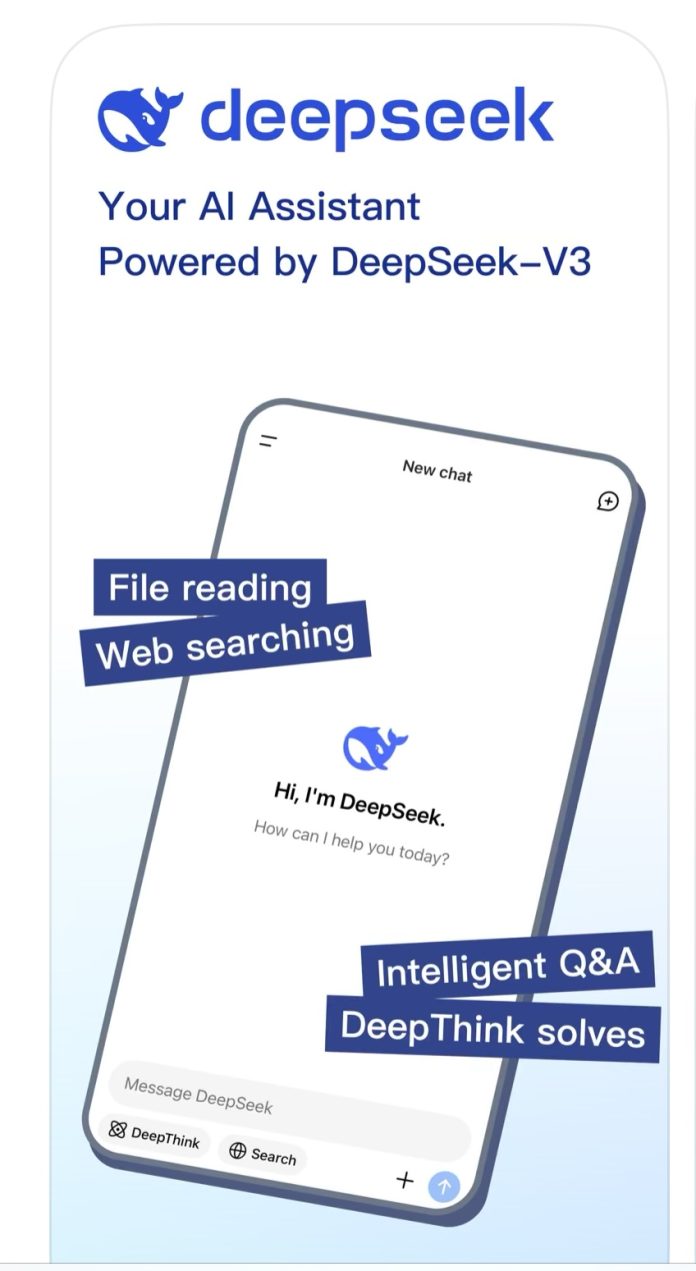
DeepSeek R1 has soared, becoming the top free downloaded app on Apple’s app store, as US technology and related stock prices fell dramatically.
Why tech stocks took a deep dive
The market was surprised by DeepSeek providing what amounts to cheaper technology but comparable performance.
This has dramatically changed the market’s expectations of computing power, showing more can be done for less. It has also compromised the competitiveness of the US tech companies’ existing AI products and developments.
Stock prices are driven by market expectations. The claimed performance of DeepSeek R1 prompted a major revision of expectations about what was technologically possible and about how cheaply AI could be developed and operated.
Investors have rapidly incorporated the news of a low-cost Chinese AI competitor into stock prices, anticipating this new entrant could disrupt the market and erode the competitive advantage of existing leaders.
Who is DeepSeek and what is R1?
DeepSeek was founded in 2023 by Chinese hedge fund High Flyer, which had been exclusively using AI in trading since 2021.
DeepSeek develops large language models (LLMs) that can underpin chatbots and other AI-based tools. R1 is the latest iteration of DeepSeek’s chatbot and underlying model. It builds on earlier versions of generative AI models developed by DeepSeek, and considerable amounts of data, but is a surprising leap forward in performance and cost.
Technology investors believe R1 matches or outperforms competitors, including OpenAI’s ChatGPT 4.o1 on numerous benchmarks.
However, there are some key differences:
- The model underlying R1 operates in a much less intensive manner. It is much cheaper to develop and run, requiring less data and computing power.
- The training of the model was possible despite the US export ban preventing Chinese companies such as DeepSeek from accessing chips from US companies such as Nvidia. The Biden administration had introduced laws restricting the sale of certain computer chips and machinery to China, in a move intended to block its rival from accessing some of the world’s most advanced technology.
- The training data and data uploaded to R1 sit on servers in China. Given concerns about data privacy and intellectual property have already been raised about US-based companies, having data under jurisdiction of the Chinese Communist Party (CCP) is arguably even more concerning.
- The chatbot program code is free to download, read and modify, unlike ChatGPT. This is however somewhat a false transparency – what matters more is the underlying model, not the Chatbot code.
- R1 is known to censor its responses in line with Chinese Communist Party values.
The future of AI and tech stocks
It is unknown whether this crash in price of tech stocks is an irrational panic that will reverse, or whether it simply reflects correct pricing. The future costs and benefits of AI are still uncertain.
This is both a technological and an economic question.
In technological terms, it is yet to be seen whether R1 really does require less computing power and less data to train and use.
Economically, there are potential winners and losers. AI users may win with cheaper access to AI, and LLMs in particular, leading to increased adoption and associated productivity gains. Existing producers such as Nvidia may lose out in what was a market with few real competitors.
More broadly, society may benefit from less computationally intensive, and therefore more energy-efficient, AI. However, the geopolitical risk of a single country capturing the market, together with concerns about data privacy, intellectual property and censorship may outweigh the benefits.
Michael J. Davern, Professor of Accounting & Business Information Systems, The University of Melbourne and Matt Pinnuck, Professor of Financial Accounting, The University of Melbourne
This article is republished from The Conversation under a Creative Commons license.

Michael J. Davern

Matt Pinnuck
-
Matt Pinnuck#molongui-disabled-link

-
Matt Pinnuck#molongui-disabled-link