NEW DELHI – Each year, China’s Police Day is staged as a confident display of order. State media highlights decorated officers, gleaming ceremonies, and promises of “stability.” The message is simple–the system is working, and the country is safe.
But that polished image covers a much harsher reality beyond it. The same security apparatus being applauded is also used to tighten the state’s grip on people whose identities and histories don’t fit Beijing’s preferred story. Behind the flags and speeches are communities living under constant pressure. It is where cultural expression is treated as a risk, religion as a problem to manage, and dissent as something to crush rather than hear.
Tibet and Xinjiang: What the Celebration Leaves Out
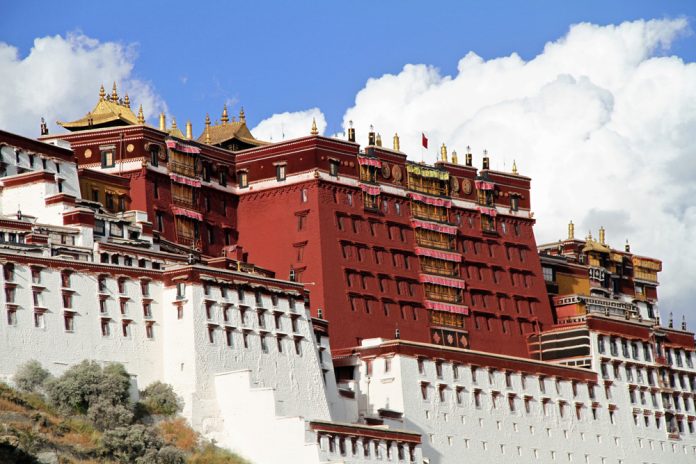
For many Tibetans, Police Day doesn’t feel like a recognition of public service. It feels like a reminder of what has been taken from them—and what they are still afraid to lose.
Tibet’s culture has long been built around faith, language, and community life. But years of intrusive control have narrowed the space for all three. Surveillance is not occasional; it is part of the environment. Restrictions are not rare; they shape daily choices. The result is a slow suffocation of identity—less a sudden break than a steady, deliberate tightening.
Monasteries, once places of learning and spiritual life, now exist under watchful eyes. Cameras, monitoring, inspections, and political oversight have become routine. Monks and nuns are not only religious figures in this system, but they are also often treated as potential threats. When prayer, teaching, or cultural practice can draw punishment, even ordinary life begins to feel like resistance.
Beijing insists this is “development” and “stability.” Many Tibetans see something else: a region increasingly militarised, where people are pressured to conform, and where speaking plainly about their reality carries serious risks.
In Xinjiang, the pressure has been even more sweeping. Uyghurs and other Muslim communities have faced mass detentions. Intense surveillance and policies aimed at modifying how people live, speak, and believe have been implemented. Reports of “re-education” camps describe a system designed to break cultural continuity—pushing people to abandon language, religious practice, and heritage in exchange for safety and release.
The state describes this as counterterrorism. But when entire communities are monitored as suspects, when families are separated, and when identity itself becomes something to “correct,” the line between security and coercion disappears. Technology has helped expand this control: facial recognition, biometric collection, and data-driven policing that follows people into their homes, their workplaces, and their private lives.
It’s not simply surveillance. It’s a message–you are being watched, and you are expected to change.
Taiwan: The Next Front of Control
Tibet and Xinjiang show what the CCP can do in areas under its control. Taiwan represents a different challenge. It is a Chinese-speaking society that has built a democratic system and refuses to be ruled by the Chinese Communist Party. That alone makes it dangerous to Beijing’s narrative.
The CCP frames Taiwan as a “wayward province” and repeats the promise of “reunification,” but what it really seeks is submission—control over Taiwan’s politics, its media, and its freedom to choose its own future. Over time, the pressure campaign has grown louder and more aggressive: diplomatic isolation, constant intimidation, and the steady drumbeat of military threats.
This is not just about territory. It’s about showing that no alternative model can survive in the shadow of the Party.
Why Accountability Still Matters
Police Day is sold as a celebration of safety. But if safety is built on mass surveillance, forced silence, and the shrinking of entire cultures, then it isn’t stability—it’s fear dressed up as order.
Tibetans and Uyghurs are not symbols in a geopolitical debate. They are communities trying to hold on to language, faith, memory, and dignity under a system intent on rewriting them. And Taiwan’s struggle is not a distant dispute; it is a test of whether authoritarian pressure will be allowed to crush a democratic society simply because it exists.
The world has a habit of looking away when abuses are framed as “internal matters.” But cultural erasure and collective punishment don’t stay neatly contained. When they are tolerated in one place, they become easier to repeat elsewhere.
Police Day should not only be a pageant of uniforms and slogans. It should be a moment that forces clearer vision: to look past the performance, see the people living under the burden of these policies, and refuse to treat repression as the price of “order.”
Because when a culture is pushed into silence, it isn’t only that culture that loses. The world becomes smaller, colder, and more willing to accept cruelty as normal.

Ashu Mann
Ashu Mann is an Associate Fellow at the Centre for Land Warfare Studies. He was awarded the Vice Chief of the Army Staff Commendation card on Army Day 2025. He is pursuing a PhD in Defense and Strategic Studies at Amity University, Noida. His research focuses include the India-China territorial dispute, great power rivalry, and Chinese foreign policy.
- Ashu Mann#molongui-disabled-link

- Ashu Mann#molongui-disabled-link

- Ashu Mann#molongui-disabled-link

- Ashu Mann#molongui-disabled-link