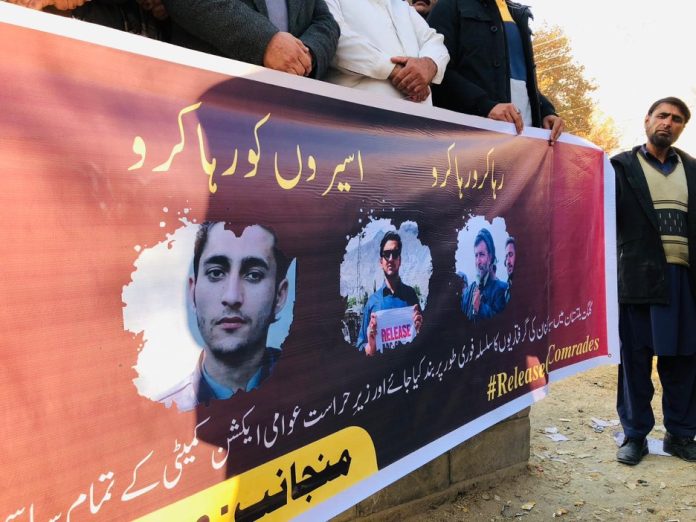
WASHINGTON, DC – Pakistan-occupied Jammu-Kashmir (POJK) is divided into two parts: upper POJK, which is spread across the 10 districts of Gilgit-Baltistan, and lower POJK, which comprises the 10 districts of Muzaffarabad-Mirpur. The local resistance movement in POJK against Pakistan is led by the Awami Action Committee (AAC), composed of groups and individuals with diverse beliefs and ethnic backgrounds.
The AAC focuses on issues that affect inhabitants’ day-to-day lives, such as affordable power bills, communication blackouts, labor rights, and food security. Since its inception, the AAC has played a significant role in revealing Pakistan’s true role as an invader and meddler in POJK.
The AAC exposes Chinese and Pakistani businesses for dam construction and resource abuse. Pakistan and China no longer wield genuine support in POJK. Although the occupiers have a monopoly over material assets and the revenues they generate, they have permanently lost the public’s emotional allegiance and goodwill.
Pakistan, as usual, employs age-old colonial tactics to weaken the AAC, such as intimidation, torture, imprisonment, and assassination of workers for suspected treason and terrorism. AAC’s initiatives have fostered solidarity and courage among the populace. Locals no longer fear the batons and bullets of Pakistani law enforcement, and instead of hiding, they now chase military vehicles out of their neighborhoods.
In October 2025, Pakistani officials killed 13 AAC supporters for nonviolent agitation. In 2024, Pakistani paramilitaries assassinated eleven members of the AAC. Over 300 AAC members are still on the exit control list (ECL), which prevents them from leaving the country.
Activists such as Mir Babar, Shakir Karakomi, Nusrat Hussain, Abid Shaheen, Ilyas, Mujtaba, Osman, and Shehzad Hasrat face terrorism charges and imprisonment for resisting the theft of natural resources and demanding an equitable share for local people.
A few weeks ago, Javed Naji, the Vice Chairperson of AAC, was assassinated in Diamer to set an example for others. In Rawalakot, Pakistani law enforcement killed two brothers, Zarnosh and Jabran, for supporting AAC. In Bagh, Pakistani officials shot and murdered Muhammad Jamil, a local constable, for refusing to fire live ammunition at protestors.
Former Islamic terrorists such as Ghazi Maqbool, Ghazi Shehzad, and Khalid Kashmiri, who were sent to kill Indians, have turned against Pakistan’s intelligence agency, ISI. At a recent public gathering, Maqbool revealed the names of Indian Muslims whom the ISI wanted him to assassinate.
Yesterday, Gilgit Baltistan’s chief minister exclaimed that Islamabad allocates only 20 billion rupees to the annual development budget. When comparing Gilgit to Kashmir, the Indian government spends much more money on a single bridge than Pakistan does on an entire territory.
This is the same Gilgit-Baltistan that provides Pakistan with uninterrupted water from the Indus River without getting any royalties or compensation. It is the same Gilgit-Baltistan that provides Pakistan with continuous transit and trade access to China, while receiving no transit or customs duties. The same Gilgit Baltistan, which is home to over ninety percent of the highest peaks and glaciers, yet watches helplessly as all tourism revenue ends up in Islamabad’s coffers.
Throughout Pakistan’s seven-decade occupation, the international community has ignored genuine instances of persecution and human rights violations in POJK to maintain its own strategic objectives.
The time has come for members of the UN Human Rights Council to speak up for the people of POJK in the same way that they do for the people of Kashmir Valley and Palestine. Otherwise, it will validate the discriminatory practices of these multilateral institutions.

Senge Sering
Senge Sering is a native of Pakistan-occupied-Gilgit-Baltistan and runs the Washington DC based Gilgit Baltistan Studies
- Senge Sering#molongui-disabled-link

- Senge Sering#molongui-disabled-link

- Senge Sering#molongui-disabled-link

- Senge Sering#molongui-disabled-link