

How a queue outside a Mumbai consulate produced the operating model now behind 71 governments
The visa outsourcing industry began in 2001, outside the U.S. consulate in Mumbai, with a problem no policy change could fix. Applicants were arriving before dawn. The consulate was overwhelmed. People waited for hours only to be told their documents were incomplete.
“People were queuing at 4 a.m.,” says Amit Kumar Sharma, who Heads VFS Global’s operations across North America, South America and the Caribbean from Washington, D.C. The company’s founder, Zubin Karkaria, watched the same queue and proposed something administrative rather than technological: let a private operator manage the queues, provide a center where applicants could wait and submit in comfort, and check documents for completeness before they reached the consulate. The consulate would keep every function that actually belonged to it, the assessment, the security judgment and the decision.
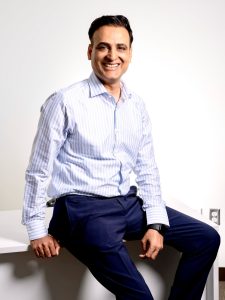
“The U.S. consulate was the first in the world to accept this solution,” Sharma says. The pilot worked. The model spread, and an industry that had not existed was created around it.
Twenty-five years on, VFS Global works with 71 governments, including the U.S. government, and operates a network of more than 4,275 application centers in 170 countries. It has processed more than 562 million transactions since 2001 and over 243 million biometric enrollments since 2007. The company is majority owned by Blackstone, the world’s largest alternative asset manager, with minority shareholders including the Swiss-based Kuoni and Hugentobler Foundation, Singapore’s Temasek and Dubai Holding of the UAE.
Those numbers describe a foundational position in the visa application process, the point at which governments and travelers actually meet. What they do not describe is why so many governments arrived at the same answer. The division of labor is the whole of it. Governments retain policy, security and decision-making. The private partner takes the volume, the logistics, the front-end experience and the technology. Sharma states the brief in operational terms: “Our goals are always to streamline the processes… make sure the front-end operations are smooth, comfortable, convenient… and ensure that the cross-border mobility is secure.”
His own vantage point spans most of the period in which that model was tested. “I joined VFS in 2004… I used to work for the UK Visa Application Center,” he says, of a posting in Delhi when the industry was barely formed. Russia followed from 2007 to 2014, Ukraine from 2014 to 2019, and Dubai through the COVID-19 period, before Washington. “We work with about 20 plus governments here in the region,” he says.
The first obstacle to the model was not commercial but legal. “When you work with any government, legislation is something you always keep in mind,” Sharma says. In the early years many governments had no legal framework permitting the outsourcing of visa services at all. Those frameworks had to be written, and they were written only as the model proved itself in one jurisdiction after another. That sequence, a pilot with a single consulate, then legislation, then adoption at scale, is the reason the change happened quietly rather than as an announced reform.
The current test is different. “We are in the age of artificial intelligence… people want everything on the mobile device, just on the click,” Sharma says. Applicants who once wanted only for their application to be accepted, and later wanted a comfortable place to wait, now expect digital submission, live status updates and immediate answers. VFS Global works with more than ten governments on e-visa and digital transformation programs, and plans against what applicants will expect two years out rather than what they ask for today. In practice this is the second phase of the same partnership: governments setting the rules of the process, the private partner building the technology that carries it.
The model has also returned something to governments that was not part of the original proposition. During the COVID-19 pandemic, VFS Global consolidated information from seventy governments on how each was responding, tracking PCR test requirements, vaccination rules and border closures, and shared the analysis with ministries, think tanks and airlines. “We have seen how these 70 governments reacted… we consolidate that information and share best practices,” Sharma says. He is direct about why the company sits where it does. “Everybody who’s traveling… cannot travel without a visa. And for most governments, visas are issued through VFS Global.”
That position widens the relationship beyond foreign ministries. VFS Global also works with ministries of tourism, culture, transportation and education, each of which absorbs the consequences of visa volume without controlling it. “All these ministries get impacted by the volume,” Sharma says. The company tracks airline route decisions, both openings and closures, as a forward indicator of where demand will land. “It gives you an indication that probably the travel is going to be more on those routes,” he says.
The furthest extension of the partnership is promotional rather than administrative. With travelers choosing between competing destinations, governments have asked the company to market national strengths alongside processing applications. “If your country is good in education, we highlight your top universities… if it’s medical tourism, we highlight the health benefits… we curate those solutions and make sure your messaging reaches where it needs to be,” Sharma explains. Britain, France and Italy are among the governments for which the company has run destination campaigns and roadshows.
Taken together, the range is the argument. A first adopter in Washington, more than twenty governments across the Americas, over ten on e-visa programs, seventy sharing pandemic data, three European states on destination promotion, and 71 in total. Different systems, different legal traditions, different levels of resourcing, arriving at the same split of responsibilities.
Asked what he would say to Washington’s diplomatic community, Sharma returns to the two variables the model is judged on. “We want to make sure cross-border mobility is very secured… and also convenient, comfortable, and accessible,” he says.
Those are not competing objectives in the way they once were, and that is the substance of the revolution. Visa systems determine whether a student reaches a university, whether a patient reaches a hospital and whether a family reaches one another. The machinery that decides it now runs largely out of sight, which is the clearest evidence that it works.

GSV News Service
- GSV News Service#molongui-disabled-link

- GSV News Service#molongui-disabled-link

- GSV News Service#molongui-disabled-link

- GSV News Service#molongui-disabled-link