

Munimul Islam’s release and the closure of Spanish extradition proceedings leave serious questions about disputed board authority, conflicting records, and whether an alleged personal vendetta by an American public relations executive contributed to the escalation of a Mercury Public Affairs contract dispute into criminal proceedings, an INTERPOL Red Notice, and detention in Spain.
WASHINGTON — The legal proceedings against Munimul Islam in Spain are over. The questions that brought him there are not.
Myanmar has withdrawn its extradition request against Munimul Islam, a former governor of the American Chamber of Commerce in Myanmar (AMCHAM Myanmar), bringing an end to Spanish proceedings arising from his detention in Barcelona. The case, which began as a dispute over a Washington, D.C., consulting agreement, had escalated into an international legal controversy involving Myanmar’s criminal justice system and INTERPOL.
Islam, chief executive of Misfit Technologies, arrived in Barcelona on September 29 for a holiday with his wife. Instead, he was detained by Spanish authorities pursuant to an INTERPOL Red Notice requested by Myanmar. As of October 12, El País reported, he remained in provisional detention while contesting extradition.
According to Islam, Spanish police initially informed him that his detention concerned “scam centers,” the sprawling online fraud operations operating across Myanmar. He says the same explanation was provided to his lawyer when police contacted counsel later that evening.
The allegations underlying the Red Notice, however, concerned an entirely different matter. They originated from a dispute within an American business association in Yangon over a consulting agreement with Mercury Public Affairs, a Washington-based lobbying and public affairs firm. Central to the dispute were questions of who authorized the agreement, how its fees were paid, and whether chamber leadership had approved the arrangement.
Two other men connected to the agreement had already spent months in Myanmar custody. Adam Castillo, an American businessman, former Marine, and former AMCHAM Myanmar president, was detained for 97 days, including 83 days at the notorious Insein Prison. Ye Khaung “Danny” Kyaw, the chamber’s former executive director, was also imprisoned. What began as an internal governance dispute had now extended beyond Myanmar’s borders, resulting in the detention of a third individual in the European Union.
Internal correspondence and screenshots obtained from sources within AMCHAM Myanmar’s current Board of Governors, alongside court records and English-language summaries obtained from sources within Pabedan Township Court, offer a closer examination of how the dispute escalated. The materials reveal efforts by chamber leadership to manage the organization’s potential legal exposure, a public relations executive offering his company’s resources to defend the board’s position, and a potentially significant connection between private communications and the criminal allegations pursued in Myanmar.
According to the court summary, the complainant identified communications forwarded by Paul Anthony Larmon, an AMCHAM governor and executive at Ruder Finn Era, to chamber president Khin Maung Win, whose company operates Caterpillar’s authorized dealership in Myanmar. Those communications were subsequently cited in support of allegations concerning concealed payments, raising questions about the role private correspondence played in the development of the criminal complaint.
The court records suggest another consequential connection. On July 9, the judge overseeing the proceedings against Castillo and Kyaw at Pabedan Township Court reportedly signed the judicial request underlying Islam’s INTERPOL Red Notice. That same day, Castillo and Kyaw were formally charged under Section 409 of Myanmar’s Penal Code, which concerns criminal breach of trust, following 28 days in detention. Both men maintain that they had been denied access to legal counsel and a meaningful opportunity to examine the evidence or respond to the allegations during that period.
The apparent convergence of these proceedings raises questions about how an internal chamber dispute developed into multiple criminal cases and an international extradition request, particularly where the underlying contractual authorization and payment arrangements remained contested.
Islam has consistently maintained that the allegations against him were unfounded. Following the termination of the Spanish proceedings, his response extended beyond relief to demands for accountability.
“This case exposes serious weaknesses in Interpol’s safeguards, allowing a military regime to trigger detention in a European democracy over unsubstantiated allegations,” he told the Associated Press.
Islam also indicated that he was considering legal action against AMCHAM Myanmar and members of its current board.
“I spent 14 days detained, separated from my two infant daughters, causing enormous emotional, financial and reputational harm,” Islam said. “My freedom has been restored but the damage remains — I want accountability and safeguards so no other innocent family endures this.”
Examining Ruder Finn Executive Anthony Larmon’s Involvement in the AMCHAM Myanmar Dispute
As a dispute over Washington lobbying engulfed the American Chamber of Commerce in Myanmar, one board member brought a particular set of professional skills to the controversy: Paul Anthony Larmon, known as Anthony, Southeast Asia managing director of Ruder Finn Era, an affiliate of the American public relations firm Ruder Finn.
The dispute centered on a November 2024 agreement with Mercury Public Affairs, a Washington lobbying firm engaged to advance the American Chamber of Commerce in Myanmar’s advocacy efforts in the United States. Although AMCHAM Myanmar was named as the client, the agreement directed invoices through Misfit Technologies, which paid Mercury directly. Chamber leadership subsequently challenged the contract’s authorization, despite court testimony acknowledging that Mercury had received approximately $300,000. The Associated Press reported that Mercury provided services and board minutes indicated awareness and approval, although AMCHAM disputed the authenticity of a separate supporting resolution. The central question was whether the agreement had been properly authorized, not whether Mercury had been paid.
By March 2026, the dispute had become a confrontation over the chamber’s reputation, leadership credibility and control of the public narrative.
On March 11, AMCHAM president Khin Maung Win wrote to governors about correspondence from two members whose membership renewals had been rejected. He maintained that the board had repeatedly requested explanations and documents without satisfactory cooperation, and had acted to protect the chamber from legal, tax and reputational risks. He recommended limiting further engagement, arguing that demands for internal deliberations and individual voting records exceeded reasonable governance expectations.
Nine minutes later, Paul Anthony Larmon, known as Anthony, an AMCHAM governor and Southeast Asia managing director of Ruder Finn Era, responded from his corporate email account.
“Full agreement,” he wrote, adding that unless governance requirements or the law demanded further engagement, the board should focus elsewhere.
He then offered his professional assistance:
“If you or the Board feels the situation or narrative is being guided in a way harmful to our leadership or AmCham’s mission/activities, I am standing by to advise on any external counter communications to the appropriate stakeholders in the appropriate format.”
For an executive specializing in corporate reputation management, the language was familiar. Its significance lay in the circumstances: Larmon was offering to shape how the dispute would be presented beyond the boardroom, placing his communications expertise at the leadership’s disposal.
The email establishes his willingness to advise the board using his corporate account, but not that Ruder Finn authorized an engagement, assigned employees or financed a campaign. Nevertheless, it raises questions about the firm’s knowledge of his involvement in a dispute that later escalated into criminal proceedings and an INTERPOL Red Notice against Munimul Islam, chief executive of Misfit Technologies.
Islam alleges Larmon’s involvement reflected a personal grievance dating back several years.
“I think Anthony has held a grudge against me ever since I refused to do business with him back in 2020,” Islam said. “Earlier this year, he attacked me in several nasty emails, even using his Ruder Finn work account. I found those attacks insulting and deeply personal. To see him involved in a dispute that eventually landed me in jail in Spain tells me everything I need to know about his character.”
Other correspondence reveals further personal tensions.
In WhatsApp exchanges reviewed for this article, Larmon described former chamber president Adam Castillo as “very very egocentric and narcissistic,” accused him of exaggerating his importance and criticized his use of American imagery on LinkedIn.
“You are quite literally now imagining a campaign against you,” Larmon wrote. “No one gives a fuck at all.”
Larmon also insisted that neither Khin Maung Win nor anyone else intended to act against Castillo’s interests. Three months later, however, Castillo was imprisoned in Myanmar’s notorious Insein Prison following a criminal complaint brought on the chamber’s behalf. Whether Larmon contributed to that outcome remains unestablished.
Private communications also surfaced in the criminal proceedings.
According to court summaries obtained from Pabedan Township Court sources, AMCHAM executive director Myat Phyu The provided police with a screenshot from an unidentified sender containing the phrase “without any audit trail.” The communication was reportedly presented as circumstantial evidence supporting allegations of concealed payments involving Castillo, despite the absence of an identified sender or authenticated conversation.
A source familiar with AMCHAM’s board communications attributed the messages to Larmon. Their origin, authenticity and whether they had been altered remain unverified. The summaries indicate the messages formed part of the allegations, but do not establish their reliability or prove Larmon knowingly supplied evidence for criminal proceedings.
By August, Larmon had become increasingly confrontational in defending the board’s decisions.
On August 20, while Castillo remained imprisoned, Casey Barnett of AMCHAM Cambodia wrote to AMCHAM Myanmar’s leadership under the subject line “Urgent request for Adam Castillo’s release and pursue civil remedies first.”
Barnett, the Cambodian chamber’s special envoy for advocacy and public-private dialogue, acknowledged the board’s responsibility to investigate legitimate concerns but urged its leadership to withdraw, narrow or suspend any criminal complaint it had initiated or supported. At minimum, he requested that AMCHAM not oppose Castillo’s release or bail while the dispute was addressed through noncustodial legal procedures.
“The Chamber’s legal rights and legitimate interests can be preserved without Adam remaining in detention,” Barnett wrote.
Ten minutes later, Larmon responded from his Ruder Finn Era account.
He rejected Barnett’s suggestion that imprisonment was being used as leverage in a commercial dispute, calling the proposition “frankly stupid” and questioning Barnett’s understanding of the case.
Larmon defended the board, maintaining that governors had considered negotiation, legal obligations, independent investigation and ethical concerns. He also rejected any connection between Castillo’s book promotion and the timing of his detention.
Describing himself as less restrained than his fellow governors, Larmon suggested a collective response would convey essentially the same position. He concluded with an insult:
“When you assume you make an ASS of U and ME.”
Barnett responded that he had approached AMCHAM Myanmar with his chamber president’s permission.
“If anything, the temperament and language that you display, and your lack of an explanation as to why Adam is in prison, only increase concerns,” he wrote.
Larmon subsequently maintained that the board’s minutes, reports and resolutions were available and encouraged direct communication between the chambers’ presidents. Khin Maung Win, however, did not respond to AMCHAM Cambodia’s request.
Reflecting more recently, Barnett questioned the rationale for criminal proceedings. He argued that the allegations lacked “common sense” because AMCHAM Myanmar suffered no financial loss from payments made directly by Misfit Technologies, which he described as a voluntary and informed donor.
“It was unjustified and vindictive to seek Adam’s detention over an administrative matter related to the U.S.-Burma Economic Forum which had been approved in a public vote by AMCHAM members,” Barnett said.
His assessment exposed a disagreement between the two American chambers. While AMCHAM Myanmar defended its criminal complaint, its Cambodian counterpart urged restraint and resolution without continued imprisonment.
When contacted about his involvement and correspondence, Larmon declined to address the substantive questions, replying: “Copying of my organization’s general emails is inappropriate. Do not contact me again.”
Larmon’s use of his corporate email raises questions about Ruder Finn’s knowledge or involvement, although company authorization remains unestablished. Court summaries reference unauthenticated messages attributed to Larmon that reportedly supported criminal allegations arising from the Mercury agreement. That same dispute subsequently led to an INTERPOL Red Notice against Islam and his detention in Spain, raising serious questions about how private communications were used to support criminal proceedings and extend their consequences internationally.
Whether Larmon acted independently or with Ruder Finn’s knowledge or authorization remains unresolved. No evidence establishes the firm’s direct involvement in the criminal proceedings or INTERPOL Red Notice that led to Islam’s detention in Spain.
Ruder Finn did not respond substantively to questions about Larmon’s conduct or potential use of company resources. An inquiry sent to its official press address was returned with an automated notice stating, “Message blocked.”
The INTERPOL Controversy in Spain: Questions of European Legal Safeguards
On September 16, Adam Castillo was released after 97 days in detention following intervention by a White House delegation. Available court records contain no documented guilty plea, conviction, sentence or formal deportation order. Castillo spent his first 28 days without access to legal counsel and maintains that he was never permitted to consult privately with his lawyer, examine the case file or adequately prepare his defense.
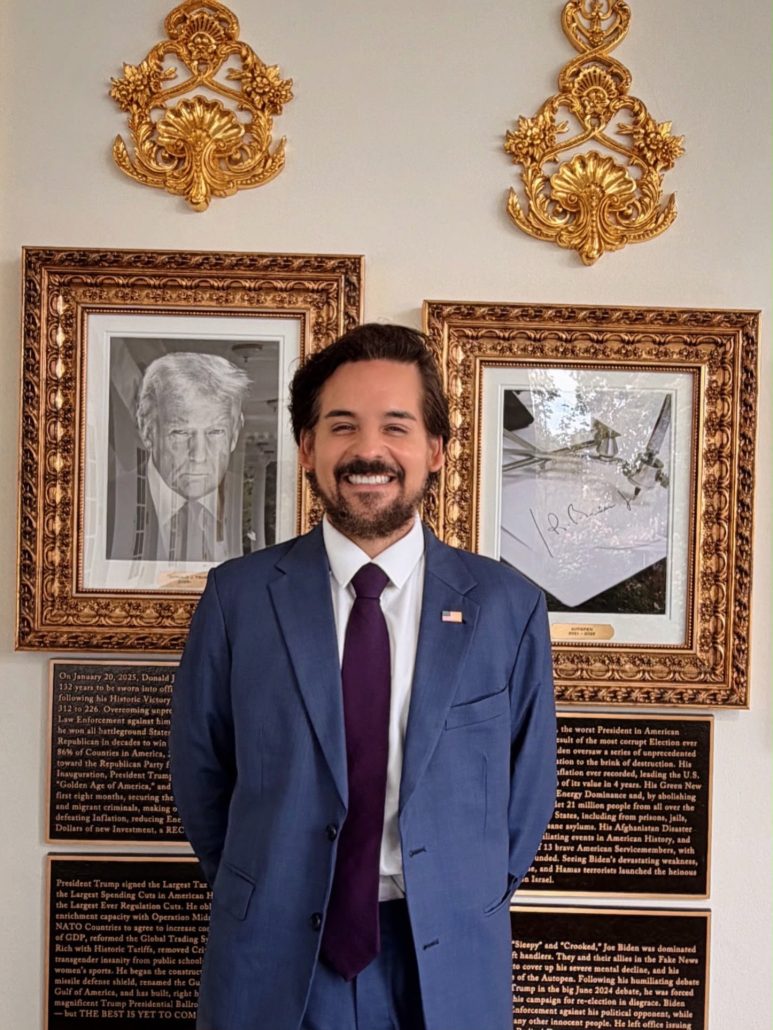
The outcome for Ye Khaung “Danny” Kyaw was different. According to an English-language summary of the September 22 judgment, Kyaw pleaded guilty and received a three-month sentence of imprisonment with hard labour, credited against time served from June 12 to September 21.
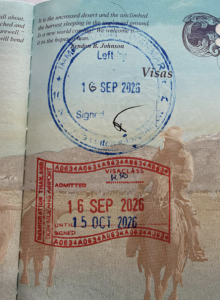
Munimul Islam, meanwhile, was detained in Spain on September 29 while contesting extradition arising from the same dispute. On October 18, Myanmar authorities informed INTERPOL Madrid that they would no longer pursue his extradition and requested cancellation of the Red Notice. Those communications described Kyaw as convicted, sentenced and deported, but characterized Castillo as “deported” without identifying a conviction or sentence.
That characterization conflicts with available Myanmar court records, which document no conviction, sentence or deportation order against Castillo. Their passports reveal a further discrepancy: Castillo’s bears an ordinary exit stamp without a deportation notation, while Kyaw’s reportedly carries an explicit deportation marking. The legal basis for describing Castillo’s departure as a deportation remains unexplained.
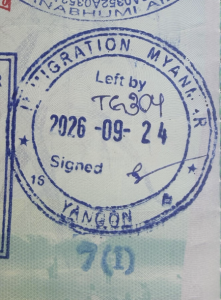
The Spanish court did not formally close Islam’s extradition proceedings until October 26, a week after receiving notification from INTERPOL Madrid. It subsequently ordered the return of his passport, bringing the case to a close.
Islam’s detention raises serious questions about how an internal dispute within an American business association became the basis for an international police alert, resulting in a foreign national’s detention in Europe over allegations Myanmar ultimately declined to pursue through extradition.
Legal experts interviewed for this article questioned whether allegations concerning the authorization and payment of a private consulting agreement satisfied INTERPOL’s requirements for international police cooperation. Neither INTERPOL nor a Spanish court has published a determination resolving that question.
Article 83 of INTERPOL’s Rules on the Processing of Data generally restricts Red Notices involving administrative violations and private disputes, subject to exceptions for sufficiently serious criminal conduct, including certain forms of organized crime. Classification as a criminal offense under domestic law does not automatically establish eligibility for international circulation.
A Red Notice is not an international arrest warrant. It is a request to locate and provisionally arrest an individual pending extradition or similar proceedings. INTERPOL cannot compel arrests, and member countries remain responsible for applying their own laws.
INTERPOL says its specialist task force reviews requests using information from requesting countries, other member states and publicly available sources. Its procedures also permit further examination and cancellation of notices found to violate its rules.
The central questions remain: What scrutiny was applied to Myanmar’s request? What specific criminal conduct was attributed to Islam? What evidence supported those allegations? And how did a dispute over a chamber consulting agreement qualify for an international police alert?
INTERPOL’s own oversight figures underscore why these questions matter. In 2024, its Commission for the Control of Files found noncompliance in 322 of the 539 deletion requests it decided involving individuals whose information appeared in its systems. These figures concern contested cases, not the overall reliability of Red Notices. The commission also reported that 30 percent of deletion requests took longer than nine months to resolve.
For individuals detained abroad, the consequences of a disputed notice can be severe, even when extradition proceedings are ultimately abandoned.
Spanish law permits provisional detention following urgent requests transmitted through INTERPOL, but also provides alternatives, including passport surrender, reporting obligations, movement restrictions and financial guarantees. A Red Notice may initiate proceedings, but Spanish authorities retain independent responsibility for determining whether continued detention is justified.
Islam’s reported lack of a fixed residence in Spain was a key factor in his continued detention. His lawyers subsequently offered a local address while contesting extradition. The Spanish court closed the proceedings on October 26 after Myanmar withdrew its request. The case emerged amid growing concerns over Myanmar’s use of international law-enforcement mechanisms against perceived opponents.
On October 14, the International Federation of Journalists condemned Myanmar authorities’ reported attempts to pursue INTERPOL action against five exiled news organizations: Myanmar Now, Khit Thit, The Irrawaddy, Mizzima and Democratic Voice of Burma. Although INTERPOL’s approval of those requests was unconfirmed, the allegations raised concerns about potential misuse of international policing mechanisms.
Islam’s case had already gone further. A Myanmar-requested Red Notice had resulted in his detention in Spain.
AMCHAM Myanmar maintained in statements to the Associated Press that criminal charges, detention, bail and guilt were matters for law enforcement and the courts. Yet questions remain about individual board members’ roles in advancing allegations and supplying evidence in a dispute that led to detentions in Myanmar and Spain.
Casey Barnett challenged the allegations, noting that “all funds were paid directly to Mercury Public Affairs, with no money going to Adam,” and that the payments were publicly disclosed in U.S. lobbying filings. According to Barnett, the money at the center of the criminal complaint never belonged to AMCHAM, was never missing and had never been concealed.
When questioned about the court record, AMCHAM Myanmar stood by its allegations against Castillo and Islam. Rather than produce an official judicial ruling, the chamber supplied a September 17 article from the state-run Global New Light of Myanmar, published the day after Castillo’s release, describing his departure as a deportation. It provided no judgment establishing a conviction or sentence.
AMCHAM had legal representation in the criminal proceedings involving Castillo, Kyaw and Islam. The chamber was also directed to an official Pabedan Township Court record examined in an October 23 report by Global Strat View. Yet AMCHAM relied on state media rather than addressing the court record, insisting it saw “no reason to amend” its previous disclosures to members concerning alleged “unauthorized actions” by former board members. It also warned that it “reserves the right to take all appropriate measures” against allegations it considered false or defamatory.
The repercussions extend to Myanmar’s government. President Min Aung Hlaing, whose military seized power in 2021 and who now heads the country’s reconstituted administration, has pursued greater regional engagement and international legitimacy. Yet the controversy has twice drawn international scrutiny of Myanmar’s criminal justice system: first through the detention of an American veteran released following White House intervention, then through an extradition dispute involving a foreign businessman detained in Europe.
For Islam, the ordeal was deeply personal. He believes his Muslim faith contributed to his treatment by Myanmar’s military-backed government.
“Myanmar’s military has already committed genocide against Muslims, so why should I be surprised they came after me for being Muslim?” Islam said. “They used INTERPOL to have me arrested in Spain, ripped me away from my family, and put me through hell over a case their corrupt courts pursued without a shred of evidence.”
Myanmar’s decision to pursue Islam internationally, only to withdraw its extradition request weeks later, raises questions about coordination and oversight. On July 9, the Pabedan Township Court judge overseeing Castillo and Kyaw’s proceedings reportedly signed the judicial request underlying Islam’s eventual INTERPOL Red Notice, the same day both men were formally charged.
On October 18, Myanmar’s INTERPOL office abandoned the extradition effort and requested cancellation of the notice. The escalation of a chamber dispute into an international police matter, followed by its withdrawal, raises questions about whether diplomatic pressure influenced the decision. It remains unclear whether senior authorities knew of the original request, initiated during the previous Minister of Home Affairs’ tenure, or scrutinized the allegations before circulation. That minister was replaced the day after Castillo’s release.
Spain faces questions of its own. European Union institutions have repeatedly condemned Myanmar’s military authorities and their human rights record. Yet Spain detained a foreign national on a Red Notice requested by those authorities, potentially lending credibility to allegations originating from a judicial system European institutions have consistently criticized. Myanmar’s subsequent withdrawal raises further questions about the justification for Islam’s detention.
The implications extend beyond Islam. Myanmar authorities have reportedly sought INTERPOL action against exiled journalists accused of terrorism, raising fears that others could face detention while traveling abroad. Similar concerns surround requests from Russia and other governments accused of targeting political opponents through international policing mechanisms. Spain’s handling of Islam’s case leaves a fundamental question:
How closely should European authorities scrutinize Red Notices from governments with documented records of judicial abuse before making an arrest?
Myanmar’s international rankings make that question especially urgent. The World Justice Project’s Rule of Law Index ranked Myanmar 138th out of 143 countries for criminal justice, while Transparency International’s 2025 Corruption Perceptions Index ranked it 169th out of 182 for public-sector corruption. Both assessments raise concerns about the reliability of criminal allegations submitted by Myanmar authorities for international enforcement.
INTERPOL’s response offered little clarification. Asked about Islam’s case, the organization emphasized that information submitted by its 196 member countries remains under their ownership. “The General Secretariat can only provide information in special circumstances and/or with the approval of the country concerned,” it stated, directing further inquiries to Myanmar authorities.
INTERPOL maintains that Red Notice requests undergo legal and compliance screening, including safeguards against political and religious misuse. Yet it provided no case-specific explanation of how those safeguards were applied to Islam’s notice, whether Myanmar’s record of judicial corruption and human rights abuses prompted additional scrutiny, or how the allegations satisfied its review requirements before resulting in his detention in Spain.
The result is a troubling accountability gap. Governments accused of abusing their criminal justice systems can request international police action, while INTERPOL may decline to explain how those requests were evaluated. For exiled journalists, political dissidents and others fleeing persecution, the consequences can include detention, prolonged legal proceedings and uncertainty over their freedom.
A dispute within an American business chamber ultimately exposed troubling questions about INTERPOL’s Red Notice safeguards and their vulnerability to misuse by governments with compromised judicial systems. Myanmar eventually withdrew its extradition request, but only after Islam had spent 14 days in Spanish detention. His release ended the proceedings, not the questions surrounding how they began.
The Credibility of INTERPOL’s Red Notice System Under Scrutiny
Yet the greater institutional embarrassment may belong to INTERPOL itself.
A privately funded Washington consulting contract became the basis for an international police alert that reached Spain, where Munimul Islam was detained pending extradition to Myanmar. Weeks later, Myanmar abandoned the request, raising serious questions about INTERPOL’s safeguards.
INTERPOL maintains that its General Secretariat reviews Red Notice requests before publication. But these are not independent criminal investigations. The organization relies heavily on information supplied by requesting countries, including governments accused of judicial abuses. In Islam’s case, the effectiveness of that screening remains in question.
The public record does not establish what evidence INTERPOL examined, how it assessed the allegations or whether it considered Castillo’s detention. Nor has INTERPOL explained how a chamber dispute over a Washington lobbying contract qualified for an international police alert.
The problem extends beyond Myanmar. Russia repeatedly pursued INTERPOL action against Kremlin critic Bill Browder, despite the organization rejecting requests it considered political. Uyghur activist Idris Hasan spent more than three years detained in Morocco following a Chinese-requested Red Notice, even after INTERPOL cancelled it. Human rights organizations have long warned that governments can exploit international policing mechanisms to pursue dissidents abroad.
China’s influence within INTERPOL also warrants scrutiny. Former Chinese vice-minister of public security Meng Hongwei served as its president, while another senior Chinese police official was elected vice-president for Asia in 2025. China is also one of INTERPOL’s largest financial contributors. Although no evidence links China to Islam’s case, its position raises questions about INTERPOL’s independence and reliance on powerful member states.
Beyond the influence of powerful governments, questions have emerged about individuals claiming they can manipulate INTERPOL’s procedures for financial gain. A European source described approaches by lawyers and consultants claiming to be former INTERPOL employees, offering to remove Red Notices for substantial fees. Some promised to reduce a process lasting a year to just months through alleged internal connections. Those claims remain unverified, but corruption involving Red Notices is not unprecedented.
In June 2024, the Associated Press reported on an international investigation into an alleged multimillion-dollar bribery scheme in Moldova that helped fugitives evade Red Notices. A year later, former INTERPOL oversight chief Vitalie Pirlog was arrested over allegations of improperly arranging notice suspensions, with payments reportedly reaching €1 million to €2 million per client, according to Le Monde. Pirlog has not been convicted in connection with those allegations.
INTERPOL’s oversight figures raise further concerns. In 2024, its Commission for the Control of Files found noncompliance in 322 of 539 deletion requests it decided involving individuals whose information appeared in its systems. Although these contested cases do not represent all Red Notices, the findings raise questions about how questionable information enters the system and how long it remains before being challenged.
For Islam, the consequences were immediate. A Myanmar-requested notice reached Spanish authorities and resulted in his detention. On October 18, Myanmar informed INTERPOL Madrid that it would abandon extradition and requested cancellation of the notice. Spain closed the proceedings on October 26. By then, Islam had spent 14 days detained over allegations Myanmar ultimately declined to pursue through extradition.
INTERPOL owes the public an explanation of how Myanmar’s Red Notice passed its safeguards, what evidence was reviewed and why a private commercial dispute warranted international police action. Instead, INTERPOL referred inquiries back to Myanmar, stating that submitted information “remains under the ownership of that member country.”
Myanmar’s withdrawal does not erase the consequences of Islam’s detention. The case raises serious questions about accountability and whether those responsible for approving the notice should face independent investigation and legal scrutiny.

Se Hoon Kim
Se Hoon Kim is the Managing Editor and White House Correspondent for Global Strat View. A U.S. Army veteran, he covers the White House, national security, foreign policy, and U.S. politics.
- Se Hoon Kim#molongui-disabled-link

- Se Hoon Kim#molongui-disabled-link

- Se Hoon Kim#molongui-disabled-link

- Se Hoon Kim#molongui-disabled-link