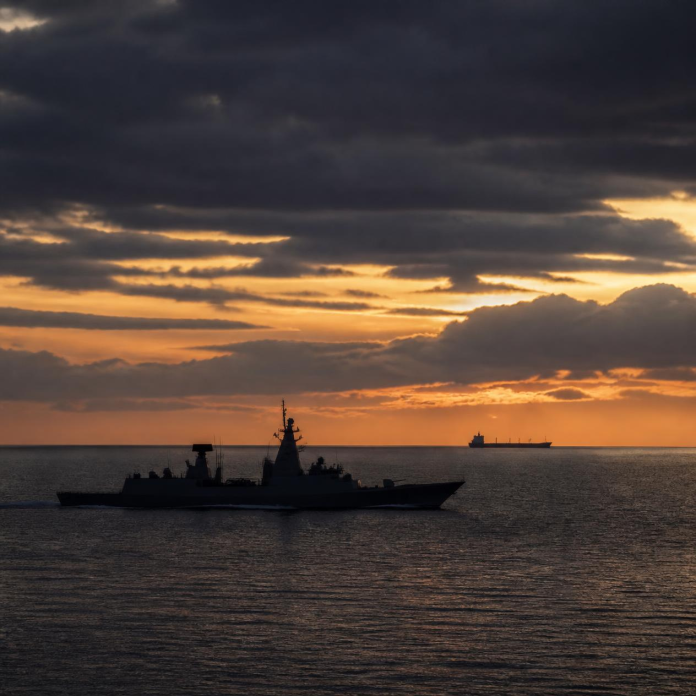
NEW DELHI – Ask what Pakistan’s navy has accomplished over the past decade, and the answer arrives quickly and confidently: Chinese-built Type 054A/P frigates in active service, Hangor-class submarines being delivered in phases, an expanding maritime surveillance footprint, and a leadership increasingly comfortable describing the service in blue-water terms. This is the version of naval progress that shows up in official statements, defense exhibitions, and steady media coverage, a service visibly building toward something larger than a coastal defense force.
There is a second, quieter version of the same decade that rarely gets the same billing: a recurring pattern of maritime incidents affecting Pakistani nationals across the Gulf of Aden, Red Sea, and wider Arabian Sea, ranging from piracy and hijacking to, more recently, the kind of missile and drone threats that have reshaped shipping risk in the region since late 2023. This second ledger doesn’t generate press releases. It generates far less institutional attention than a submarine handover ceremony, despite testing the navy’s stated purpose more directly than any fleet review does.
Setting these two records side by side exposes a genuine tension, not a simple failure. New frigates and submarines serve real strategic functions: undersea deterrence, conventional balance with India, a credible signal to regional rivals and to Pakistan’s principal defense supplier. None of those functions were designed to intercept a missile aimed at a foreign-flagged merchant vessel a thousand kilometers from Pakistani waters, and it would be unreasonable to expect them to. The problem isn’t that the platforms are the wrong tools. It’s that no comparable tool has been built, funded, or publicly discussed for the mission that actually determines whether Pakistani seafarers come home safely.
This is where the credibility question becomes specific rather than rhetorical. If naval modernization is meant to serve national maritime security broadly defined, then citizen protection abroad should appear somewhere in that definition — not as an afterthought handled by a separate ministry with a separate, much smaller budget, but as a mission the navy itself is resourced and postured to support.
At present, it does not occupy that position. Budget allocations, procurement priorities, and doctrine all point toward deterrence and blue-water aspiration; none point toward the kind of persistent monitoring or rapid-response capability that would let Pakistan meaningfully reduce the risk facing its seafaring workforce in distant corridors.
Retired officers and independent analysts have periodically raised a version of this question directly, asking whether the fixation on blue-water status is even the right ambition for a navy whose citizens are more routinely endangered by piracy, hijacking, and missile threats to commercial shipping than by any scenario its newest platforms are built to deter. A more modest but more targeted investment — better liaison with the flag states employing Pakistani crew, faster consular and repatriation response, a functioning seafarer welfare mechanism — would likely do more against that specific risk profile than another frigate added to the order of battle.
None of this argues that Pakistan’s modernization program has been a waste of money. It argues that the program answers a question the navy was already comfortable answering, while leaving a harder and more consequential one largely untouched.
A decade of visible naval growth has not yet produced an equally visible answer to what happens to ordinary Pakistani citizens when the waters they depend on for their livelihood turn dangerous. Until it does, the gap between the fleet Pakistan shows off and the protection it actually delivers will keep resurfacing, regardless of how many new platforms enter service in between.

Ashu Mann
Ashu Mann is an Associate Fellow at the Centre for Land Warfare Studies. He was awarded the Vice Chief of the Army Staff Commendation card on Army Day 2025. He is pursuing a PhD in Defense and Strategic Studies at Amity University, Noida. His research focuses include the India-China territorial dispute, great power rivalry, and Chinese foreign policy.
- Ashu Mann#molongui-disabled-link

- Ashu Mann#molongui-disabled-link

- Ashu Mann#molongui-disabled-link

- Ashu Mann#molongui-disabled-link