Yoon Walker, SOAS, University of London
South Korea’s constitutional court upheld the parliament’s decision to impeach the country’s suspended president, Yoon Suk Yeol, on April 4. The court stated that, by declaring martial law in December, Yoon had taken actions that were beyond the powers granted by South Korea’s constitution.
Yoon is also facing criminal charges for allegedly leading an insurrection with the martial law attempt. While the criminal trial is separate from the impeachment, the court’s ruling that the martial law decree was unconstitutional could undermine Yoon’s defence of presidential authority.
Separate to this charge, Yoon is being investigated for obstructing arrest after his security team blocked attempts by the police to detain him at his residence in January. His security service refused police warrants for search and seizure, citing national security concerns.
Yoon has been stripped of his presidential rights, including the privilege of staying in the newly built presidential residence in Seoul and being buried at the national cemetery when he passes away.
South Koreans will now elect a new president. But, in a country beset by deep societal division, the new leader will face an uphill battle to return the nation to stability.
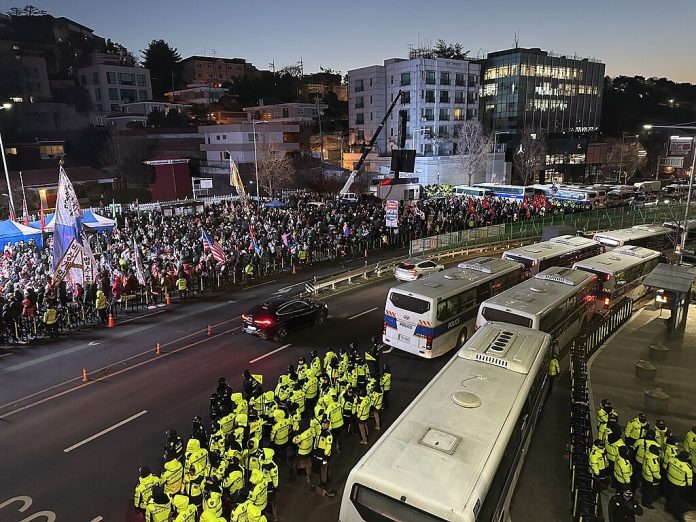
Since parliament approved Yoon’s impeachment over 100 days ago, South Korea has been divided between Yoon’s supporters, who see him as the victim of a political establishment that has been overrun by “communists”, and those in favour of his removal. There have been weekly protests from both camps.
Most conservative politicians from Yoon’s People Power party (PPP) stood by him throughout the political upheaval. But many have started to distance themselves from him now that he has been dismissed, especially as any criminal conviction could be a setback for the party in the upcoming snap election.

The political stance of far-right figures is also changing. Jeon Kwang-hoon, a Protestant pastor at the forefront of the anti-impeachment movement and an advocate for the “right to resist”, has rejected the court’s ruling on Yoon’s impeachment. He has also urged his followers to resist.
On the other hand, another prominent far-right figure called Jeon Han-gil swiftly changed his stance after the judgment. He expressed his respect for the court’s decision and announced that he would now focus on supporting the upcoming presidential election.
Electing Yoon’s successor
With South Korea’s need for a new president confirmed, the date for the snap presidential election has been set for June 3. Both political camps are gearing up for the race.
Lee Jae-myung, leader of the main opposition Democratic party (DPK), has been Yoon’s most formidable rival. Lee was the DPK’s candidate in the last presidential election in 2022, where he narrowly lost to Yoon by less than 1% of the vote.
Few others from his party have shown interest in the primary race, including former member of the National Assembly Kim Kyung-soo and the governor of Gyeonggi province, Kim Dong-yeon.
The situation in the ruling party is more chaotic. With no clear frontrunner, a number of candidates are expected to enter the race.
These include labour minister Kim Moon-soo, former PPP leader Han Dong-hoon, Daegu mayor Hong Joon-pyo, and Ahn Cheol-soo, a politician who made his name in the tech industry. Experts predict there could be ten candidates in the ruling party’s primary.
South Korea’s polarisation across political, social, gender and generational lines has intensified in recent years. Lee Jae-myung was even stabbed in the neck in 2024 by a man hoping to prevent him from “becoming president”, resulting in Lee undergoing emergency surgery.
This division has become even more pronounced since Yoon’s declaration of martial law, with tensions spilling over online and on the streets. The crisis has provided both ends of the political spectrum with an opportunity to solidify their positions, further entrenching this divide.
During the street protests following the martial law decree, the majority of women in their 20s and 30s took the lead in advocating for Yoon’s impeachment, while many men in the same age group rallied against it.
As South Korea prepares to elect its next leader, the urgency of uniting a deeply fractured society has never been greater. National unity has long been a central goal for South Korean political leaders, but heightened social divisions are threatening the country’s wellbeing.
This is being compounded by a range of other pressing issues, including the world’s lowest birth rate, a high suicide rate and soaring housing prices. These paint a sobering picture of the challenges ahead.
Yoon Walker, PhD Candidate in the School of Languages, Cultures and Linguistics, SOAS, University of London
This article is republished from The Conversation under a Creative Commons license.