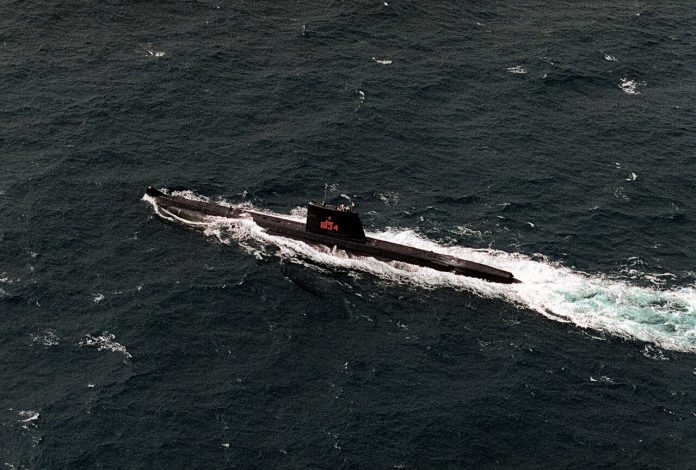
NEW DELHI – The Pakistan Navy received its first Chinese-built Hangor-class submarine, PNS/M Hangor, in Karachi on June 11, 2026. Commissioned in Sanya, China, on April 30, it is the first of eight submarines being acquired from Beijing under the program. Pakistan sees the boat as a symbol of its naval modernization, but keeping these submarines running may prove harder than buying them.
The concern centers on the Chinese CHD620 diesel engines reportedly fitted to the Hangor class. The submarines were designed around Germany’s MTU 396 engine, but Germany refused to approve its export. China then proposed the CHD620 instead, and the engine has no publicly established operational record in submarine service.
That makes Pakistan one of the first operators to test it in naval service. The engine has not been proven over long-term operations, so technical problems could emerge later and drive up maintenance demands. This makes it hard to estimate service intervals and repair times.
Servicing the engines will also require specialized equipment and expertise. Overhauls call for diagnostic equipment, specialized instrumentation, manufacturer specifications and access to specialized spares. Pakistan may have to rely on Chinese technical experts for some complex repairs, and depending on China for spares could lengthen repair times.
The burden would also fall on Pakistani submarine crews. Engineering staff will have to monitor engine condition, carry out checks and detect mechanical defects before they affect operations. If maintenance takes longer and Chinese help is needed, the boats will spend more time idle.
The problem extends beyond the engines. The CHD620 drives the generators that produce the electricity used to recharge the submarine’s batteries, which are essential to its operation. Any fault in power generation could affect the batteries and, in turn, the boat’s power systems.
The Hangor class also has a Stirling air-independent propulsion (AIP) system, which allows longer underwater missions without constantly running the diesels. But AIP does not replace diesel generators, so a failure in power generation would still create serious difficulties.
Pakistan’s own repair facilities will matter as well. Karachi Shipyard and Engineering Works (KS&EW) is building four of the eight boats under a technology transfer agreement. Whether it can independently carry out major repairs on the CHD620 is unclear, and building submarines does not automatically bring the expertise to repair every imported propulsion component.
Acquiring eight submarines may be the easier part for Pakistan. Maintaining them will require specialized tools, expertise and Chinese support, and delays in maintenance would keep boats out of service. Unless KS&EW can develop the ability to maintain the engines, Pakistan may remain dependent on Beijing long after the submarines are delivered.

Ashu Mann
Ashu Mann is an Associate Fellow at the Centre for Land Warfare Studies. He was awarded the Vice Chief of the Army Staff Commendation card on Army Day 2025. He is pursuing a PhD in Defense and Strategic Studies at Amity University, Noida. His research focuses include the India-China territorial dispute, great power rivalry, and Chinese foreign policy.
- Ashu Mann#molongui-disabled-link

- Ashu Mann#molongui-disabled-link

- Ashu Mann#molongui-disabled-link

- Ashu Mann#molongui-disabled-link