
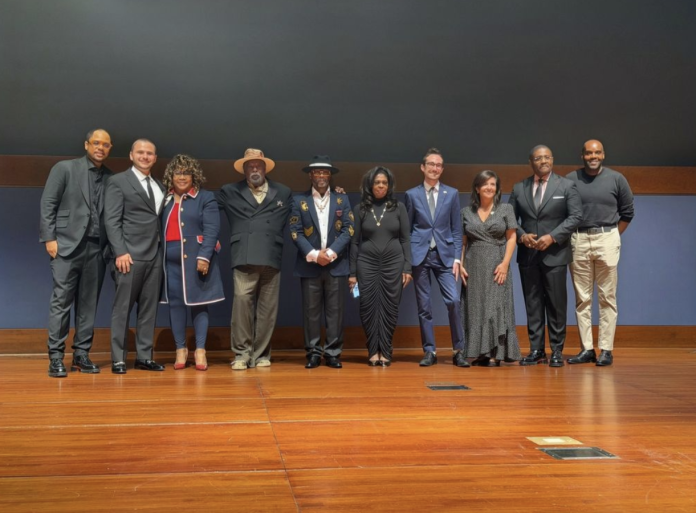
WASHINGTON — The House had finished its business for the day when members of Congress began making their way across the Capitol complex. Inside the Congressional Auditorium, however, the focus was not on the day’s political battles, but on something broader — and, in a deeply divided country, perhaps more difficult to talk about: what Americans still have in common.
The occasion was the America United National Observance, held on the eve of Constitution Day. The timing allowed members of Congress to come directly from the House after completing their legislative work. But the evening was not designed as another partisan gathering. There was no campaign to rally around, no party platform and no political score to settle. Instead, the program brought together people from remarkably different parts of American life around the themes of citizenship, service and participation in democracy.
Congresswoman Jasmine Crockett and Congressman Al Green joined Emmy Award-winning actor and comedian Katt Williams, GRAMMY winner and Rock & Roll Hall of Fame inductee George Clinton, Prince Michael Jackson Jr., executive producer of Michael and son of Michael Jackson, Grammy-nominated recording artist Kim Burrell, and Virginia Gamba, the longtime United Nations diplomat and former Under-Secretary-General.
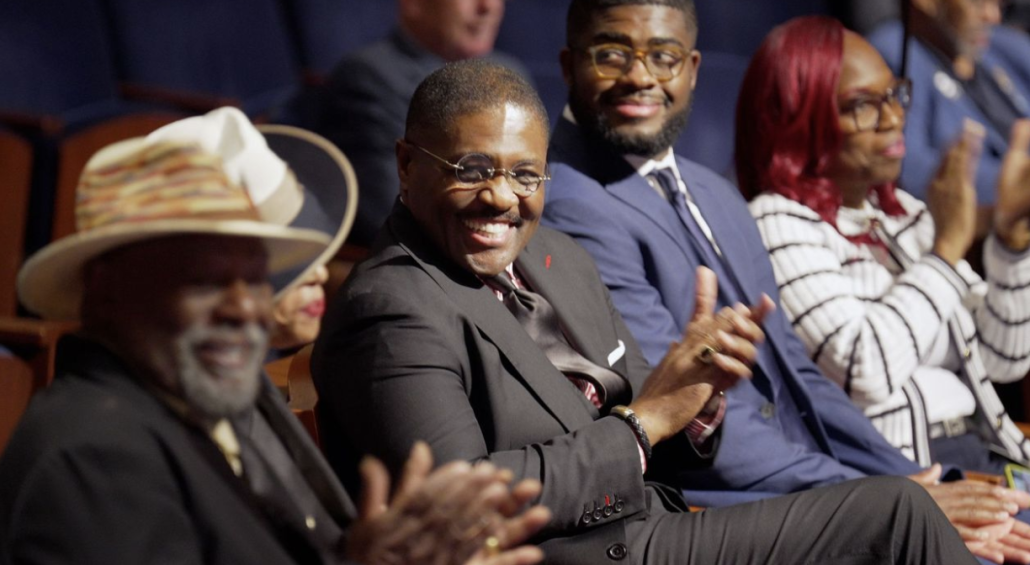
The well-known names, however, were only part of the gathering. The auditorium also included educators, civic leaders, members of the armed forces and students — people of different generations, professions and experiences who came together under the same roof. Their presence gave the evening a quality that went beyond the stage. It was not simply a gathering of public figures, but a cross-section of people who contribute to the country in very different ways.
At the heart of the observance was a simple idea: democracy depends on participation. Voting is part of that responsibility, but citizenship also takes shape in classrooms, military service, neighborhoods, community organizations and countless everyday acts that rarely make headlines. The presence of students underscored that point. As the United States approaches its 250th year, the next generation will inherit both the country’s achievements and its unresolved challenges.
The presence of artists and entertainers added another dimension to the evening. Music, comedy and popular culture have long given Americans a language that can cross boundaries politics sometimes cannot. People may disagree over government and policy while still sharing a song, a laugh or a cultural memory. Bringing entertainers together with lawmakers, diplomats, service members, educators and students reflected the many different ways people experience and contribute to American life.
No one in the room was expected to abandon their differences. A country as large and complicated as the United States has never been defined by complete agreement. Its history is filled with disagreement, debate and competing visions. The Constitution itself was born from difficult arguments and compromise. The challenge is not necessarily to eliminate those differences, but to preserve the ability to live with them while continuing to participate in a shared democratic system.
That made the Capitol an especially fitting setting. The same building where lawmakers routinely debate the country’s most consequential questions became, for an evening, a place to consider the responsibilities that come with belonging to the same nation. With Election Day approaching and the country’s 250th anniversary ahead, the themes of civic participation and national identity carried particular weight.
America has never been a finished project. Its history is complicated, its politics are contentious and its people have never agreed on everything. Yet generation after generation has continued to participate in the country’s democratic life — by serving, teaching, voting, organizing, volunteering, speaking out and simply showing up.
That was the quieter message inside the Capitol that evening. Members of Congress shared the room with entertainers and diplomats; service members stood alongside educators and students. Their backgrounds were different, but their presence reflected a common commitment to the idea that citizenship carries responsibilities shared across political, professional and generational lines.
In Washington, where disagreement so often becomes the headline, that may sound like a modest achievement. But unity does not require Americans to think alike. Sometimes it begins with something more basic: a willingness to come together, listen to one another and remember that, beneath the arguments that divide the country, there remains a democratic nation that belongs to all of its citizens.

GSV News Service
- GSV News Service#molongui-disabled-link

- GSV News Service#molongui-disabled-link

- GSV News Service#molongui-disabled-link

- GSV News Service#molongui-disabled-link