Bipartisan Congressional Action Underscores Growing Concern Over Human Rights, Regional Stability, and Ethiopia’s Future
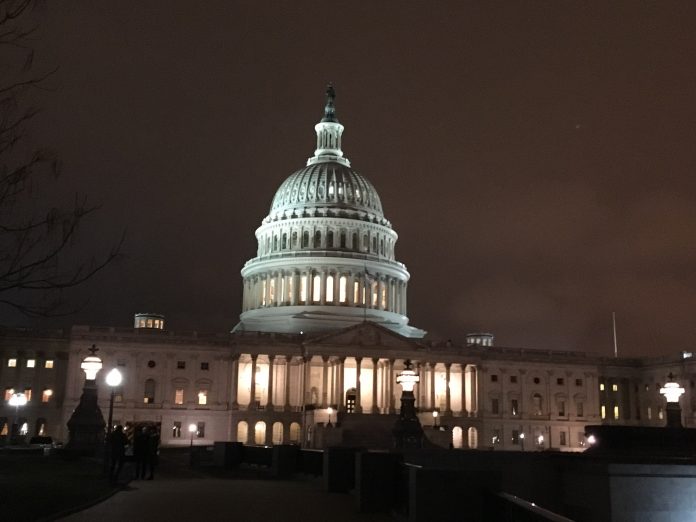
Washington, D.C. — A bipartisan group of U.S. lawmakers has raised renewed concerns about the deteriorating security, humanitarian, and human rights situation in Ethiopia, urging Secretary of State Marco Rubio to take stronger diplomatic action to address the country’s continuing conflicts and instability.
The bipartisan coalition includes Representatives Joe Wilson (R-SC), Earl “Buddy” Carter (R-GA), Donald Beyer (D-VA), and Brian Fitzpatrick (R-PA). Their correspondence reflects growing concern in Congress over Ethiopia’s internal conflicts, civilian suffering, humanitarian needs, and the potential consequences for stability in the broader Horn of Africa.
The congressional concerns are particularly significant because they come at a time when Ethiopia continues to face armed conflicts and political tensions in multiple parts of the country.
H.Res. 937: An Earlier Congressional Warning
It is also important to note that Representatives Buddy Carter and Joe Wilson introduced H.Res. 937 on December 9, 2025, titled:
“Condemning the Government of Ethiopia for actions that threaten regional stability, violate fundamental human rights, and undermine the strategic interests of the United States in the Horn of Africa.”
The resolution was referred to the House Foreign Affairs Committee.
H.Res. 937 states that the United States has a strategic interest in promoting peace, security, and good governance in the Horn of Africa. It also cites continuing violence in areas including Amhara, Oromia, Afar, Tigray, and Ogaden, along with loss of life, destruction, displacement, humanitarian suffering, and heightened ethnic and religious tensions.
Among the measures addressed in the resolution are calls for greater accountability for human-rights violations, consideration of targeted sanctions, restrictions on assistance other than humanitarian assistance, and support for independent investigations into alleged war crimes, crimes against humanity, and other serious abuses.
The resolution therefore provides an important congressional context for the latest bipartisan concerns being raised about Ethiopia.
A Crisis That Requires Sustained U.S. Attention
For years, Ethiopian-American civic and human-rights organizations have urged the U.S. Congress and successive administrations to pay greater attention to Ethiopia’s deteriorating human-rights and humanitarian situation.
The message from the Ethiopian-American community has been consistent: the United States should not wait for another major war or humanitarian catastrophe before acting.
Ethiopia’s importance extends beyond its borders. It is the second-most populous country in Africa and occupies a strategically important position in the Horn of Africa, near the Red Sea and the Bab el-Mandeb Strait, one of the world’s critical maritime corridors connecting the Red Sea with the Gulf of Aden and global commercial shipping routes.
Instability in Ethiopia can therefore have consequences beyond the country’s immediate borders. A major escalation of conflict could increase refugee and humanitarian pressures, disrupt regional economic activity, deepen tensions among neighboring countries, and complicate U.S. diplomatic and security interests throughout the Horn of Africa.
Human Rights and Protection of Civilians Must Remain Central
The continuing reports of killings, displacement, destruction of property, attacks on communities, and other abuses require sustained international attention.
Civilians must not become casualties of political or military competition.
Reports of violence affecting women, children, religious communities, and other civilians are deeply troubling. Allegations involving drone strikes and other attacks that may have affected civilian populations should be independently investigated, and credible allegations of violations of international humanitarian or human-rights law should be addressed through appropriate accountability mechanisms.
The international community cannot afford to treat civilian suffering as an unavoidable consequence of Ethiopia’s political crisis.
The Pretoria Agreement and the Risk of Renewed Conflict
The fragile peace achieved through the 2022 Pretoria Cessation of Hostilities Agreement remains an important reference point for Ethiopia’s future.
The agreement helped halt the devastating two-year war in northern Ethiopia. Any renewed military confrontation between forces associated with the federal government and TPLF, Fano, OLA and other forces would risk reversing progress made since the agreement and could produce another humanitarian emergency.
The appropriate response to political disagreements should not be a return to large-scale warfare.
The United States and other international partners should encourage dialogue, implementation of existing peace commitments, confidence-building measures, humanitarian access, and political negotiations among Ethiopia’s stakeholders.
Ethiopia’s Multiple Conflicts
Ethiopia’s crisis is not limited to one region.
Armed violence and political tensions have affected Tigray, Amhara, Oromia, Afar, Benishangul-Gumuz, and other parts of the country. The conflicts involve different actors and have different historical and political contexts, but their common consequence has been civilian suffering, displacement, economic disruption, and weakened public confidence in state institutions.
Violence involving federal forces and armed groups in Oromia has continued to generate serious humanitarian concerns. The conflict involving Fano forces and federal authorities in Amhara has likewise caused significant suffering and instability.
These conflicts should not be viewed in isolation. Taken together, they represent a national crisis requiring a comprehensive political solution.
Military Solutions Alone Cannot Resolve Ethiopia’s Crisis
Ethiopia cannot achieve lasting stability through military solutions alone.
Military operations may temporarily alter the balance of power, but they cannot resolve the underlying political disputes, constitutional disagreements, competition over political representation, questions of territorial administration, or grievances over security and governance.
A durable solution requires an inclusive political process that allows Ethiopia’s diverse communities and political stakeholders to address their grievances peacefully.
That process should include:
- Protection of civilians and an end to attacks against noncombatants;
- Meaningful political dialogue among Ethiopia’s major political and social stakeholders;
- Independent investigations into credible allegations of atrocities and serious human-rights violations;
- Accountability for individuals responsible for grave abuses, regardless of political or military affiliation;
- Humanitarian access and assistance for displaced and vulnerable populations;
- Implementation of existing peace agreements;
- Confidence-building measures between competing political and regional actors;
- Strengthening of judicial independence and other democratic institutions; and
- A credible national process to address constitutional and governance questions.
The Constitutional Question
One of the most difficult questions facing Ethiopia is whether the country’s current constitutional and federal structure is capable of providing a sustainable framework for political coexistence.
Ethiopia’s 1994 Constitution established an ethnic-based federal system consisting of regional states organized largely around ethnicity and language. Supporters of the system have argued that it provides recognition and political autonomy to Ethiopia’s diverse communities. Critics, however, argue that the system has reinforced ethnic political competition and contributed to tensions over territory, identity, representation, and access to political power.
Ethiopia’s constitutional debate should therefore be approached through an inclusive and peaceful national process rather than through violence.
A serious national conversation should examine whether constitutional arrangements are adequately protecting individual rights, minority rights, political equality, freedom of movement, democratic representation, and peaceful coexistence among Ethiopia’s many communities.
The objective should be to build institutions that unite citizens around equal rights and shared national interests while respecting Ethiopia’s extraordinary linguistic, cultural, religious, and regional diversity.
A Call for Bipartisan U.S. Engagement
The bipartisan involvement of Representatives Wilson, Carter, Beyer, and Fitzpatrick is significant because Ethiopia’s crisis should not be treated as a partisan issue in Washington.
The United States has longstanding interests in Ethiopia and the broader Horn of Africa. Those interests include regional security, counterterrorism, humanitarian assistance, economic development, freedom of religion, human rights, democratic governance, and the protection of international trade routes.
Congress and the administration should therefore work together to develop a consistent and sustainable Ethiopia policy.
That policy should combine diplomacy with accountability. It should support humanitarian assistance while pressing all parties to protect civilians. It should encourage negotiations rather than military escalation. And where credible evidence establishes serious human-rights violations, appropriate accountability measures should be considered.
Ethiopian Americans Urge Washington to Act
Ethiopian-American civic organizations have repeatedly raised these concerns with members of Congress, congressional staff, and U.S. policymakers.
Our message is straightforward:
Ethiopia needs peace, accountability, democratic institutions, and a political process capable of addressing the country’s deep-rooted grievances.
The United States should use its diplomatic influence to encourage all Ethiopian stakeholders to reject violence and pursue meaningful negotiations.
At the same time, Washington should continue to monitor human-rights conditions throughout Ethiopia and support independent mechanisms capable of establishing the facts when serious allegations are made.
The suffering of Ethiopian civilians should not become another forgotten humanitarian crisis.
The Stakes Extend Beyond Ethiopia
The future of Ethiopia has implications for the entire Horn of Africa.
A prolonged conflict in one of Africa’s largest countries could contribute to further displacement, economic instability, cross-border tensions, and humanitarian emergencies. It could also complicate efforts to maintain security and reliable commercial transportation through the Red Sea and Bab el-Mandeb region.
For these reasons, preventing another large-scale Ethiopian war is not simply a humanitarian concern. It is also a matter of regional and international security.
The bipartisan congressional attention now being directed toward Ethiopia provides an opportunity for Washington to reassess its approach and pursue a more comprehensive policy.
The United States should encourage peace over war, dialogue over confrontation, accountability over impunity, and democratic institutions over political violence.
Ethiopia’s future ultimately belongs to the Ethiopian people. But the international community—including the United States—has an important role to play in supporting peaceful solutions, protecting civilians, and ensuring that serious human-rights violations do not go unanswered.
Washington should act before another conflict becomes another humanitarian catastrophe.

Mesfin Mekonen
Mesfin Mekonen is the author of Washington Update, a bulletin about Ethiopia’s struggle for freedom and prosperity, and founder of MM Management.
- Mesfin Mekonen#molongui-disabled-link

- Mesfin Mekonen#molongui-disabled-link

- Mesfin Mekonen#molongui-disabled-link
- Mesfin Mekonen#molongui-disabled-link