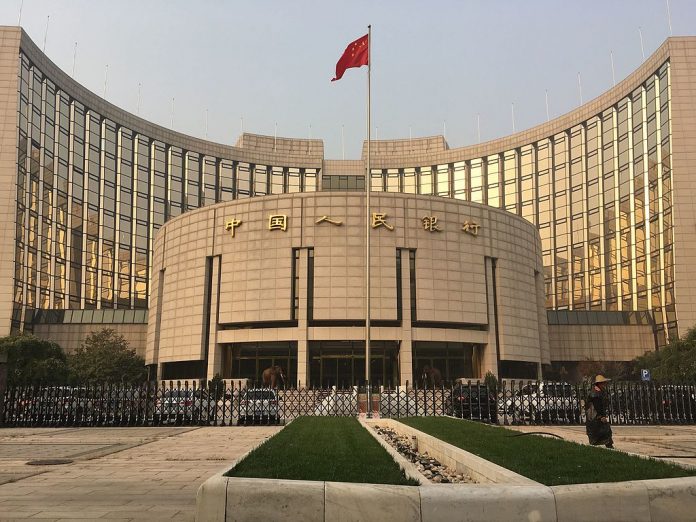
Washington, DC – The resilience of the Chinese banking system has come under scrutiny in recent years due to individual characteristics such as concentration, rapid asset growth, the importance of shadow banking, the opaque interconnectedness of financial firms, and Chinese banks’ increased international clout. The rapid expansion of the Chinese stock market presents both opportunities and risks for global investors. It significantly impacts the performance of emerging markets as measured by indices such as the MSCI EM. An international investor should be concerned about the impact of smaller Chinese banks on financial stability and should consider both systemic and individual riskiness.
Recent reports indicate that Credit Suisse Group is slowing its expansion in China, but this does not imply that major foreign banks are abandoning their China ambitions. Foreign banks such as Morgan Stanley, Citigroup, UBS, Goldman Sachs, and Deutsche Bank are continuing to increase their investments in China.
Credit Suisse has postponed the launch of its locally incorporated bank until 2024, allowing it to expand its wealth management bank. Among the COVID-19 lockdowns and increased regulation, the firm’s management cited China’s slowing economy. Credit Suisse is also awaiting an on-site inspection from regulators before it can expand on the mainland.
Because well-known local and entrenched banks control the majority of the market share and are used as channels for government policy implementation, China is a notoriously difficult place for foreign banks to compete successfully. Minimum asset thresholds and ownership requirements have long constrained foreign banks, and they continue to be constrained by capital account restrictions. A 2021 regulation, for example, restricted global banks’ ability to raise money abroad and transfer it to China.
There are still indications that Beijing wants more control over its economy. In 2022, regulators warned foreign banks not to overpay their executives. Furthermore, according to Bloomberg, tensions between China and the United States have significantly delayed banking licenses. This includes licenses desired by Morgan Stanley to expand on the mainland.
Due to difficulties obtaining low-cost deposits as major funding sources, foreign banks have faced higher funding costs than their domestic counterparts. Foreign banks are now obtaining wholesale funding from the interbank market at interbank rates, which are typically higher than deposit rates. Foreign banks also have a higher loan loss coverage ratio than domestic banks because they have fewer outlets for nonperforming loans.
Despite this, foreign banks are hopeful that the regulatory tide has turned. Maximum deposit rates on foreign currency and renminbi exchange restrictions were lifted in this area with the establishment of the Shanghai Free Trade Zone at the end of November 2014, attracting 23 foreign banks at the time.Following this period, in 2020, foreign banks were allowed to apply for full ownership of their partnerships, giving them an additional incentive to become active in China.
Some banks have continued to pursue partnerships to gain better client access. In 2021, Goldman Sachs partnered with ICBC to gain better access to potential investment clients. BlackRock formed a joint venture with local Chinese partners and expanded its wholly-owned business. JP Morgan invested 10% in China Merchants Bank’s wealth subsidiary.
Foreign banks continue to pursue business in foreign currency lending, trade financing, and investment banking, including derivatives trading and asset management. However, they run the risk of China’s regulatory changes imposing additional requirements on their core businesses.
New regulations are frequently introduced quickly and can aggressively curtail activities deemed unstable, unequal, or otherwise unpalatable by the Communist Party.
Foreign banks are also concerned about government intervention in the economy. The flurry of regulations enacted in 2020 and 2021 demonstrated Beijing’s ability to crack down on what it considers unacceptable behavior but equally troubling has been government influence on China’s equity markets via government guidance funds in favored industries. Over the last decade, government funds have raised more than $900 billion to provide early funding to companies in preferred high-tech industries.
These actions demonstrate the Chinese government’s authority in determining which industries will thrive and how they will be funded.
Foreign banks want to expand on the mainland, but the question is whether they will continue to be favored by the government or whether the schism between China and the West or China’s own political and economic direction will change their fortunes.

Pia Sherman
Pia Sherman is a freelance writer. Views expressed are solely of the author.
- Pia Sherman#molongui-disabled-link

- Pia Sherman#molongui-disabled-link

- Pia Sherman#molongui-disabled-link

- Pia Sherman#molongui-disabled-link