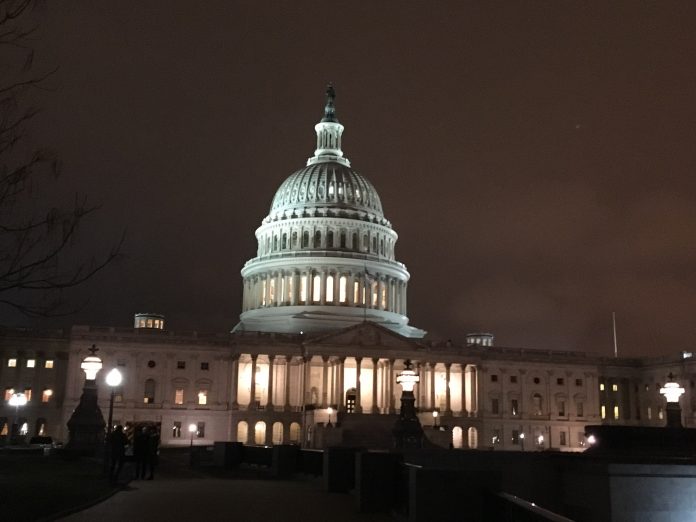
The following remarks were delivered at the Ethiopian Constitutional Conference held at the Rayburn House Office Building in Washington, DC. The conference focused on the rapidly deteriorating human rights situation in Ethiopia, with particular emphasis on state violence, constitutional failures, and the escalating persecution of the Ethiopian Orthodox Tewahedo Church. The gathering brought together policymakers, advocates, and community leaders to examine the crisis and to advance concrete actions for accountability, constitutional reform, and the protection of fundamental freedoms.
My name is Mesfin Mekonen. For more than three decades, I have been engaged in advocacy on behalf of the Ethiopian people, focusing on human rights, democracy, and economic development. I am the Manager of the National Press Club in Washington, DC; the author of Washington Update; the Founder of MM Management, Ltd., an executive search firm; and Chairman of Ethiopian American civic organizations.
It is a great honor to welcome all distinguished guests and participants to today’s Ethiopian Constitutional Conference and Forum on Attacks on Religious Freedom in Ethiopia.
I extend my deepest appreciation to Congresswoman Eleanor Holmes Norton (D-DC) for generously sponsoring this meeting space here in the Rayburn House Office Building. Although Congresswoman Norton was unable to join us today due to a prior commitment, she shared the following message:
Message from Congresswoman Eleanor Holmes Norton (D-DC)
Dear Mesfin,
Thank you for inviting me to speak at your Conference on December 19, 2025. I am honored by your request. I would very much like to participate, but unfortunately a prior commitment prevents me from doing so. Please accept my sincere regrets that I cannot join you.
Sincerely,
Eleanor Holmes Norton
Message from Congressman Chris Smith (R-NJ)
My Dear Friends,
It is an honor and a privilege to salute the great people of the great nation of Ethiopia on the important occasion of the Ethiopian Constitutional Conference and Forum on Attacks on Religious Freedom in Ethiopia.
As one of the most populous countries in the world, Ethiopia is home to more than 132 million people. It also has one of Africa’s fastest-growing economies, recording an 8.1 percent growth rate last year.
With each passing day, improvements are being made in living standards, access to water and electricity, and childhood vaccinations. Ethiopians have much to be proud of, yet there remains much important work ahead.
Ethiopia’s future peace and stability depend on abandoning the system of ethnic federalism. The root cause of the country’s ongoing crisis lies in a constitution built on a divide-and-rule ethnic structure. Moving beyond this framework would be a major step forward for a great nation.
As Ethiopians continue striving for progress, they can count on the United States as a friend and partner. Americans consider the Ethiopian people among their closest friends in Africa.
We wish you all the very best on this important day.
Sincerely,
Chris Smith
Member of Congress
Why We Are Here
An important resolution has been introduced in the U.S. House of Representatives by Congressman Buddy Carter (R-GA) and Congressman Joe Wilson (R-SC):
House Resolution 937, Condemning the Government of Ethiopia for actions that threaten regional stability, violate fundamental human rights, and undermine the strategic interests of the United States in the Horn of Africa.
The resolution cites credible reports that the Government of Ethiopia has committed gross violations of internationally recognized human rights, including war crimes, crimes against humanity, and acts that may constitute genocide. It also highlights targeted violence against the Ethiopian Orthodox Church and other religious institutions.
As part of the 50-State Strategy we have developed, the next phase of our advocacy is a coordinated nationwide letter-writing campaign. Our immediate priority is to contact Members of Congress in every state to explain why this resolution matters and to urge Representatives to:
-
Support and co-sponsor House Resolution 937
-
Actively push for its passage in the House
-
Advance it to the U.S. Senate
Once in the Senate, our advocacy must continue until the resolution is passed and ultimately signed into law by the President of the United States.
This effort must be collective and sustained. Our voices matter. Members of Congress place great value on hearing directly from their constituents, and it is essential that they understand the realities on the ground in Ethiopia—particularly the worsening human rights crisis affecting Amhara Ethiopians.
The Crisis in Ethiopia
Today’s conference brings urgent attention to a rapidly deteriorating human rights situation in Ethiopia—one that receives far too little global attention. Ethiopia’s stability is vital not only for its own citizens but also for the security of the Horn of Africa and broader international interests.
If Ethiopia collapses, the consequences will be profound: the spread of extremism across East Africa, disruption of Red Sea trade routes, and the expansion of influence by global powers such as China and Russia. Preventing Ethiopia’s descent into chaos is both a humanitarian imperative and a critical U.S. national security interest.
Under Prime Minister Abiy Ahmed, state violence has intensified, particularly against the Amhara population. Government forces have carried out drone strikes on civilians, massacres, widespread sexual violence, and mass displacement.
Opposition figures are imprisoned and tortured. Peaceful protests are violently suppressed. Journalists are harassed, detained, and silenced. Rather than fostering national unity, the government has deepened ethnic divisions entrenched since 1991.
Ethiopia’s future depends on:
-
Genuine constitutional reform to end ethnic-based governance
-
Protection of fundamental human rights
-
Eliminating systemic corruption that strips the nation of its resources
Humanitarian Emergency
Corruption has compounded human suffering. In 2023, USAID and the World Food Programme uncovered the largest food-aid diversion scandal in history, implicating government officials. The resulting suspension of aid pushed millions toward starvation.
Although aid has since resumed under stricter safeguards, the humanitarian crisis remains severe:
-
More than 4 million people displaced by government policy
-
Over 20 million people in need of food assistance, with only one-third receiving aid
-
Severe funding shortages placing millions at risk of famine
Persecution of the Ethiopian Orthodox Church
The Ethiopian Orthodox Tewahedo Church has faced escalating persecution:
-
State-backed seizures and violence
-
Killings and arrests: More than 35 Orthodox followers killed and many others detained
-
Suppression of worship: In January 2023, police blocked access to churches in Oromia and even in Addis Ababa
-
Mass violence in Oromia: Joint operations by Oromo Special Forces and the OLA have reportedly killed tens of thousands of Amharas and displaced more than one million
-
Attacks on places of worship: In East Wollega, OLA forces reportedly killed 29 worshippers inside a church during a holy fast
These atrocities demand urgent international attention.
What Must Be Done
The United States and the international community must act decisively:
-
Fully restore humanitarian aid with strong safeguards
-
Impose targeted sanctions on officials responsible for war crimes and ethnic cleansing
-
Demand comprehensive constitutional reforms that end ethnic-based governance
-
Secure the release of political prisoners and journalists, including:
-
Christian Tadele, Member of Parliament
-
Tadios Tantu, author
-
Dr. Wondwosen
-
Meskerem Abera, author and educator
-
-
Promote an immediate ceasefire and an end to violence
Only through these steps can Ethiopia move toward peace, justice, and democratic governance.
The Constitutional Conference
Today’s gathering is part of an ongoing series of Constitutional Conferences committed to producing a new draft Ethiopian Constitution. A central theme is the escalating persecution of Ethiopian Orthodox Christians and the growing threat to the Ethiopian Orthodox Tewahedo Church.
Ethiopia stands at a pivotal moment. This is a time to unite, find common ground, and work toward a future that ensures peace and dignity for the Amhara people and for all Ethiopians seeking inclusion and security.
Why We Meet in Congress
We have chosen to meet in the U.S. Congress because it is the heart of American democratic decision-making. Ethiopian Americans have successfully engaged Congress before, and this venue provides a powerful platform to advocate for justice, human rights, and meaningful reform.
Call to Action: Prevent Genocide in Amhara
The Amhara region is facing an escalating crisis marked by mass killings, forced displacement, and atrocities that exhibit clear warning signs of genocide. Silence is not an option.
We call on the international community to:
-
Launch independent investigations
-
Hold perpetrators accountable for crimes against humanity
-
Take urgent measures to protect civilians
The world must not look away. The people of Amhara—and all Ethiopians—deserve peace, dignity, and freedom.
The Role of the United States
While Ethiopia’s future ultimately lies in the hands of its own people, the United States has a critical role to play as a partner grounded in democratic values. A strategic approach is urgently needed:
-
Humanitarian Relief: Restore and expand aid with strict safeguards
-
Accountability: Enforce targeted sanctions and demand justice for victims
-
Democratic Reform: Support a constitutional framework that unites rather than divides
Closing
We gather here at a historic moment. Let us raise our voices for justice, stand with the victims of oppression, and work together to build an Ethiopia that is peaceful, democratic, and inclusive for all.
Thank you.

Mesfin Mekonen
Mesfin Mekonen is the author of Washington Update, a bulletin about Ethiopia’s struggle for freedom and prosperity, and founder of MM Management.
- Mesfin Mekonen#molongui-disabled-link

- Mesfin Mekonen#molongui-disabled-link
- Mesfin Mekonen#molongui-disabled-link
- Mesfin Mekonen#molongui-disabled-link